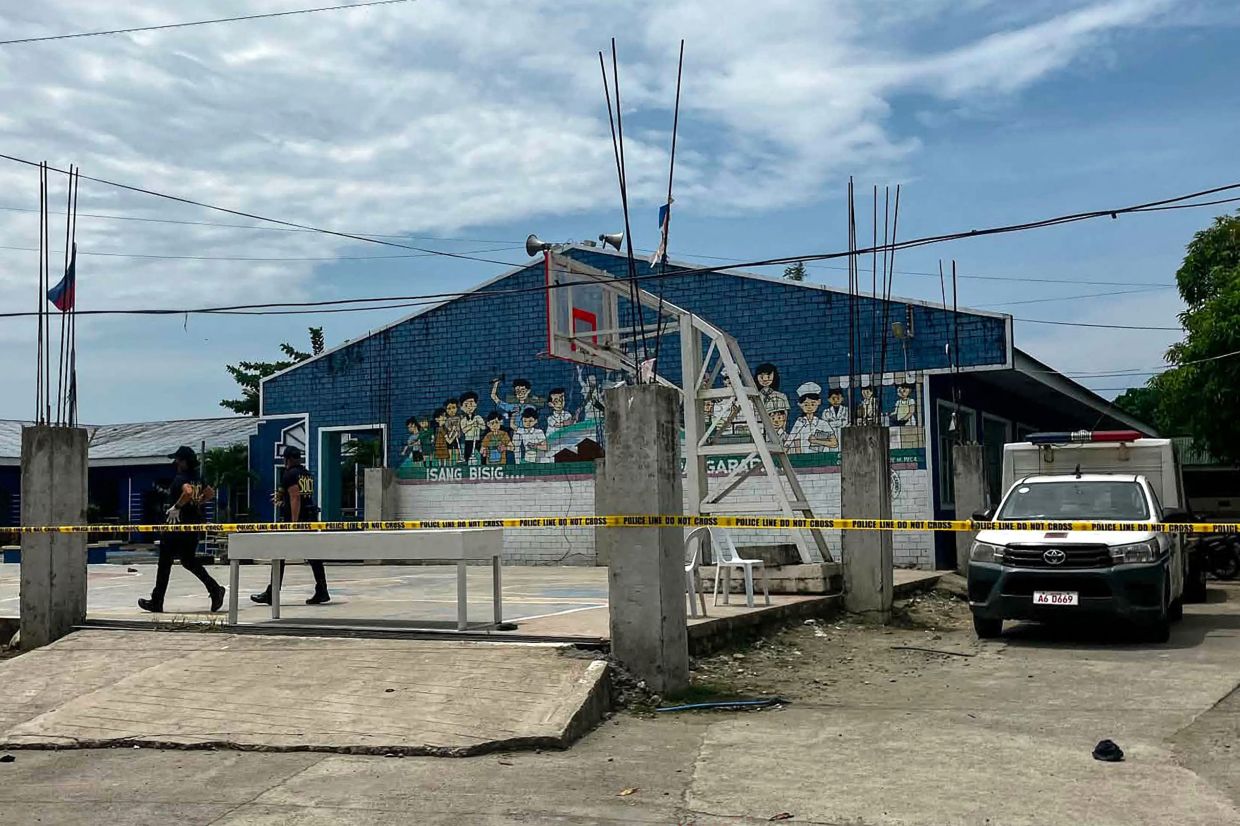
The Philippines confronted a national tragedy on Monday when two students opened fire at San Jose National High School in Tacloban city, leaving three fellow pupils dead and seven others injured. The suspects, aged 14 and 15, were swiftly apprehended following the mid-morning attack on the government-run institution, which serves a student population exceeding 1,500. The incident has prompted renewed scrutiny of school security protocols and the broader question of how firearms reach minors in a nation where gun violence remains an entrenched challenge.
According to regional police chief Brig. Gen. Jason Capoy, the perpetrators were close friends who cited experiences of bullying as motivation for their actions during the initial police questioning. Neither suspect carried prior criminal histories, a detail that underscores how difficult it may be to identify warning signs among adolescents. The dual nature of the incident—two coordinated shooters rather than a solitary gunman—suggests a degree of premeditation that deepens concerns about the psychological dynamics between the two teenagers and whether adult supervision or intervention might have prevented the tragedy.
The weapons used in the attack highlight alarming vulnerabilities in firearm regulation and storage. One of the suspects obtained a 9 millimetre pistol from his aunt, a serving police officer, raising serious questions about security practices within law enforcement families. The second assailant wielded a calibre .38 revolver, the source of which is still under investigation. These guns were successfully smuggled onto the school campus through security gaps that became starkly apparent in the aftermath—the institution relied on only a single security guard stationed across multiple entry and exit points, a staffing decision that likely accelerated the tragedy's toll.
The shooting unfolded across two separate classrooms, with victims attempting to flee after the initial gunfire only to encounter the attackers again in a second location. This pattern of pursuit suggests the suspects were methodical rather than impulsive, though psychological evaluation will be crucial to understanding their precise mental state during the incident. Investigators recovered at least 40 shell casings at the scene, indicating sustained gunfire over an extended period. The majority of those killed and wounded were female students, though authorities have not fully detailed the circumstances of how individual victims were selected or whether targeting was random or deliberate.
Social media footage captured the raw trauma unfolding within the school walls. Videos showed students cowering beneath classroom desks while gunshots echoed outside, their screams audible as some desperately called relatives to say goodbye. Other recordings documented panicked evacuation scenes with students clutching one another as they fled the campus, their faces reflecting visceral terror. These images, rapidly disseminated across digital platforms, intensified the psychological impact well beyond the school community itself, affecting millions of Filipinos nationwide who witnessed the horror in real time.
The operational response, while ultimately successful in apprehending both suspects, revealed the challenges faced by local authorities. One shooter was detained at the school grounds immediately following the incident, but the second managed to escape the campus and sought refuge in a nearby residence. He remained at large until community members alerted police to his location, leading officers to his hiding place. This temporary escape highlighted potential security lapses and the difficulty of containing a volatile situation in urban environments where suspects have immediate access to populated neighbourhoods and sympathetic shelter options.
As minors, both suspects now face a distinctive legal pathway in the Philippines that differs markedly from adult proceedings. The 14-year-old is protected under a 2006 law establishing 15 as the minimum age for criminal liability, though this protection depends on authorities determining that the suspect comprehended the nature and consequences of their actions. The 15-year-old potentially faces greater legal exposure but remains subject to juvenile justice procedures. Both will be transferred to government welfare officers following investigation, transitioning from police custody to the child protection system rather than conventional criminal detention.
President Ferdinand Marcos Jr. responded swiftly to the crisis, ordering comprehensive investigation and directing security agencies to strengthen protective measures across schools, workplaces and public gathering spaces. Communications Undersecretary Claire Castro conveyed the president's sorrow, acknowledging the particular agony families of victims must experience and the terror the incident inflicted on the wider community. This high-level political response reflects recognition that such incidents strike at the heart of national security and public confidence.
The shooting occurs within a broader Philippine context where firearms-related crime remains endemic despite repeated reform efforts. The nation has long grappled with proliferation of unlicensed weapons circulating through informal channels, contributing to consistently elevated homicide rates by regional standards. Yet school shootings specifically have remained comparatively rare, suggesting this incident represents an aberration rather than a manifestation of pervasive campus violence. The previous notable case in 2022, when an assailant killed a former town mayor and two others at a Manila-area university during a graduation ceremony, demonstrates that when such incidents do occur, they typically involve adult perpetrators motivated by personal grievances rather than adolescent school-based tensions.
The Tacloban attack forces Malaysian and wider Southeast Asian observers to confront uncomfortable questions about youth access to firearms, school security adequacy, and mental health support systems for bullied students. While the Philippines faces distinctive legal and structural challenges, the incident serves as cautionary reminder that no nation is immune to such tragedies. The apparent ease with which adolescents obtained functioning firearms—including through family members in law enforcement—underscores how criminal intent can circumvent institutional safeguards when personal relationships override professional responsibility. For Malaysia, which has maintained stricter firearm regulations, the case nevertheless illustrates the necessity of vigilance in preventing weapon access to minors and ensuring comprehensive psychological support systems within schools identify and intervene with at-risk youth before grievances calcify into violence.