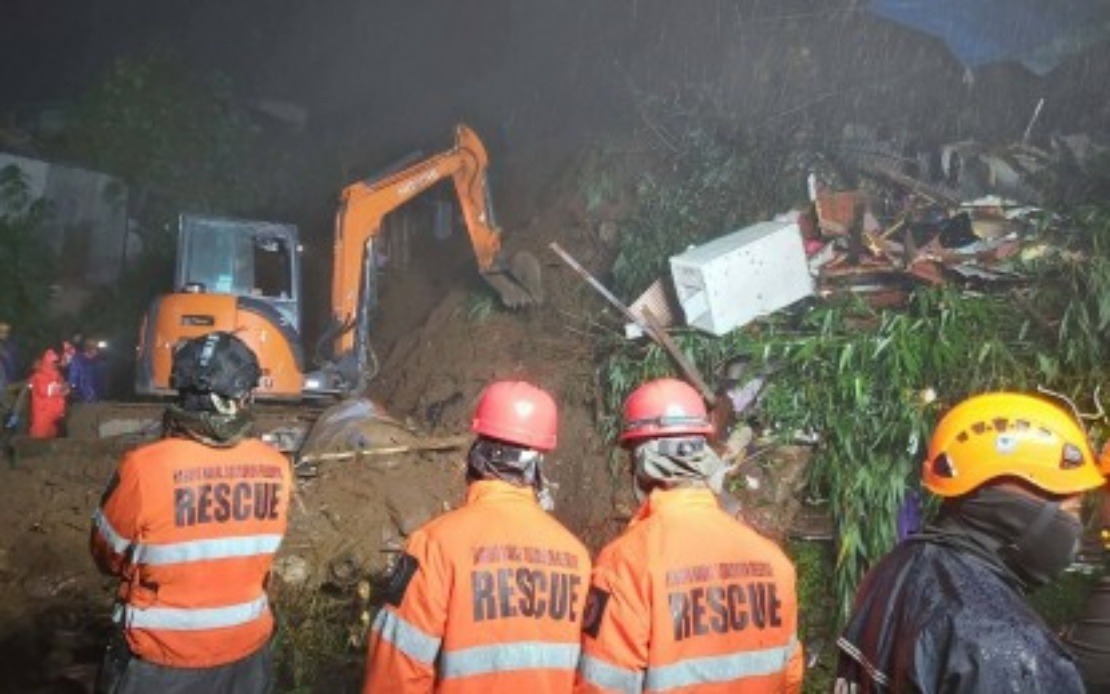
The Philippines faces a deepening humanitarian crisis as the confirmed death toll from consecutive tropical weather systems climbed to 19, with authorities warning that the full extent of damage across the archipelago continues to emerge. The Office of Civil Defence released verification figures on Tuesday through spokesman Diego Mariano, indicating that Tropical Depressions Luis and Maymay, augmented by the seasonal southwest monsoon, have wreaked havoc across the country's most vulnerable regions, leaving approximately 2.2 million citizens affected by flooding, landslides, and infrastructure collapse.
The geographic distribution of fatalities reveals the uneven impact of the disaster, with the mountainous Cordillera Region's Benguet province accounting for the majority of deaths at 12, a figure that underscores the particular vulnerability of upland communities to flash flooding and mudslides during intense rainfall events. The adjacent provinces of Rizal and Batangas, both near Metro Manila and subject to rapid water runoff from higher elevations, each recorded four and three deaths respectively. This pattern reflects a recurring challenge in Philippine disaster management: the concentration of casualties in zones where topography amplifies the destructive force of tropical weather systems, creating cascading hazards that local infrastructure struggles to withstand.
Beyond the verified fatalities, the disaster has generated additional human costs reflected in injury and disappearance reports. Fifteen people sustained injuries severe enough to warrant official documentation, with Benguet again predominating at 12 cases, suggesting that the nature of hazards in that region—likely associated with structural damage and rockfalls—inflicts significant morbidity alongside mortality. Four individuals remain unaccounted for, three in Benguet and one in Batangas, raising the prospect that final casualty figures may yet climb as search operations continue in remote areas where communication infrastructure has been compromised.
The scale of population displacement indicates the severity of flooding in lowland areas and forced evacuations in hazard zones. Across ten major regions spanning Luzon, Visayas, and Mindanao, 646,676 families totalling 2.27 million people confronted evacuation orders or suffered direct impacts from the weather disturbances. Emergency authorities established 919 evacuation centres providing temporary shelter to approximately 95,000 individuals from nearly 26,200 families, suggesting that official shelter capacity has been strained and that many displaced persons are seeking refuge with relatives or in makeshift arrangements outside formal systems. This disparity between total affected populations and those in organized shelters highlights logistical constraints that often characterise Philippine disaster response.
Physical infrastructure damage paints a picture of widespread devastation concentrated in residential areas. The Office of Civil Defence documented 639 houses sustaining damage ranging from partial to severe, with 45 structures destroyed entirely—figures that imply both immediate shelter shortages and a significant reconstruction burden for affected communities. The infrastructure damage bill reached PHP1.46 million, a figure encompassing roads, water systems, power lines, and other critical public works compromised by flooding and debris flows. Though this sum may appear modest in national terms, it represents concentrated losses in provincial areas where municipal budgets are already stretched and disaster recovery funds are limited.
The agricultural sector bore equally substantial losses estimated at PHP135.33 million, a figure of profound consequence for rural economies across the affected zones. The southwest monsoon and tropical depressions struck during a critical growing period, destroying standing crops, saturating fields beyond recovery, and depositing silt on productive land. In regions like Cagayan Valley and Bicol, which depend heavily on rice and coconut cultivation, such losses translate directly into reduced household income, food insecurity, and secondary economic disruption as agricultural labourers face seasonal unemployment. The broader implications extend to national food security and import requirements for the coming months.
The geographic footprint of the disaster encompasses the Ilocos Region, Cagayan Valley, Central Luzon, Bicol Region, Western Visayas, Zamboanga Peninsula, Calabarzon, the Cordillera Region, the National Capital Region, and Mimaropa—an unusually broad swath of the country indicating that these were not isolated convective events but rather a sustained weather pattern affecting the entire western Pacific corridor of the Philippines. This distribution reflects how tropical depressions can generate widespread rainfall fields that transcend typical storm tracks, and it explains why Philippine emergency management agencies must coordinate responses across such vast distances and diverse terrain.
For regional observers, the Philippine disaster underscores vulnerabilities shared across Southeast Asia where rapid urbanization, agricultural dependence, and mountainous topography create compounding risks during intense weather events. Malaysia, particularly Peninsular Malaysia's east coast and Sabah-Sarawak, faces similar exposure to seasonal monsoon systems and tropical cyclones. The Philippine experience—with its emphasis on early warning systems, evacuation protocols, and post-disaster coordination—offers instructive lessons about scaling emergency response to populations measured in millions while contending with fragmented geography and varied infrastructure capacity.
The unfolding humanitarian response reveals both the resilience and limitations of Philippine institutional capacity. Though the Office of Civil Defence mobilized shelter systems and began damage assessments within days of the peak impacts, the sheer volume of affected persons and dispersed nature of damage suggest that recovery will extend across months. International and domestic assistance will likely focus initially on shelter stabilization and clearing critical routes to restore supply chains, with longer-term reconstruction of agricultural capacity and residential infrastructure requiring sustained commitment from both public and private sectors.

