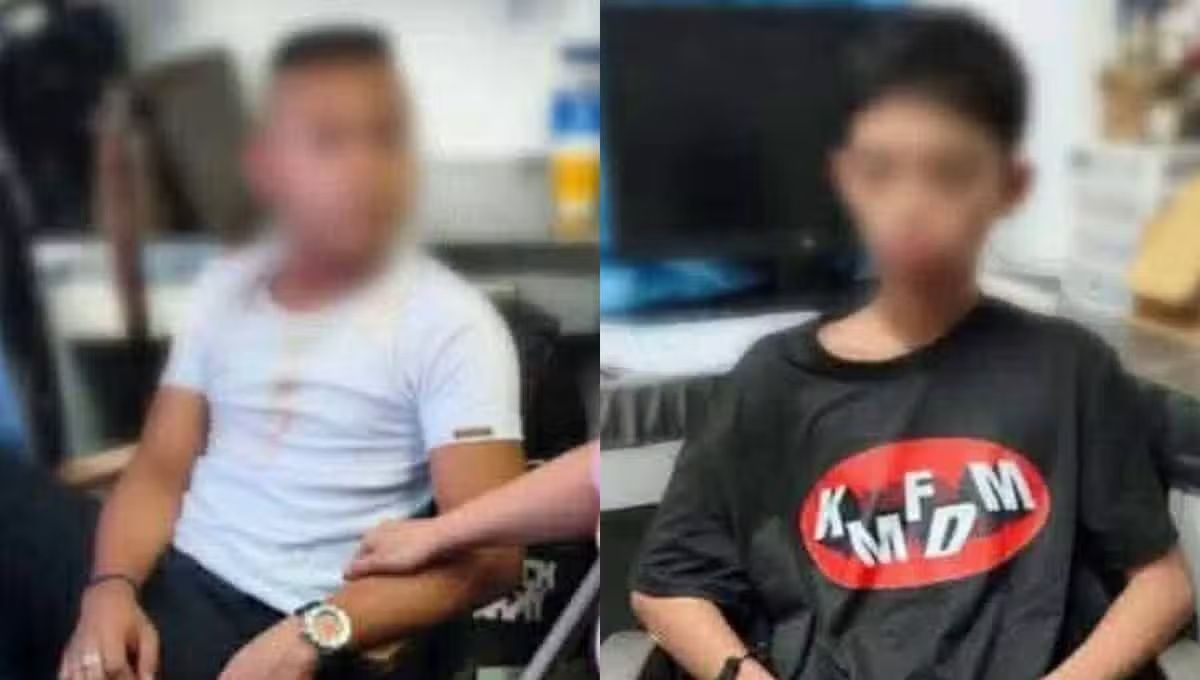
On the morning of June 22, two teenagers—aged 14 and 15—allegedly walked into San Jose National High School in Tacloban City, Leyte, and opened fire on their classmates. The attack left three students dead and twenty others wounded in one of the country's deadliest school shootings in recent memory. Yet what unfolds in the aftermath reveals a deeper fracture in Philippine society: the question of whether young perpetrators of such violence should bear criminal responsibility commensurate with the severity of their actions, or whether the nation's juvenile protection framework ultimately shields them from accountability.
The legal treatment of the two suspects underscores this tension sharply. The 15-year-old faces multiple counts of murder and frustrated murder in the criminal justice system. His 14-year-old accomplice, however, operates under a different legal universe. The Juvenile Justice and Welfare Act of 2006 renders him ineligible for criminal prosecution. Instead, authorities will direct him toward a rehabilitation facility, one of several institutions designated as a House of Hope for children in conflict with the law. The practical implications of this distinction weigh heavily on families of the victims, for whom the law's categorical protection of youth offenders feels like a fresh injustice layered atop their grief.
Erbea Fabian, mother of 15-year-old Chris Lorenz who was killed in the attack, articulated the anguish many bereaved families share. She emphasised that the younger suspect bore primary responsibility for the deadliest portion of the rampage, yet the law's architecture shields him from criminal accountability. Jenny Baldoria, who lost her 16-year-old son Joyancee—a student with dreams of pursuing computer science in higher education—echoed her despair, questioning how forgiveness becomes possible when the system itself appears to circumvent justice. The emotional testimonies of these mothers have crystallised public sentiment and empowered advocates pushing for legislative reform.
The Tacloban incident does not stand in isolation. Within the same week, authorities thwarted a potential mass shooting at another school in Leyte and recorded three separate stabbing incidents across different campuses nationally. This clustering of student-related violence has alarmed policymakers and intensified pressure on President Ferdinand Marcos Jr, who has already signalled openness to lowering the minimum age of criminal responsibility. The Philippine National Police have advanced concrete proposals to establish the threshold at 12 years old, citing documented cases of children as young as nine engaged in criminal conduct. Interior Secretary Jonvic Remulla added another dimension to the argument, pointing to the deliberate exploitation of minors by drug trafficking organisations that deploy child operatives precisely because existing law immunises them from prosecution.
Senator Robin Padilla accelerated this momentum by introducing legislation in July 2025 that would reduce the minimum age to ten years. He invoked an urgent tone, urging President Marcos to convene a special legislative session to address what he framed as a national emergency comparable to the epidemic of school shootings in the United States. The comparison proved rhetorical leverage: Padilla's plea arrived as Congress commenced its recess, leaving reform efforts temporarily stalled despite mounting public and political pressure. This legislative gridlock, in the context of fresh tragedy, heightened the sense that institutional response lagged behind the scale of the crisis.
Digital content and online gaming emerged as a secondary focal point in investigative and public discourse. Police discovered that the younger suspect had been posting violent videos online and consuming substantial quantities of violent digital media in the weeks preceding the attack. Investigators identified GoreBox, a first-person shooter developed by German company F2Games that features graphic combat mechanics and extensive weaponry, as a game to which the suspect had devoted considerable time. The government responded by temporarily restricting access to the game while examining its potential causal relationship to the shooting. This development opened another avenue of policy debate: whether the state should impose stricter regulatory controls over minors' exposure to violent entertainment platforms and violent gaming content.
Philippine law has historically maintained one of Asia's most permissive thresholds for juvenile protection. The minimum age of criminal responsibility stands at 15, substantially higher than regional peers. Indonesia sets the threshold at 12, while Singapore places it at 10. Thailand, Vietnam and other Southeast Asian jurisdictions cluster around 14 or 15. The Philippines' outlier status, paradoxically, reflects a legal philosophy centred on child protection rather than child culpability—yet the Tacloban shooting has inverted the framing, positioning that same protection as an obstacle to justice. The United Nations Committee on the Rights of the Child has cautioned against downward revision, maintaining that thresholds above 14 should remain inviolate and that any minimum below 12 contravenes international norms. Singapore's experience offers a comparative template: young offenders aged 10 to 16 may be charged, with cases typically channelled through specialised Youth Courts rather than the adult criminal system.
Opposition to reform, however, coalesces around a different analytical framework. Tricia Clare Oco, executive director of the Juvenile Justice and Welfare Council, contested the presumption that lowering the age threshold would meaningfully enhance public safety. She argued that mechanical changes to criminal liability age sidestep the fundamental drivers of youth violence: family disintegration, chronic bullying, peer pressure, and a cultural media environment that normalises harm and aggression. Evidence from the United States, where numerous jurisdictions have adopted stricter juvenile liability regimes without substantially reducing school shooting frequency, provides empirical ballast to her scepticism. She further noted that existing Philippine law already permits involuntary commitment to Houses of Hope within 72 hours of judicial order, coupled with mandatory structured rehabilitation and civil liability exposure for parents—mechanisms that, she contended, remain underutilised and underfunded rather than inherently deficient.
The institutional response has broadened beyond law enforcement. The Philippine Senate and the Commission on Human Rights have each launched independent investigations into the Tacloban shooting. The Commission framed its inquiry within a human rights paradigm, emphasising the need for a child-sensitive and rights-based approach that honours the victims while preventing recurrence. This articulation reflects a policymaking tension: simultaneously acknowledging the legitimate grievances of bereaved families and crime victims whilst preserving the foundational principle that children remain developmentally distinct from adults and require rehabilitative rather than purely punitive responses.
The debate unfolding across legislative chambers and public forums touches upon fundamental questions about the purpose of the criminal justice system itself. Should youth offenders be processed through mechanisms oriented toward accountability and deterrence, mirroring adult criminal procedures? Or should rehabilitation and developmental restoration remain paramount, even when offences prove catastrophically violent? The Tacloban school shooting has rendered this philosophical abstraction urgently concrete. For families of the three deceased students and twenty wounded survivors, the question feels not like a legal principle but like a measure of whether the state values their loss and the finality of their bereavement. The coming months will reveal whether Philippine lawmakers choose incremental reform or more substantial restructuring of juvenile justice architecture.

