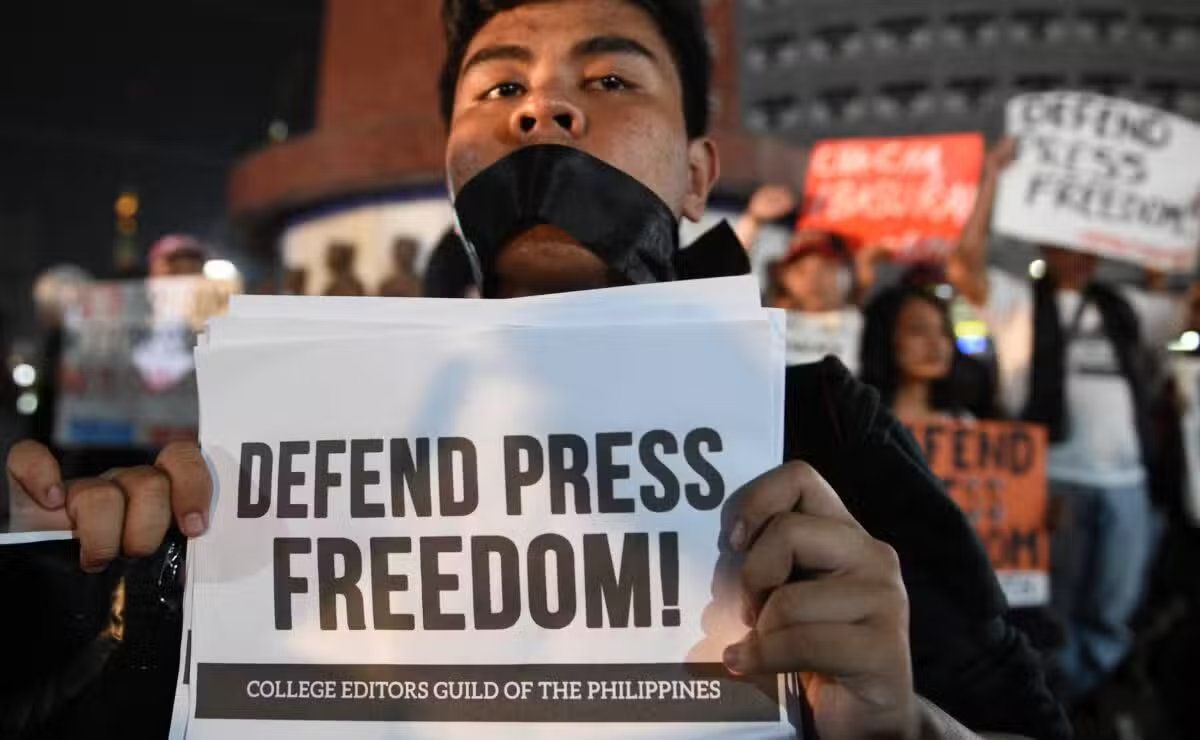
The Philippines is experiencing a troubling surge in attacks against media workers, with the National Union of Journalists of the Philippines documenting approximately 260 cases during President Ferdinand Marcos Jr.'s administration. Yet beneath these stark figures lies a pattern far more concerning than the raw numbers suggest: the vulnerability of journalists operating at the grassroots level. More than 180 of these incidents have targeted reporters and broadcasters working for community newspapers, radio stations, alternative media outlets and campus publications—organisations that operate with considerably tighter budgets and fewer institutional safety nets than their Manila-based counterparts.
The concentration of attacks against smaller news organisations illuminates a critical gap in press freedom protections in the Southeast Asian nation. Provincial and community journalists labour under fundamentally different conditions than those in major metropolitan newsrooms. They typically earn lower salaries, lack comprehensive legal support systems, operate with minimal security infrastructure, and often work alone or in tiny teams without the institutional resources that shield larger outlets. These structural vulnerabilities combine to create an environment where the cost of investigative reporting extends far beyond professional stakes into personal safety and financial survival.
The operational reality for community journalists differs markedly from their counterparts in Manila. These reporters cover stories from the communities where they live, work, and raise families—meaning their professional scrutiny of local officials and business interests occurs against a backdrop of intimate social ties. Jay Lavapiez, station manager of Baskog Radyo in Roxas City, Capiz, articulates this unique pressure. The 48-year-old broadcaster survived an assassination attempt last June when his vehicle was intercepted by two men on a motorcycle, who fired four bullets from a 9 millimetre pistol. Prior to this violent attack, Lavapiez and his wife, India, had faced a barrage of legal complaints filed across multiple jurisdictions—Manila, Muntinlupa, and Capiz—related to their reporting on a cemetery owned by a local official and allegations of abuse and corruption.
The harassment against Lavapiez and his family exemplifies a coordinated strategy of using the legal system to silence critical journalism. The cyberlibel and libel cases commenced after their initial reporting in good faith on matters of significant public concern. By spreading complaints across different courts and jurisdictions, complainants can exhaust journalists' limited financial and emotional resources, effectively using the justice system as an instrument of intimidation. This weaponisation of legal processes represents a particularly insidious form of suppression, as it creates the appearance of legitimacy while systematically targeting those least able to defend themselves.
The decision to file cases and pursue legal harassment carries minimal personal risk for powerful figures, while the consequences for journalists are severe and multifaceted. Lavapiez identifies the full spectrum of tactics deployed against critical media workers: cyberlibel complaints designed to create legal liability, online harassment that extends attacks into digital space, direct intimidation, explicit threats, coordinated smear campaigns, and ultimately armed violence. For provincial journalists, these threats carry particular weight because unlike their urban counterparts, they cannot simply relocate or adopt anonymity. They must return to the same streets, encounter the same people, and continue their work the following day, all while navigating the physical and psychological toll of documented threats.
The economic dimension of this vulnerability cannot be overstated. Salaries for media workers in provincial areas are modest by any measure, and they bear no reasonable proportion to the risks journalists accept as part of their professional duties. This disparity between compensation and danger creates a situation where journalists are essentially accepting life-threatening hazards for below-market wages. The imbalance underscores how community journalism operates in the Philippines: these journalists are not motivated by financial incentives but by a commitment to serving their communities and ensuring that local power structures remain accountable to ordinary citizens.
The costs of this commitment have proven tragically real. In April, community journalist RJ Ledesma was killed in Toboso, Negros Occidental, during a military operation. Ledesma had been conducting community work and reporting on renewable energy initiatives and their effects on agricultural communities when he was among 19 people killed in the operation. An international fact-finding mission subsequently condemned the operation for serious violations, including allegedly indiscriminate firing by military forces despite supposedly having clear visibility of the scene. Ledesma's death represents the ultimate manifestation of the dangers that community journalists face when their reporting touches on politically or economically sensitive matters.
The geographic and social isolation of provincial journalism creates distinct vulnerabilities that merit specific attention from press freedom advocates and policymakers. In metropolitan areas, journalists operate within ecosystems of institutional support, peer networks, legal resources, and international attention. The Philippines' largest newsrooms maintain dedicated legal teams, security protocols, and international recognition that provide tangible protection. Community journalists, by contrast, often work in isolation, lacking colleagues to corroborate their safety concerns or advocate on their behalf. Local authorities and business interests consequently perceive them as more vulnerable targets, precisely because exposure to their harassment generates minimal international scrutiny.
Lavapiez articulates the essential paradox at the heart of this crisis: the closer journalists position themselves to their communities, the more exposed they become. Everyone in the community knows where they work, where they reside, and who they are. This visibility, which would ordinarily be an asset for accountability journalism, becomes a liability when journalists face threats from those wielding local power. Unlike journalists in larger cities who can blend into urban anonymity, community journalists operate in fishbowls where their movements are observed and their professional activities directly impact people they encounter daily.
The deterioration of press freedom in the Philippines carries significant implications for Southeast Asia's democratic health. As community journalists face escalating violence and legal harassment, the natural consequence is self-censorship among the remaining journalists and a chilling effect on aspiring media workers in provincial areas. Stories that communities desperately need to hear—concerning corruption, environmental degradation, abuse of power, and misallocation of public resources—go unreported. The information deficit particularly affects rural and provincial populations who lack alternative sources of local accountability journalism. This creates a democratic deficit where local officials exercise authority with minimal scrutiny and rural citizens lack mechanisms to access information necessary for informed civic participation.
The situation in the Philippines also serves as a cautionary indicator for other Southeast Asian democracies grappling with press freedom challenges. The Philippines demonstrates how attacks on journalism systematically target smaller, independent outlets first, establishing precedents and testing the limits of permissible harassment before expanding to larger outlets. Community journalists, lacking prominent profiles and international advocates, become convenient targets for those wishing to establish boundaries around acceptable reporting. Their vulnerability stems not from inherent weakness but from structural disadvantages in resources, legal support, and institutional backing.
Addressing this crisis requires multifaceted intervention beyond simply calling for improved press freedom. Community journalists require dedicated legal support funds that can challenge libel and cyberlibel cases across multiple jurisdictions. Security protocols and insurance mechanisms must account for the distinct vulnerabilities of provincial reporters. International press freedom organisations must establish specific advocacy mechanisms focused on community journalists, whose stories and safety concerns often escape global attention. Equally important, the Philippines government must ensure that legal systems designed to protect individual reputations are not weaponised as instruments of political control and must prosecute attacks on journalists with the seriousness such crimes deserve.
Lavapiez's closing statement captures the fundamental demand: journalists seek not special privileges but the basic ability to perform their professional duties without facing threats, harassment, legal persecution, or physical violence. This constitutes the minimum threshold for functioning press freedom. In the Philippine provinces, that minimum remains unmet for hundreds of community journalists who persist in asking uncomfortable questions on behalf of their neighbours. Their continued commitment, despite documented risks and modest compensation, represents an extraordinary investment in democratic accountability. Yet without meaningful protections and systemic reforms, this vital work remains unsustainably dangerous.

