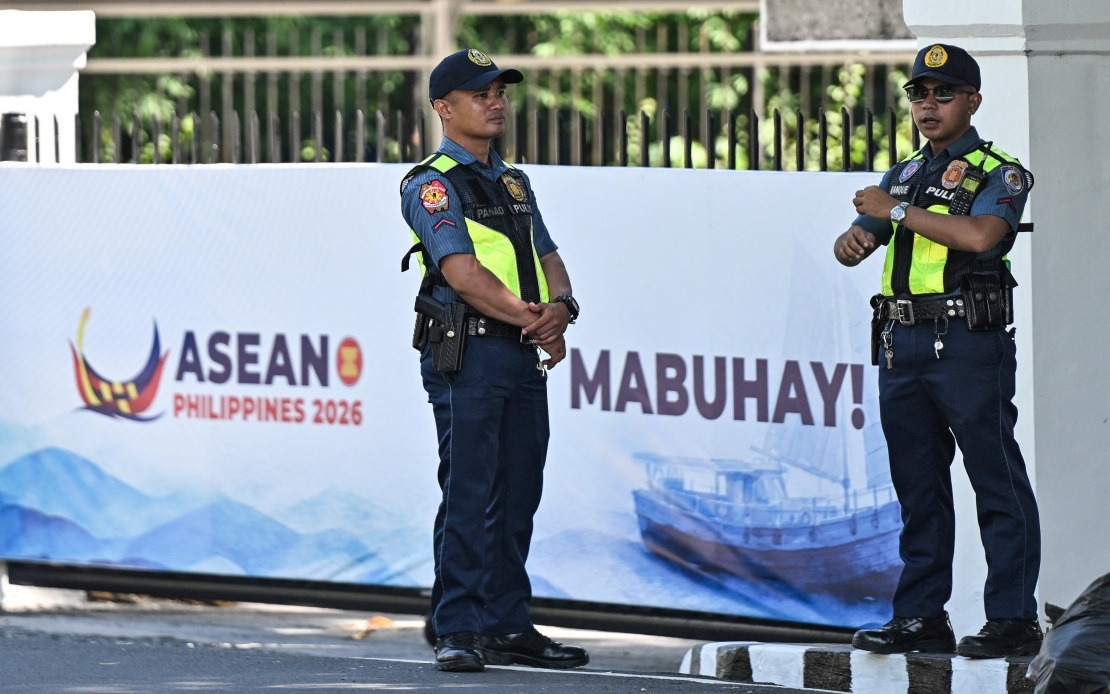
The Philippines assumes the diplomatic spotlight this week as it orchestrates the 59th ASEAN Foreign Ministers' Meeting and associated gatherings from July 20 to 24 in Manila, positioning itself as custodian of a critical moment for Southeast Asian diplomacy. The annual summit arrives at a time when the region navigates competing geopolitical pressures, ongoing humanitarian crises, and unresolved territorial disputes that threaten to undermine the stability ASEAN has long championed. Foreign Affairs Assistant Secretary Dominic Xavier Imperial framed the gathering as an opportunity to consolidate the institutional momentum Manila has built during its half-year stewardship of the bloc while reaffirming ASEAN's collective commitment to principles that have anchored regional peace for decades.
The ministerial agenda reflects a bloc grappling with interconnected challenges that demand coordinated regional responses. Imperial emphasised that the week's activities would advance core development priorities and reinforce the identity of ASEAN as a unified community, particularly as external powers intensify their engagement with Southeast Asia. The breadth of the gathering—encompassing ministerial forums, specialised commissions, post-ministerial conferences with major dialogue partners, and bilateral encounters—underscores how central ASEAN remains to discussions on global geopolitics, despite the bloc's modest economic and military weight relative to its strategic location.
Human rights protection emerged as a cornerstone of the meeting's opening phase, with the 16th face-to-face interface between ASEAN Foreign Ministers and the ASEAN Intergovernmental Commission on Human Rights marking the bloc's formal commitment to safeguarding fundamental freedoms across the region. This session carries symbolic weight in a context where Myanmar's protracted political crisis has displaced hundreds of thousands and generated regional displacement pressures, whilst other member states grapple with their own governance challenges. The interface signals that despite criticism of ASEAN's limited enforcement mechanisms, member states publicly acknowledge the importance of human rights frameworks as part of their community architecture, though translating rhetoric into measurable protection remains a persistent implementation gap.
Nuclear non-proliferation featured prominently in the opening deliberations through the Southeast Asia Nuclear Weapon-Free Zone Commission meeting, where ministers reviewed a five-year action plan and discussed accessions to the treaty protocol. This agenda item reflects a longstanding regional consensus that Southeast Asia must remain outside the nuclear arms competition that characterises great power rivalry. For Malaysian policymakers and analysts, such discussions remain relevant to broader questions about how ASEAN can preserve its strategic autonomy as China's military capabilities expand and as the United States renews its security commitments across Asia. The SEANWFZ mechanism, though primarily symbolic given ASEAN's limited enforcement capacity, provides a diplomatic framework through which Southeast Asia asserts its distinct identity within the global security architecture.
The formal 59th AMM commences with external sessions where foreign ministers, diplomatic missions, and international representatives convene to review progress across ASEAN's three pillars—the political-security community, economic community, and socio-cultural community. These pillar reviews carry implications beyond ASEAN's internal functioning; they signal to dialogue partners and rival powers the degree to which the bloc's integration agenda remains on track or whether fractures have widened. Two key outcome documents will anchor the meeting's conclusions: the Joint Communiqué and Guidelines on Modalities for Engagement with High Contracting Parties to the Treaty of Amity and Cooperation in Southeast Asia. The latter represents a Philippine initiative designed to create structured pathways for states seeking closer ties with ASEAN without formal accession, a particularly relevant framework in an era when Washington, Beijing, and other capitals compete for influence within and around the bloc.
The Treaty of Amity and Cooperation itself becomes the focus of ceremonial attention as ASEAN marks the document's 50th anniversary on the meeting's final day. Signed in 1976, the TAC established principles of mutual respect for sovereignty, non-interference, and peaceful resolution of disputes that have become foundational to regional order. Imperial stressed that the new engagement guidelines reinforce the TAC's role as the cornerstone of regional peace and confidence-building, positioning it as essential to managing great power competition. For Malaysia, the TAC remains a crucial diplomatic tool, one that enables Kuala Lumpur to manage relations with more powerful neighbours whilst maintaining its commitment to multilateral frameworks that constrain unilateral behaviour.
Post-ministerial conferences with key dialogue partners—including the United States, China, India, Russia, Japan, South Korea, Australia, New Zealand, and the European Union—transform the latter half of the week into a multipolar engagement festival. The timing of these consultations, particularly as geopolitical tensions spiked globally, lends them heightened significance. Each dialogue represents an opportunity for ASEAN ministers to hear directly from major powers about their regional intentions and to shape the terms of engagement. Imperial emphasised the venues' importance as spaces where dialogue partners can address current regional and global impacts, suggesting that ASEAN sees itself as a privileged forum for mediation and consensus-building among competing external actors.
The 27th ASEAN Plus Three meeting and the 33rd ASEAN Regional Forum on Thursday expand the diplomatic calendar to include East Asian and broader Indo-Pacific configurations. The ARF, in particular, serves as the region's oldest comprehensive security dialogue, bringing together virtually every significant military power in a single negotiating space. The 16th East Asia Summit, meanwhile, institutionalises engagement among the ten ASEAN members plus major powers including the United States, China, Japan, and India. Together, these platforms create multiple channels through which ASEAN attempts to manage great power rivalry and establish rules of engagement that prevent competition from destabilising the region. Yet the multiplication of forums also highlights the challenge of maintaining coherence when ASEAN's interests are divided and external powers pursue conflicting objectives.
Two issues will dominate ministerial discussions throughout the week: the Myanmar crisis and South China Sea territorial disputes. Myanmar's military coup in February 2021 fractured ASEAN consensus, with neighbouring Thailand and Laos maintaining closer ties to the junta whilst others, particularly the Philippines and Indonesia, advocated stronger intervention. Three years on, the Five-Point Consensus remains aspirational rather than enforceable, and the humanitarian situation has deteriorated. The Code of Conduct negotiations for the South China Sea represent a decade-long effort to establish rules governing maritime behaviour in one of the world's busiest shipping lanes and a zone of overlapping territorial claims involving Vietnam, the Philippines, Malaysia, Brunei, and China. Progress on the COC has been incremental, with China exercising considerable leverage over outcomes, and recent incidents involving Chinese vessels and Philippine boats have raised tensions.
A bilateral encounter between Philippine Foreign Affairs Secretary Ma. Theresa Lazaro and Chinese Foreign Minister Wang Yi carries particular weight, offering an opportunity to stabilise the Philippines-China relationship after months of maritime tensions and competing claims in the South China Sea. Such bilateral engagements within multilateral settings allow countries to address contentious issues in controlled environments where mediating pressure from fellow ASEAN members can theoretically encourage restraint. Imperial framed the meeting as addressing both bilateral relations and broader regional impacts, recognising that Philippine-China tensions have repercussions across ASEAN and the Indo-Pacific more broadly. For Malaysia and other claimant states, any signals emerging from this encounter regarding China's willingness to constrain its assertiveness carry direct implications.
The structure of the week—moving from internal ASEAN deliberations through bilateral and regional grouping meetings to dialogues with external powers—reflects a diplomatic architecture designed to manage complexity through graduated engagement. Malaysia's interests across the various forums span maritime security in the South China Sea, economic integration benefits from ASEAN centralisation, human rights advocacy consistent with democratic norms, and broader Indo-Pacific stability. The week's outcomes will indicate whether ASEAN can maintain sufficient cohesion to influence great power behaviour or whether external divisions have rendered the bloc increasingly declaratory rather than consequential.
Imperial's emphasis on the week as a venue for dialogue partners to address regional impacts reflects a realistic assessment of ASEAN's limited enforcement capacity. The bloc cannot compel major powers to modify behaviour, nor can it unilaterally resolve Myanmar or the South China Sea disputes. Rather, ASEAN's value lies in its role as convener, dialogue facilitator, and curator of principles around which regional stakeholders theoretically align. Whether this diplomatic infrastructure can withstand the intensifying competition between the United States and China, and whether it can accommodate the interests of member states with sharply divergent foreign policies, remains among the most consequential questions facing Southeast Asian regionalism.

