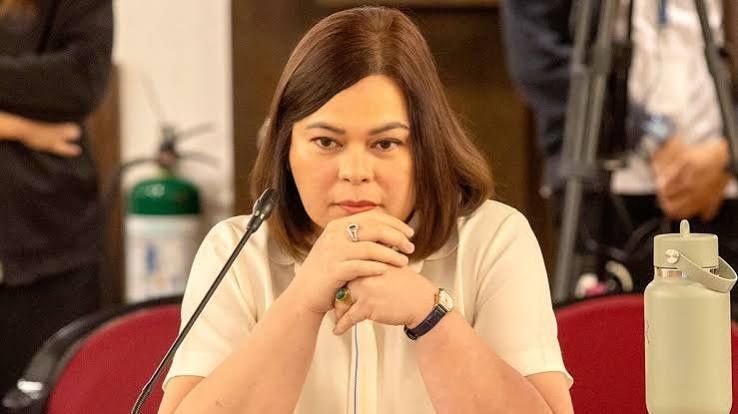
The Philippine National Police is mobilizing approximately 6,000 personnel to safeguard the Senate and its environs as the impeachment trial of Vice President Sara Duterte prepares to commence on Monday, marking a significant moment in the country's political landscape. The substantial security operation reflects the gravity and sensitivity of the proceedings, which have already generated considerable public interest and political tension across the nation. Officers will maintain heightened vigilance throughout the trial to guarantee that the court's operations proceed without disruption or security incidents.
The deployment represents one of the largest security operations centred on legislative proceedings in recent Philippine history. Local authorities in Pasay City, where the Senate complex sits within Metro Manila, have begun preparations for temporary road closures scheduled to commence Monday. These traffic management measures aim to facilitate the movement of security personnel and trial participants while maintaining public safety in the densely populated capital region. The scale of preparation underscores both the institutional importance of the impeachment process and the broader political divisions the trial has exposed within Philippine society.
On Thursday, the Senate impeachment court formally directed the vice president to appear before the tribunal, providing her the option of attending in person or submitting a defence through legal counsel. This directive represents the court's assertion of its constitutional authority and establishes the procedural framework within which the trial will unfold. The requirement for her appearance—whether personal or representational—signals the court's intention to conduct a substantive proceeding rather than a nominal exercise.
The timing of the trial carries particular significance given Sara Duterte's recent political repositioning. In February, she formally announced her candidacy for the 2028 Philippine presidential election, signalling her ambitions for higher office. An impeachment conviction carries severe political consequences: a two-thirds Senate majority voting in favour would result in her removal from office and a lifetime ban from holding any public position. This stakes-raising scenario creates a stark political reality where the trial's outcome could fundamentally alter the trajectory of Philippine politics heading into the 2028 election cycle.
Familial and historical context further frames this proceeding. As the daughter of former President Rodrigo Duterte, who governed from 2016 to 2022, Sara represents a continuation of the Duterte political dynasty—a family that has wielded considerable influence in Philippine national politics. Her father's presidency, marked by controversial policies including a bloody war on drugs, remains deeply contested within Philippine society. The impeachment trial thus transcends merely personal political conflict, touching on broader questions about accountability, executive power, and the judiciary's role in managing high-level political disputes.
Parallel to the impeachment proceedings, the Office of the Vice President released audit findings from the Commission on Audit for calendar year 2025. According to the COA's report, the OVP's financial statements were fairly presented and satisfied all applicable financial reporting standards, receiving an unmodified audit opinion. Officials emphasized that this favourable audit result remains administratively separate from the impeachment case, suggesting that financial compliance does not address the substantive charges underlying the trial. This distinction is important for understanding that impeachment proceedings operate on different legal and political grounds than administrative audits.
The impeachment mechanism itself reflects the Philippines' constitutional framework, which grants Congress the power to remove high officials for serious constitutional violations or crimes. The use of this mechanism against a sitting vice president remains relatively uncommon in modern Philippine politics, lending added weight to the trial's constitutional implications. The proceedings will test the Senate's independence and its willingness to apply the impeachment power across partisan lines—a crucial indicator of institutional health.
Regional observers and international analysts have been monitoring the situation closely, recognizing that the trial's outcome may influence political dynamics across Southeast Asia. The Philippines' democratic institutions are frequently cited as a regional reference point, and the manner in which this high-profile impeachment unfolds will send signals about the strength of institutional checks and balances. A conviction would demonstrate the Senate's willingness to hold the executive accountable; conversely, acquittal would indicate the dominance of political considerations over constitutional principles.
Looking forward, the trial is expected to generate intense political and public debate throughout its duration. Philippine media organizations have devoted substantial coverage to pre-trial developments, and civil society organizations have positioned themselves to observe proceedings. The police deployment, while ostensibly routine security protocol, reflects official concern that the trial could provoke demonstrations or confrontations among supporters and opponents of the vice president. The balance between maintaining public order and preserving space for legitimate political expression remains a central challenge for authorities managing the trial environment.
For ordinary Filipinos and the broader Southeast Asian region, the impeachment trial represents a crucial test of democratic governance. The outcome will demonstrate whether constitutional mechanisms designed to check executive power function effectively when applied to high-ranking officials, or whether political calculations ultimately override institutional requirements. As the trial commences, this fundamental question about the nature of Philippine democracy hangs in the balance.

