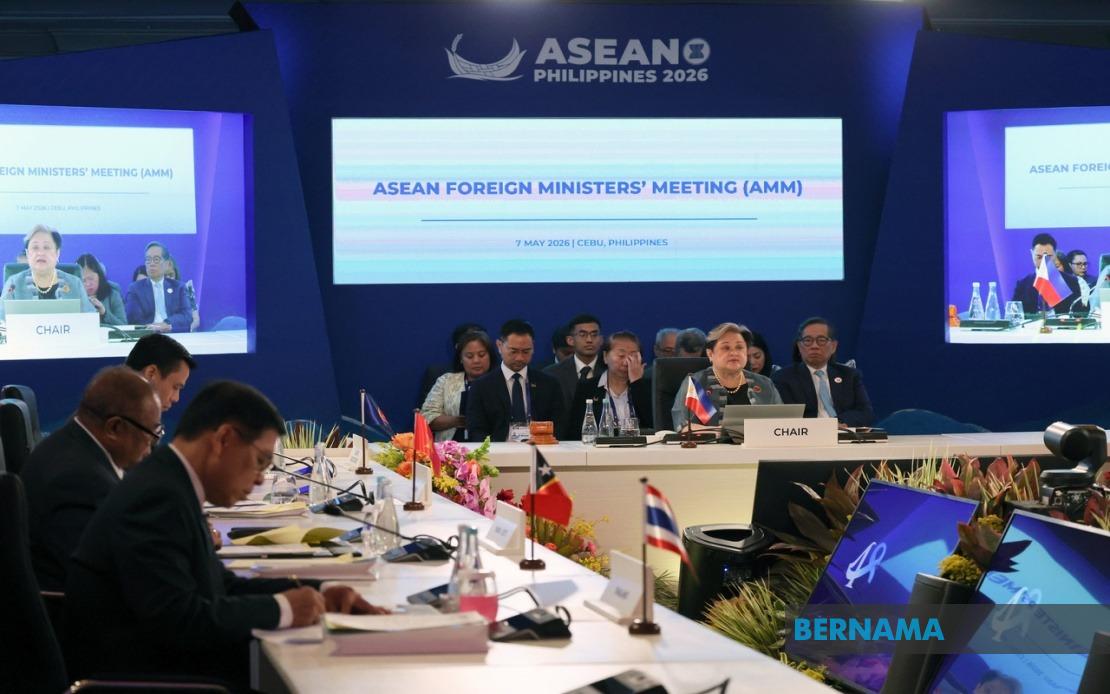
Manila has signalled its commitment to ASEAN's foundational framework for addressing the Myanmar crisis while simultaneously pushing for a more adaptive and results-oriented approach to how member states carry out this agenda. In remarks to regional media, Philippine Foreign Affairs Secretary Ma. Theresa P. Lazaro underscored that the Five-Point Consensus, adopted in April 2021, remains the bedrock of the regional bloc's engagement with Myanmar, yet acknowledged that some fellow ASEAN leaders have raised concerns about the effectiveness of current implementation strategies and called for recalibration.
The nuance embedded in Manila's position reflects broader tensions within ASEAN over how best to address a crisis that has left hundreds of thousands displaced and thousands dead since the military coup that ousted civilian leader Aung San Suu Kyi in February 2021. Rather than abandoning the Five-Point framework entirely, Lazaro explained that the Philippines believes ASEAN's actions and those of its Chair should be deliberate, purposeful and guided by the actual circumstances unfolding on the ground in Myanmar. This language suggests recognition that rigid adherence to the original consensus has failed to produce meaningful change, necessitating a recalibration of tactics without losing sight of the strategic objective.
The Five-Point Consensus itself contains five core pillars: an immediate halt to violence and bloodshed; comprehensive dialogue involving all relevant parties; appointment of an ASEAN Special Envoy to facilitate mediation efforts; humanitarian aid delivery to affected populations; and sustained engagement by the envoy with all stakeholders involved in the conflict. While these elements remain sound in principle, implementation has stalled considerably, with the Myanmar military junta resisting meaningful dialogue and ethnic armed organisations continuing armed resistance against regime forces. The conflict has evolved into a complex proxy environment involving multiple factions with competing interests, making the original consensus increasingly difficult to operationalise as originally conceived.
On the question of Myanmar's seat at ASEAN's table, Lazaro made clear that restoration of full representation for Myanmar's top leadership would hinge on demonstrable progress across three critical areas: genuine de-escalation of violence; substantive and inclusive dialogue among conflicting parties; and consistent delivery of humanitarian assistance to civilians caught in the crossfire. This conditionality has served as ASEAN's primary leverage mechanism, though the junta has shown limited responsiveness. Since the coup, ASEAN has restricted Myanmar's participation by barring senior military leaders from attending high-level summits, permitting only non-political representatives to participate—a compromise that has satisfied neither Myanmar's military nor the opposition while limiting ASEAN's diplomatic influence.
The Philippines, assuming ASEAN's rotating chair, intends to utilise the annual ASEAN Leaders' Review and Decision process on Five-Point Consensus implementation as a vehicle for comprehensive assessment of Myanmar's trajectory. These scheduled reviews provide structured opportunities for member states to collectively evaluate whether substantive movement has occurred on violence reduction, dialogue initiatives and humanitarian assistance programmes. The mechanism allows ASEAN to avoid a binary choice between maintaining the status quo and complete policy reversal, instead enabling incremental adjustments based on factual progress assessments. For Malaysia, which previously held the chair, this same annual review process represented an opportunity to take stock of implementation challenges and seek refinement.
Malaysia's Foreign Minister Datuk Seri Mohamad Hasan reiterated in late June that ASEAN remains committed to strengthening how the Five-Point Consensus is executed, indicating that regional capitals are actively exploring alternative modalities and approaches. Malaysia has positioned itself as willing to maintain channels with Myanmar's military junta, the National Unity Government representing deposed civilian leadership, the People's Defence Force conducting armed resistance, and various ethnic armed organisations. This multi-stakeholder engagement strategy reflects acknowledgment that sustainable peace requires negotiating with all significant power-holders, not just those deemed legitimate by international democratic standards.
The Philippines' emphasis on flexible implementation rather than framework abandonment carries particular significance for Southeast Asia's stability architecture. ASEAN operates on consensus, making it extraordinarily difficult for any single member to unilaterally change collective positions. By framing their approach as adaptation rather than revision, Manila navigates this constraint whilst signalling to the international community and Myanmar's opposition that ASEAN remains invested in achieving meaningful change. This rhetorical positioning also demonstrates sophistication in managing domestic political expectations across ASEAN capitals, where various factions hold differing views on how hardline or accommodating the bloc should be toward Myanmar's junta.
For Malaysia and other ASEAN states, the Philippines' articulation of a flexibility-within-consistency approach offers a pathway forward without fracturing the bloc. The region has learned from past experience that internal discord on Myanmar weakens ASEAN's negotiating position and invites external powers to exploit divisions. By maintaining the Five-Point Consensus as the legitimate framework while acknowledging implementation challenges, ASEAN can present a united front even as individual members explore different tactical approaches. This framework also provides political cover for member states considering deeper engagement with various Myanmar stakeholders without appearing to abandon the bloc's collective position.
The practical implications of this shift remain to be seen, particularly regarding whether enhanced flexibility will translate into concrete progress on violence reduction and humanitarian access. Myanmar's military junta has thus far shown little willingness to compromise on fundamental questions of power-sharing or accountability, whilst opposition forces lack the military capacity to impose a settlement through force alone. The international community, including major powers, has largely accepted that ASEAN-led mediation represents the most viable pathway, despite its limitations. This creates perverse incentives for all parties to maintain sufficient engagement with ASEAN to avoid total isolation whilst avoiding the genuine compromises necessary for settlement.
For Malaysian policymakers and observers, the Philippines' position signals that ASEAN will likely maintain its current holding pattern for the foreseeable future, with incremental adjustments rather than fundamental strategic shifts. Myanmar will probably continue to attend ASEAN meetings through non-political representatives, whilst political isolation of the junta remains the bloc's primary lever. The annual reviews provide a face-saving mechanism for ASEAN to claim engagement whilst avoiding the politically difficult decision of either fully welcoming the junta back or formally expelling Myanmar. This pragmatic approach reflects ASEAN's preference for preserving institutional stability over forcing confrontational choices, even when circumstances on the ground suggest that truly transformative diplomacy may require bolder moves.
Ultimately, the Philippines' advocacy for flexible interpretation of the Five-Point Consensus acknowledges an uncomfortable truth: ASEAN's framework was designed for a political crisis but has evolved into a compound emergency encompassing active warfare, humanitarian catastrophe and geopolitical competition among external powers. Adapting implementation to ground realities represents honest recognition of this mismatch. Whether tactical adjustments prove sufficient, or whether the consensus itself requires fundamental rethinking, depends heavily on developments within Myanmar beyond ASEAN's control—particularly whether any faction achieves sufficient leverage to force meaningful negotiations. Until that occurs, the bloc's flexible approach represents the only strategy capable of maintaining internal unity whilst preserving channels for future diplomatic engagement.

