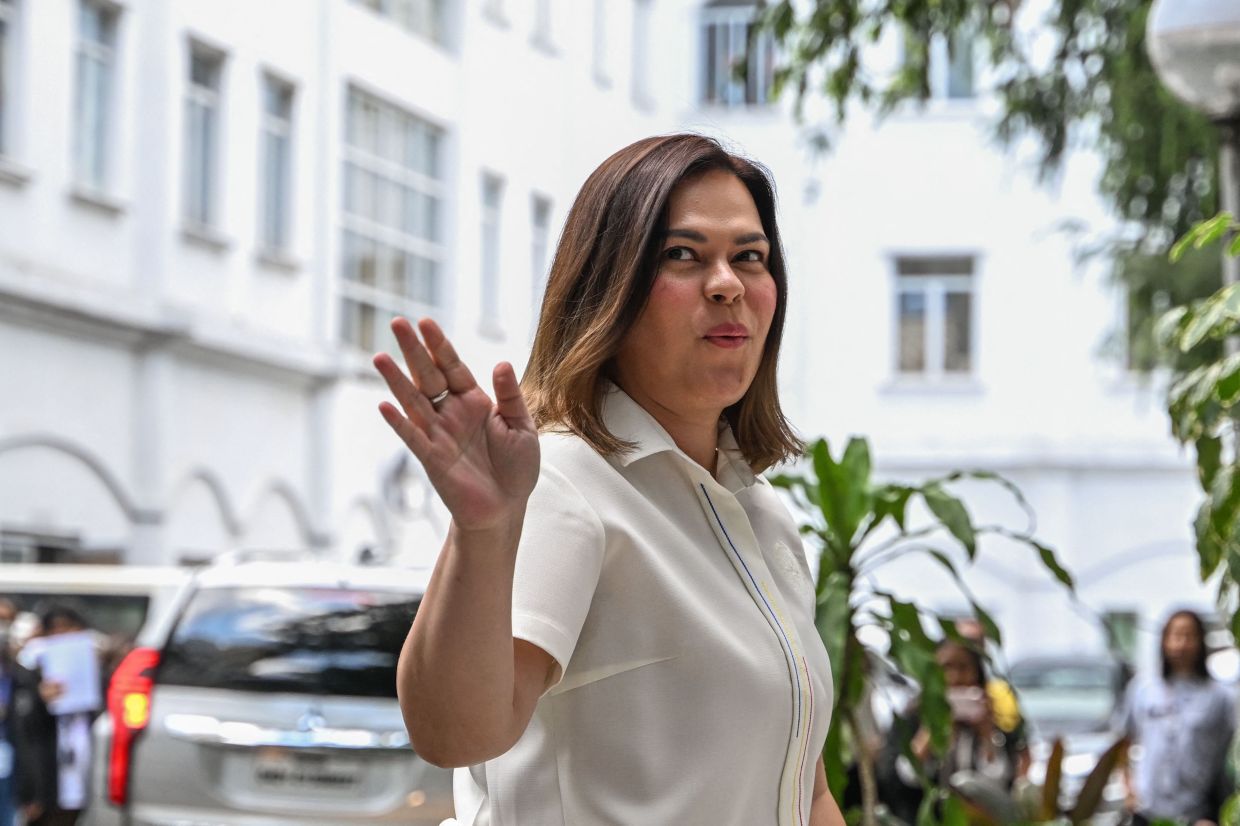
Vice President Sara Duterte remains outside the Philippines throughout this week as her impeachment trial advances in the capital, according to confirmation from the presidential palace on Tuesday. Palace spokesperson Claire Castro revealed that President Ferdinand Marcos Jr had greenlit the vice president's extended overseas journey through the Office of the Executive Secretary, authorising her absence from July 16 through the final day of the month.
The approved itinerary encompasses a series of European destinations as well as the Middle East, with Duterte visiting Qatar, Germany, the United Kingdom, Northern Ireland, and the Netherlands during her authorised sojourn abroad. Officials characterised the journey as a personal undertaking rather than an official state visit, though the circumstances surrounding the trip's timing have drawn scrutiny given the concurrent impeachment proceedings unfolding in the Philippine capital.
Duterte's current confirmed location is The Hague, where she has reportedly been attending to family matters. Her father, former President Rodrigo Duterte, has been held in the Dutch city since March of last year pending trial before the International Criminal Court scheduled for November 30 this year. The former leader faces allegations of crimes against humanity in connection with extrajudicial killings that occurred during his administration's intensified anti-drug and anti-criminal operations spanning 2011 through 2019, periods when he served initially as Davao City mayor before his elevation to the presidency.
The detention of Rodrigo Duterte followed Philippine authorities' arrest in March 2025 pursuant to an International Criminal Court warrant. The charges centre on his alleged indirect involvement as a co-perpetrator in thousands of deaths that occurred during the controversial campaigns that defined much of his political career. The ICC investigation and subsequent legal proceedings have attracted significant international attention and raised complex questions about presidential accountability and jurisdiction that reverberate throughout the Southeast Asian region.
The timing of Sara Duterte's departure assumes heightened political significance given the mounting challenges she faces domestically. The impeachment process against the vice president represents a dramatic escalation in Philippine political tensions, reflecting deep fissures within the government and raising questions about institutional stability at the highest levels of state. Her ability to remain abroad while the trial proceeds underscores both the complexities of Philippine constitutional law regarding vice-presidential privileges and the contentious nature of current political disputes.
Defence counsel Michael Poa addressed journalists prior to Tuesday's trial proceedings, confirming Duterte's presence in The Hague while indicating her anticipated return to the country in the near term. The lawyer's measured comments about her whereabouts appeared designed to acknowledge her temporary absence without suggesting any attempt to evade her legal obligations or courtroom responsibilities. The precise timing of her return remains unspecified, though her itinerary suggests she will conclude her approved travels by July 31.
The approval of Duterte's extended foreign travel by President Marcos raises intriguing constitutional and political questions about executive prerogatives during periods of intense institutional strain. The president's decision to authorise her journey, despite the simultaneity with her impeachment trial, suggests a calculation that permitting her temporary departure serves broader political interests or represents an exercise of discretion within his constitutional authority. Such decisions invariably carry implications for how observers assess the administration's management of governance during periods of significant internal political pressure.
For Malaysian observers and broader Southeast Asian political analysts, the Duterte impeachment proceedings and the family's entanglement with international criminal justice mechanisms illuminate persistent challenges facing the region's democracies. The case demonstrates how legacy issues from previous administrations continue generating profound institutional consequences, potentially destabilising governance and complicating diplomatic relationships. The intersection of domestic accountability mechanisms with international legal processes creates unprecedented pressures on government systems still developing robust institutional frameworks for managing such complexities.
The ongoing ICC trial of former President Rodrigo Duterte adds another layer of complication to an already fraught political environment. The international dimensions of his legal jeopardy, coupled with his daughter's domestic political troubles, suggest that Philippine governance faces simultaneous pressures from multiple institutional directions. This multifaceted challenge reflects broader regional trends whereby previous administrations' policies generate extended legal and political consequences that constrain subsequent governments' operational flexibility and policy autonomy.
The approval of Sara Duterte's travel despite her impeachment trial indicates that Philippine political institutions retain sufficient stability to accommodate executive discretion even amid serious constitutional disputes. Whether this reflects institutional resilience or normative accommodation of executive prerogative ultimately depends on how the impeachment process itself concludes and whether it establishes meaningful consequences for high government officials. The outcome carries implications extending beyond the Philippines, influencing perceptions of executive accountability and institutional constraint throughout the wider Southeast Asian region.

