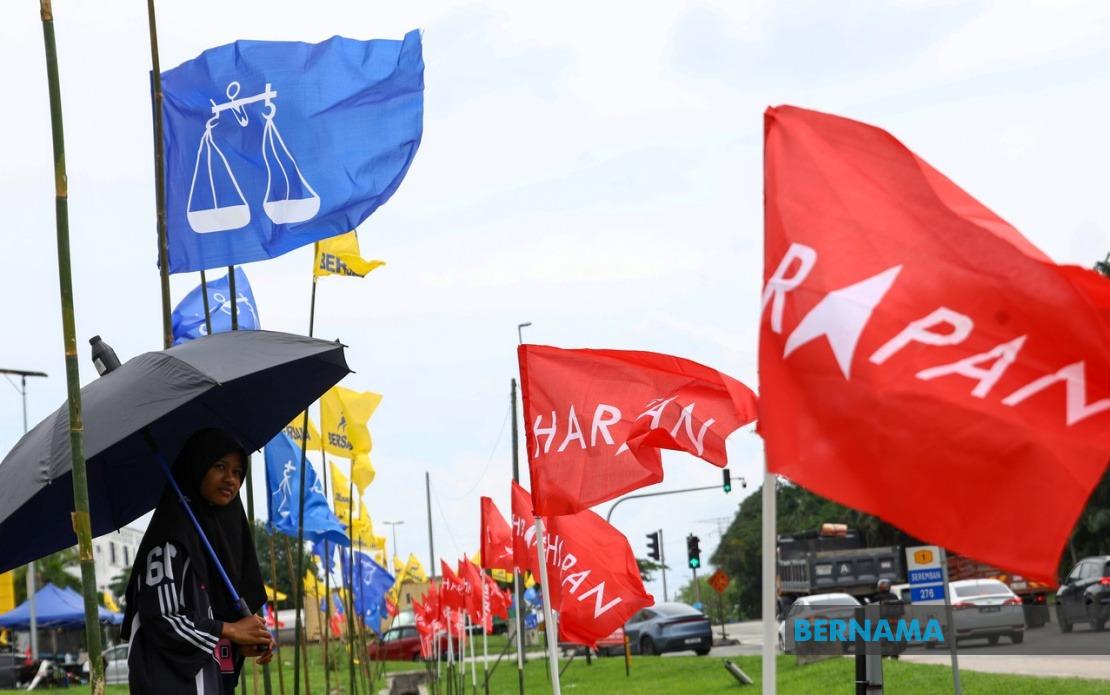
Pakatan Harapan's performance in the Johor state election carries significance beyond ordinary electoral politics, according to DAP secretary-general Anthony Loke, who contends that a decisive PH showing is essential for preserving institutional oversight and preventing authoritarian concentration of power at the state level. Speaking at a gathering in Kluang on July 3, Loke articulated a vision of competitive democracy in which multiple political forces maintain equilibrium, each capable of holding the other accountable through parliamentary scrutiny and public discourse.
The DAP leader's intervention underscores a broader concern animating opposition coalition strategy ahead of the July 11 Johor ballot. When any single political entity accumulates unchecked legislative supermajorities, Loke warned, the structural safeguards that distinguish functioning democracies from vehicles for patronage and executive overreach begin to erode. Without viable parliamentary opposition or competing power bases within the state assembly, governments face diminished incentives to explain themselves to constituents or respect institutional norms that constrain arbitrary action.
This framing reflects a distinctly Malaysian interpretation of democratic theory, one shaped by the country's recent political turbulence and experiences of executive power abuse at both federal and state levels. The concept of "checks and balances" resonates within Malaysian civil society precisely because Malaysians have witnessed periods of governmental unaccountability, weaponised institutions, and erosion of judicial independence. For many voters, particularly urban and educated constituencies, the arithmetic of legislative seats translates directly into questions about whether their interests face genuine representation or mere tokenism.
Pakatan Harapan's decision to contest all 56 state assembly constituencies reflects confidence in this narrative, and also pragmatic calculation about seat distribution. The coalition, which encompasses PKR, DAP, and Amanah, recognises that partial participation forfeits opportunities to construct majorities and would concede uncontested territory to rival coalitions. However, fielding a full slate also exposes candidates to concentrated attack and raises expectations for performance; anything short of major gains risks demoralising supporters and inviting claims of strategic failure.
The broader electoral context shapes how these messages land. Johor, Malaysia's southernmost peninsula state, has historically alternated between Barisan Nasional and opposition control, making it a bellwether for national political sentiment. A decisive PH performance would signal that the coalition retains capacity to compete seriously for state power and represent an alternative to the incumbent Perikatan Nasional administration. Conversely, a weak showing would encourage narrative among opponents that PH's federal recovery remains fragile and geographically concentrated.
Loke's emphasis on preventing single-coalition dominance implicitly acknowledges that Johor voters may harbour concerns about opposition rule as well. By positioning checks and balances as the organising principle of PH's campaign rather than simply promising patronage or policy delivery, DAP attempts to meet voters on the terrain of institutional governance and democratic hygiene. This rhetorical strategy assumes that Malaysian voters have become sufficiently sophisticated about political risk to respond to arguments about distributed power and institutional constraints.
The attendance of senior DAP figures including deputy national chairman Nga Kor Ming and deputy secretary-general Steven Sim Chee Keong at the Kluang event signalled the party's investment in the campaign. DAP has long positioned itself as the most ideologically committed to parliamentary democracy and institutional reform within PH, making such messaging consistent with the party's brand positioning. The party's digital footprint and urban support base make appeals to democratic governance particularly resonant with core constituencies.
With 172 candidates competing across the 56 seats, the July 11 election will test whether voters in Johor prioritise the institutional and constitutional arguments that opposition parties emphasise, or whether bread-and-butter issues, local grievances, and incumbency effects dominate voter calculus. Early voting scheduled for July 7 may attract urban professionals and migrant workers who respond more readily to abstract democratic principles, while later voting could reflect more diverse demographic participation. The distribution of PH support across these voting periods may offer early signals about the coalition's true standing.
For Southeast Asian observers, the Johor election carries resonance beyond Malaysia's borders. The region has experienced democratic backsliding in recent years, with Thailand, Myanmar, and Cambodia offering cautionary examples of how concentrated power erodes institutional checks. Malaysia's ability to maintain viable opposition competition, functioning courts, and electoral integrity despite pressures in that direction distinguishes it within Southeast Asia and depends partly on state-level contests like Johor where alternatives to incumbent coalitions remain electorally plausible. A PH victory that translates into meaningful legislative oversight would reinforce pluralistic governance traditions across Malaysia.
The stakes framing that Loke and other PH leaders employ carries implicit warning that voters must recognise the consequences of their choices. This messaging occasionally strains credibility when opposition parties themselves have been accused of using state power arbitrarily, yet the underlying logic about distributed power and institutional competition retains force. Malaysian democracy's future trajectory depends substantially on whether multiple coalitions can take turns holding power without fundamentally destabilising institutions or reducing state apparatus to purely partisan instruments.

