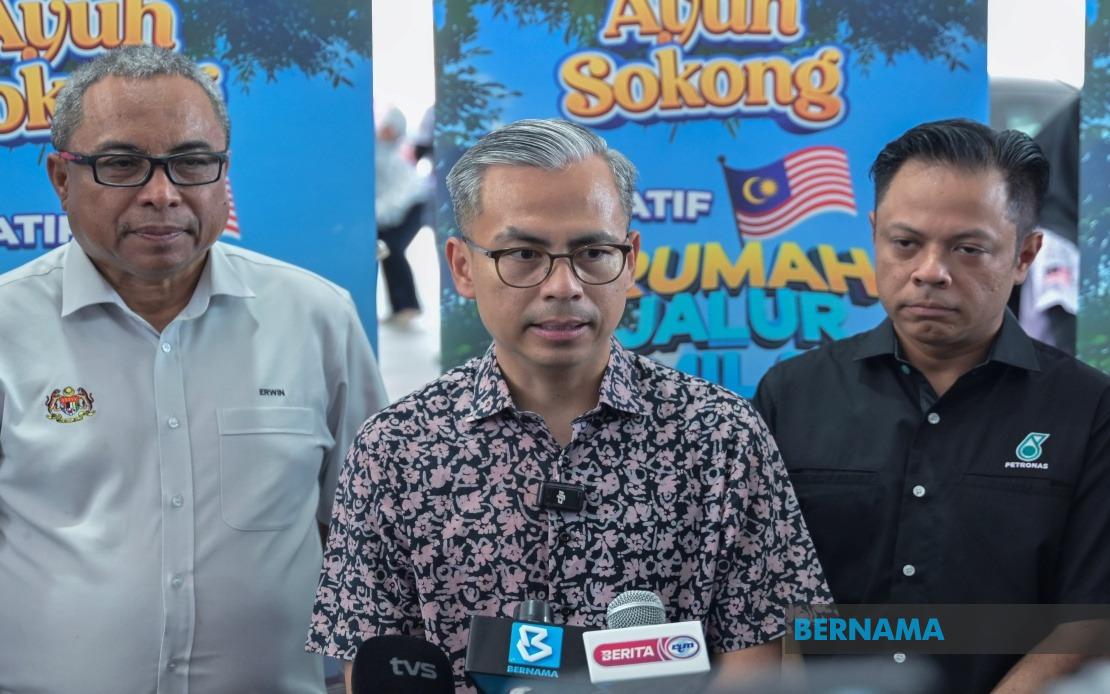
Pakatan Harapan has signalled its receptiveness to Barisan Nasional's willingness to discuss seat arrangements for the forthcoming Melaka state election, viewing the coalition's flexibility as a development warranting serious examination. The statement by PH communications director Datuk Seri Fahmi Fadzil came after BN chairman Datuk Seri Dr Ahmad Zahid Hamidi indicated earlier this week that his coalition remained amenable to discussions about seat allocation and even potential exchanges with political partners competing in the state polls.
Fahmi framed the development as potentially beneficial not only for electoral strategy but for the broader political stability of Melaka and the nation as a whole. Speaking to reporters in Kuala Lumpur on August 9 following his participation in a dengue prevention initiative in the Lembah Pantai constituency, the Communications Minister suggested that this cooperative approach deserved serious consideration by all stakeholders. He underscored that the overture represented a tangible opportunity for the two major coalitions to engage constructively on the matter, provided both parties approached discussions with genuine intent.
The dynamics at play in Melaka reflect the complex power balance currently shaping Malaysian state politics. With BN commanding 21 seats in the State Legislative Assembly against PH's five, Fahmi acknowledged the arithmetic reality underlying any prospective negotiations. This significant disparity in representation naturally shapes the parameters of any potential seat-sharing arrangement, yet the mere willingness to discuss alternatives suggests both coalitions recognise the potential benefits of strategic cooperation in certain constituencies. Such flexibility contrasts with the zero-sum approach that characterised earlier periods of Malaysian political competition.
Keadilan Melaka chairman Yang Berhormat Adam Adli has reportedly engaged in direct communications with Melaka Chief Minister Datuk Seri Ab Rauf Yusof regarding the distribution of state assembly seats, indicating that exploratory discussions are already underway at the state level. These preliminary talks between key figures from both coalitions suggest that serious groundwork is being laid for more formal negotiations should both parties decide to proceed. The involvement of state-level leaders in these discussions implies that practical considerations specific to Melaka's political geography and electoral dynamics are being factored into the conversation.
Ahmad Zahid's position, articulated just prior to Fahmi's remarks, established clear parameters for any negotiations. The BN chairman stipulated that discussions should be conducted with transparency and genuine commitment from all participating parties, and that any arrangement must preserve the integrity of seat allocations already won by individual coalition members. He further indicated that BN's fundamental principle was respect for the electoral victories achieved by partner parties, rejecting any notion that seats could be arbitrarily transferred without consent or legitimate rationale. This framework suggests that while flexibility exists, it operates within defined boundaries that protect the autonomy and achievements of individual political actors.
The possibility of managing seat distribution through discussions at both state and federal governmental levels adds another dimension to the negotiations. Fahmi's reference to the capacity for resolution through multiple administrative channels indicates that solutions need not be monolithic but could involve coordinated approaches across different levels of governance. This suggests that any eventual agreement might incorporate various mechanisms, from direct seat swaps in particular constituencies to broader understandings about electoral cooperation in specific regions or demographics. Such flexibility could enable both coalitions to claim meaningful outcomes from negotiations.
Melaka holds particular significance in the Malaysian political landscape given its recent electoral volatility and its strategic location as a swing state capable of influencing broader national political dynamics. The state has experienced considerable political turbulence in recent years, with multiple leadership transitions and shifting coalition arrangements. Current discussions about seat distribution thus occur against a backdrop of genuine uncertainty about voter preferences and shifting community priorities. Any coalition arrangement that emerges from negotiations will carry implications extending beyond the state boundaries, potentially signalling broader trends in how Malaysia's two largest political groupings are willing to cooperate or compete.
The emphasis on honesty and sincerity in negotiations, as highlighted in Ahmad Zahid's statement, underscores the importance of trust-building in Malaysian political contexts where coalition arrangements have historically faced challenges. Past experiences with power-sharing arrangements have sometimes ended acrimoniously when parties felt misled or undervalued within broader coalitions. The explicit commitment to transparent, good-faith discussions therefore represents an attempt to establish a different precedent, one where both parties respect each other's interests and operate according to agreed principles. This rhetorical commitment to integrity could help legitimise whatever arrangement eventually emerges.
For Malaysian voters, the trajectory of these negotiations will determine the nature of electoral competition in Melaka. If both coalitions proceed with seat-sharing arrangements, several constituencies may effectively become contested only between BN and PH candidates rather than featuring genuine multi-party competition. Such arrangements can enhance electoral stability and clarity but may also reduce voter choice in certain areas. Conversely, if negotiations break down and return to all-out competition, Melaka could witness a more fragmented electoral landscape with implications for eventual seat distribution and state government formation.
The economic and developmental implications for Melaka residents also merit consideration. Periods of coalition cooperation often enable more stable governance and longer-term policy implementation, as reduced internal competition among partners creates space for state governments to focus on delivery and constituent service. By contrast, intense electoral competition can result in policy paralysis as governing coalitions struggle with internal discord. The willingness shown by both BN and PH to explore cooperative arrangements thus potentially creates conditions for more focused state administration in the coming term, though this benefit would only materialise if actual agreements are reached and honoured.
PH's framing of these developments as opportunities to be examined rather than already-decided matters reflects appropriate caution given the preliminary nature of discussions. Senior party leadership clearly wishes to maintain flexibility and avoid premature commitment while simultaneously signalling openness to broader cooperation. This balanced approach allows PH to explore potential advantages from seat-sharing while retaining the option to pursue independent strategies should negotiations prove unpromising. The party's communications chief therefore performed a delicate rhetorical balancing act, endorsing cooperation in principle while preserving strategic options for tactical decision-making.
Looking forward, the success of Melaka negotiations will likely establish patterns and precedents for how BN and PH handle seat distribution discussions in other state elections scheduled in coming years. Malaysia's federation includes regular rotations of state elections, and lessons learned from Melaka could influence approaches to Selangor, Kedah, Penang, and other crucial states. The flexibility shown by both major coalitions in Melaka could therefore portend a broader shift toward more pragmatic, interest-based negotiations in Malaysian electoral politics, moving away from purely confrontational approaches toward arrangements based on realistic assessments of mutual interests and existing electoral realities.

