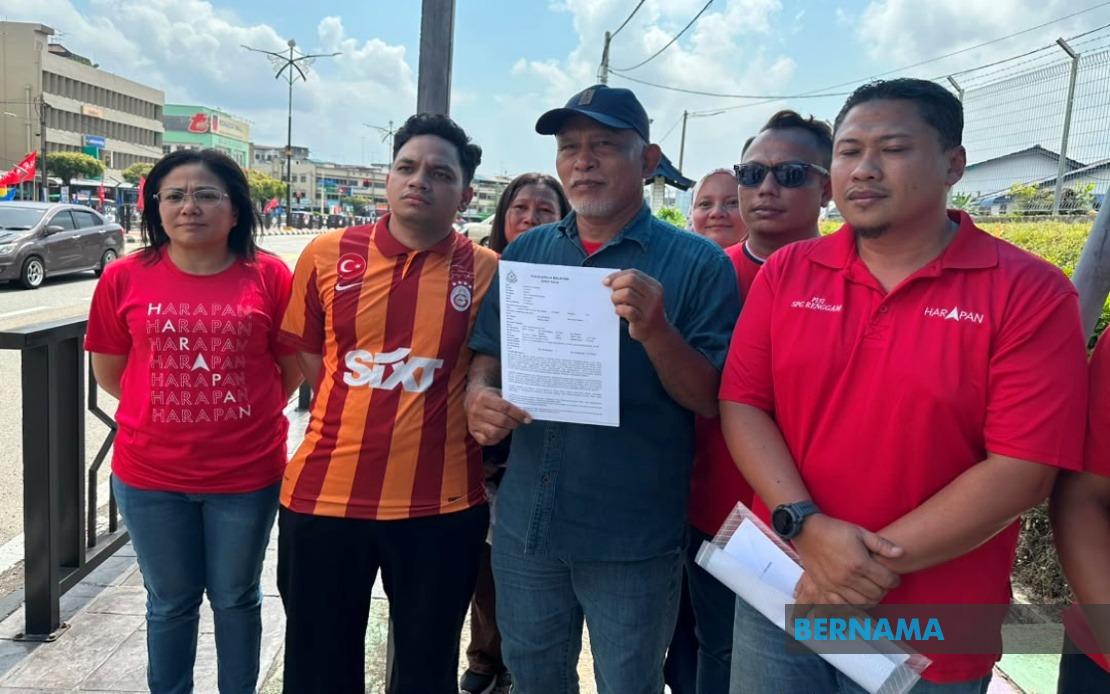
A representative backing the Pakatan Harapan candidate in the Machap constituency has escalated election-related tensions by submitting a police complaint against Johor Menteri Besar Datuk Onn Hafiz Ghazi, alleging misuse of Technical and Vocational Education and Training students during campaigning activities. The report was filed at the Simpang Renggam district police headquarters on July 9, amid the final week of campaigning for the state assembly election scheduled for Saturday, which will see 172 candidates contesting 56 seats across Johor.
According to Khiru Nasir Rohani, the PH candidate's representative and Simpang Renggam Amanah deputy division chief, there had been an orchestrated push to mobilise TVET students from institutions across the state to participate in politically driven events. These gatherings, he contended, were designed to consolidate support for Barisan Nasional candidates rather than serve any legitimate educational purpose. The allegation strikes at a sensitive nerve in Malaysian electoral politics: the perceived weaponisation of state institutions and public resources for partisan advantage.
The specific incident that triggered the complaint involves TVET students who were purportedly instructed to attend a programme in Kluang on July 4. Rather than focusing on technical education or skills development, Khiru Nasir asserts the event functioned as a campaign rally where candidates openly solicited political backing. If substantiated, such conduct would represent a departure from the neutrality expected of state-funded educational institutions and their officials during election periods, raising questions about oversight mechanisms within the vocational training system.
In his formal statement to police, Khiru Nasir identified potential breaches of the Election Offences Act 1954, particularly clauses addressing undue influence and the misappropriation of official position or institutional resources for electoral purposes. These provisions exist precisely to prevent scenarios where students, who may feel unable to decline directives from educational authorities, become unwitting participants in political mobilisation. The distinction matters: attendance that results from subtle coercion or institutional pressure differs fundamentally from voluntary civic engagement.
The complaint encompasses a broader pattern of concern rather than a single isolated occurrence. The allegation suggests a coordinated strategy involving multiple TVET centres, implying systemic rather than spontaneous activity. This dimension has prompted Khiru Nasir to call for involvement from multiple agencies beyond the police, specifically requesting that the Malaysian Anti-Corruption Commission and the Election Commission undertake parallel inquiries to examine the full scope of institutional involvement.
For Malaysia's electoral system, the timing of this complaint underscores ongoing tensions regarding the boundary between government communication and party campaigning. State agencies occupy an ambiguous position during elections: they continue their normal functions while their political leadership campaigns actively for their parties. The challenge deepens when those agencies control access to student populations, whose compliance with directives cannot always be freely given. The allegation thus touches on fundamental democratic principles regarding the protection of vulnerable participants in the electoral process.
The Johor state election itself has been marked by considerable competition and shifting political dynamics. The contest involves significant constituencies and competitive races that could alter the state's political composition. Allegations of institutional misuse, whether ultimately proven or dismissed, influence voter perception of candidate integrity and party governance standards. Voters increasingly evaluate not merely policy platforms but also whether candidates respect procedural norms and democratic conventions.
Vocational education represents a crucial pathway for Malaysian youth seeking practical skills and employment prospects outside the university-centric academic track. TVET institutions depend on institutional credibility and student trust to fulfil their educational mission effectively. When such institutions become venues for political activity, particularly if students lack genuine choice in attendance, the integrity of these vital training centres faces compromise. The reputational stakes extend beyond immediate electoral implications to the long-term effectiveness of vocational training as a national development strategy.
The investigation pathway Khiru Nasir has initiated will likely proceed through standard police procedures, with potential referral to the Election Commission if preliminary findings suggest electoral offences. The MACC's involvement would specifically examine whether official position was abused for improper advantage. These parallel investigations could require interviews with school administrators, student witnesses, and campaign organisers, potentially extending beyond the election period itself. The thoroughness of such inquiries determines whether electoral norms are effectively enforced or merely aspirational.
Institutional responses to such allegations matter significantly for electoral credibility. Both the government and opposition parties maintain an interest in demonstrating that institutions function according to rules rather than political whim. A comprehensive investigation, regardless of its outcome, sends a signal about whether electoral laws operate with teeth or remain symbolic. For voters and observers across Southeast Asia monitoring Malaysian governance standards, this complaint and its resolution reflect the maturity of institutional checks within Malaysia's electoral framework.

