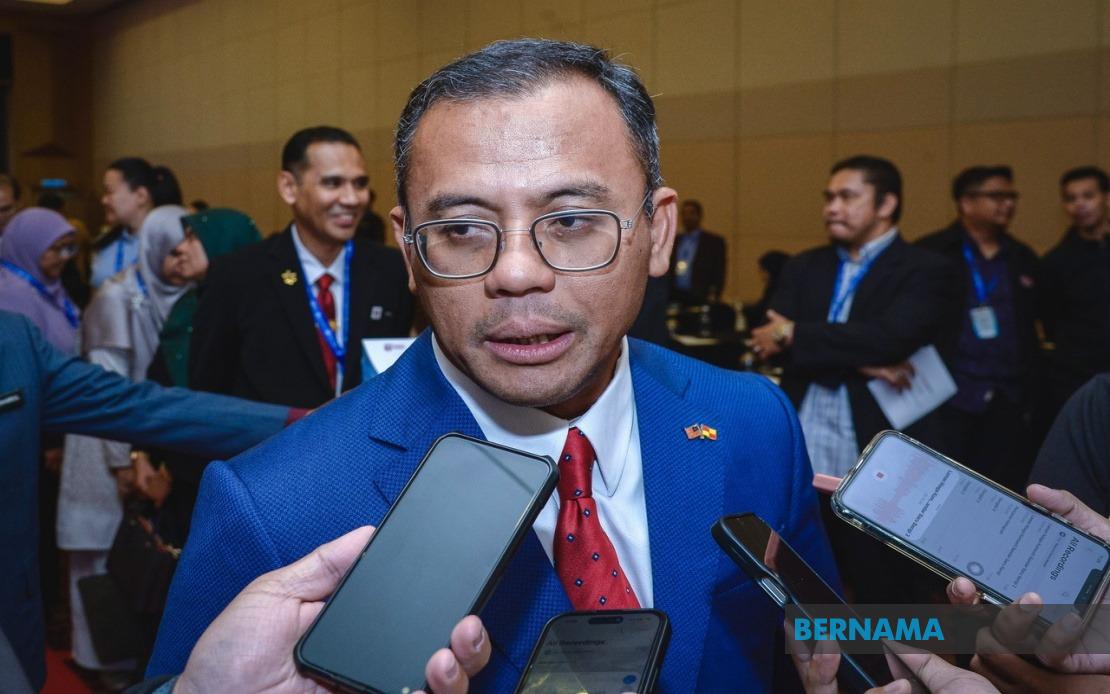
Pakatan Harapan has signalled its willingness to explore political cooperation with other parties and coalitions, provided such arrangements are anchored in two non-negotiable principles: maintaining political stability and safeguarding the people's interests. Datuk Seri Amirudin Shari, the Selangor Menteri Besar and a member of PH's Presidential Council, made this declaration at an event in Bangi, drawing a distinction between the coalition's openness to dialogue and any actual commitment to working arrangements.
Amirudin, who also serves as PKR vice-president, emphasized that PH's threshold for cooperation extends beyond Bersatu and Perikatan Nasional (PN), suggesting the coalition remains pragmatic about potential partners. His language was deliberately measured, framing cooperation not as an ideological alignment but as a transactional arrangement contingent on shared values. This positioning reflects PH's broader post-2022 strategy of maintaining flexibility in Malaysia's fluid political landscape, where coalition formations have become increasingly conditional and temporary.
Crucially, Amirudin firmly denied reports circulating since the previous Friday suggesting that Selangor PH had already begun working arrangements with Bersatu. He stressed that no substantive discussions or decisions involving Bersatu had reached the state party level, effectively closing the door on speculation about imminent alignment at the grassroots. This clarification carries weight in Selangor, the nation's richest state and the political battleground where PH's electoral fortunes often determine its national trajectory.
The timing of these remarks proves instructive. Media reports from the preceding weekend had suggested that both Selangor PH and Bersatu were exploring collaboration, ostensibly to strengthen their respective positions ahead of major electoral contests. The potential cooperation was widely interpreted as defensive positioning, designed to ensure both parties remained electorally competitive and politically relevant as Malaysia heads toward key ballots, including a general election and the Melaka state election.
Amirudin articulated a structured approach to evaluating any potential political arrangements. Rather than unilateral decision-making at the state level, he underscored that matters of cooperation require deliberation at PH's central leadership echelon. This hierarchical process reflects PH's constitutional governance, whereby state-level figures cannot independently commit the coalition to major political repositioning without consensus from the higher party structure. He acknowledged that while various ideas and proposals circulate—many stemming from broader national political realignments or state-specific electoral calculations—these remain preliminary explorations rather than binding commitments.
The conditions Amirudin enumerated for assessing cooperation deserve closer examination. Beyond the headline principles of stability and public welfare, he identified timing and electoral calendars as material considerations. This suggests that PH evaluates potential partnerships through a cost-benefit framework that weighs the electoral cycle. Strategic cooperation months before a state election carries different implications than cooperation announced during a general election campaign, where voter perception becomes paramount and coalition flexibility can damage credibility.
Selangor's political context adds significant dimension to PH's cautious stance. As the coalition's primary bastion and revenue generator, Selangor cannot afford coalition instability or perception of compromised principles. Any arrangement with Bersatu—a party that defected from PH's predecessor Pakatan Rakyat and later challenged PH's 2022 government—carries historical baggage that requires careful management. Voter sentiment in Selangor, which delivered overwhelming support to PH in 2022, could prove unforgiving if the coalition is perceived as abandoning its commitment to reform and clean governance in pursuit of political convenience.
From a national perspective, Amirudin's remarks signal PH's recognition that Malaysia's two-coalition framework—PH versus PN—may prove insufficient for stable governance moving forward. With both coalitions fragmenting internally and independent politicians gaining leverage, smaller alliances and flexible arrangements are reshaping electoral dynamics. PH's public openness to cooperation reflects not weakness but strategic realism about the mathematics of forming stable parliamentary majorities.
The distinction between openness and actual engagement matters significantly. By stating willingness to cooperate while simultaneously denying current arrangements, Amirudin maintains PH's negotiating flexibility without appearing desperate. This positioning preserves PH's reform credentials with urban, younger voters while keeping options open with pragmatic politicians who might seek realignment. For regional observers, it demonstrates how Malaysian political coalitions have evolved beyond rigid ideological blocs into more fluid arrangements responsive to electoral calculations and leadership personalities.
The broader implication for Malaysia's political evolution is noteworthy. If major coalitions increasingly condition cooperation on abstract principles like stability rather than shared ideology, party politics becomes purely transactional. This could either stabilize governance by broadening coalition options, or destabilize it by reducing commitment and coherence. PH's cautious approach suggests the latter concern weighs heavily—hence the emphasis on central leadership oversight rather than ad hoc state-level agreements.
Looking ahead, Amirudin's statements may serve as a policy foundation for PH during upcoming electoral cycles. By publicly articulating criteria for cooperation—stability and public interest—the coalition establishes benchmarks that potential partners must accept. Any future arrangement with Bersatu or other parties will be judged against these stated principles, constraining the political narrative these parties can deploy to justify cooperation. For Malaysian voters, particularly in Selangor, this represents an attempt to maintain accountability even as political flexibility increases.

