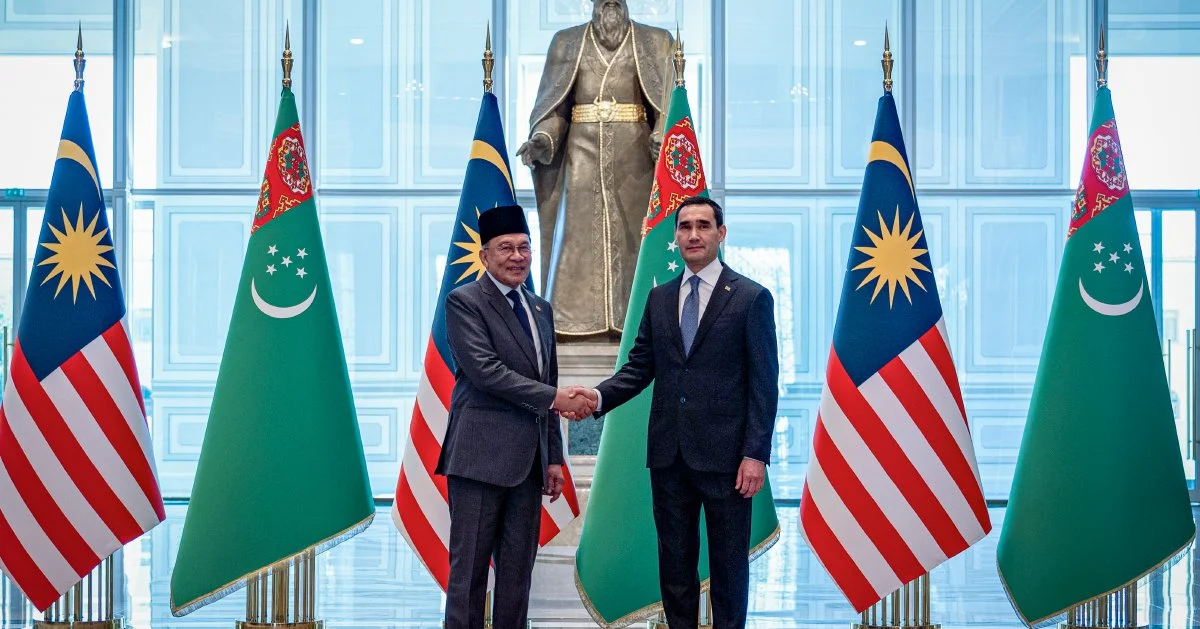
Malaysia's national energy champion Petronas is positioning itself as a linchpin in revitalised bilateral relations between Kuala Lumpur and Turkmenistan, with the company's expanding operations in the resource-rich Central Asian nation providing tangible momentum to strategic cooperation efforts. The timing is significant: Prime Minister Datuk Seri Anwar Ibrahim's recent official visit to Ashgabat has created a diplomatic backdrop that allows Petronas to accelerate its engagement in one of the world's largest gas reserves, marking a shift in Malaysia's energy diplomacy beyond traditional Southeast Asian markets.
Petronas has cultivated a substantial presence in Turkmenistan over several decades, establishing itself as a reliable international operator in the country's upstream sector. This historical foundation has become invaluable as both nations seek to deepen economic integration. Rather than starting from scratch, Petronas can leverage existing operational expertise, local relationships, and established infrastructure to unlock fresh opportunities that benefit Malaysian energy security and contribute to Turkmenistan's development objectives. The company's track record in managing complex international projects positions it uniquely to navigate the regulatory and commercial landscape of Central Asia.
The broader geopolitical context cannot be overlooked. Turkmenistan sits atop vast hydrocarbon reserves that remain largely underexploited due to geographical constraints and limited international investment flows. For Malaysia, diversifying energy partnerships beyond traditional suppliers in Southeast Asia and the Middle East reduces supply chain vulnerability and opens alternative revenue streams. Petronas's involvement signals Malaysia's commitment to becoming a significant player in Central Asian energy markets, a region that has historically been dominated by Russian, Chinese, and Western operators.
Energy cooperation between the two nations extends beyond extraction. The relationship encompasses downstream opportunities, including gas-to-liquids technology, petrochemical development, and refining capacity building. Petronas brings technical expertise and management capabilities that can assist Turkmenistan in maximising returns from its natural resources whilst moving up the value chain. Such partnerships typically generate knowledge transfer, training opportunities, and infrastructure development that benefit the broader Turkmenistan economy.
From a Malaysian perspective, securing reliable long-term energy supplies from Turkmenistan addresses a critical national interest. As Southeast Asia's energy consumption continues to climb, Malaysia cannot rely solely on dwindling domestic reserves and regional suppliers. Turkmenistan's proven gas reserves exceed 17 trillion cubic metres, making it one of the world's top reserve holders. Access to these reserves, either through direct investments or long-term supply agreements facilitated by Petronas's operational presence, strengthens Malaysia's energy independence and reduces inflationary pressures on domestic utilities and manufacturing sectors.
The economic implications extend to Malaysian businesses beyond the energy sector. Petronas's expansion in Turkmenistan creates demand for specialised services, equipment suppliers, and technology providers across Malaysia's industrial ecosystem. Engineering firms, manufacturing companies, and logistics providers can participate in supporting Petronas operations, generating employment and export revenues. The multiplier effects of large-scale energy projects typically extend throughout the broader economy, making Petronas's Central Asian push relevant to Malaysian policymakers focused on economic diversification and job creation.
Prime Minister Anwar Ibrahim's diplomatic visit provides crucial political cover for intensified energy negotiations. High-level political endorsement signals to Turkmenistan's leadership that Malaysia views the relationship as strategically important, encouraging Turkmen officials to prioritise Malaysian investors and operators over competing international suitors. This diplomatic momentum often translates into regulatory flexibility, priority access to exploration blocks, and preferential contract terms that purely commercial negotiations might not secure. The visit essentially framed Petronas's energy ambitions within a broader Malaysia-Turkmenistan partnership narrative.
However, Petronas faces competitive pressures from established players already entrenched in Turkmenistan. Russian, Chinese, and European energy companies possess their own geopolitical advantages and longer operational histories in Central Asia. Petronas must differentiate itself through superior operational efficiency, transparent governance practices, and genuine commitment to Turkmenistan's long-term development goals. The company's reputation for professional management and adherence to international standards can become a competitive advantage in markets where governance concerns sometimes impede foreign investment.
Looking forward, the Petronas-Turkmenistan partnership may catalyse broader Malaysian engagement across Central Asia. Success in Turkmenistan could create pathways for Malaysian expansion in neighbouring Kazakhstan and Uzbekistan, potentially transforming Malaysia's energy profile from a regional player into a globally distributed energy enterprise. This geographical diversification reduces concentration risk and positions Malaysia as an indispensable intermediary for Asian-European energy trade flows.
The trajectory of Malaysian-Turkmenistan relations increasingly depends on Petronas's ability to translate operational presence into tangible commercial outcomes. For Malaysia, this represents an opportunity to strengthen its position in global energy markets whilst supporting Central Asian development. For Turkmenistan, Petronas offers expertise and international credibility that can unlock value from vast hydrocarbon reserves. The convergence of Malaysian strategic interests and Petronas's operational capabilities suggests this energy partnership will deepen significantly over the coming years, reshaping Malaysia's international energy footprint.

