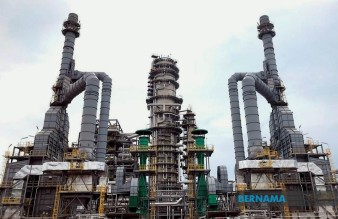
Malaysia's proposed petroleum reserve should not operate in isolation but rather serve as one pillar within a comprehensive economic security architecture that addresses vulnerabilities across multiple strategic sectors, according to a leading economist's assessment of Prime Minister Datuk Seri Anwar Ibrahim's initiative to establish a national oil stockpile. The proposal, intended to shield the nation from global supply disruptions and geopolitical conflicts, has sparked broader questions about how reserves fit into Malaysia's long-term resilience planning.
Mohd Sedek Jantan, director of investment strategy and country economist at IPPFA Sdn Bhd, argues that the focus on petroleum alone overlooks the reality that economic shocks may emerge from entirely different sectors. Future crises could originate from food supply interruptions, disruptions to critical mineral flows, semiconductor shortages or digital infrastructure failures rather than from oil markets. This diversified threat landscape demands a correspondingly multifaceted defensive approach rather than concentration on a single commodity. The economist emphasises that resilience cannot be built by addressing one sector while leaving others exposed to systemic risk.
The fundamental principle underpinning this assessment reflects a crucial lesson from international economic history: stockpiles themselves do not automatically create resilience. Instead, their effectiveness multiplies when integrated within a broader, coordinated framework that touches multiple dimensions of national economic security. A petroleum reserve sitting in isolation, however large, offers only limited protection if other critical vulnerabilities remain unaddressed. This perspective challenges policymakers to think systemically about economic defence rather than compartmentally.
Mohd Sedek contends that success should not be gauged by counting barrels stored but rather by measuring whether the initiative genuinely strengthens Malaysia's capacity to absorb and recover from future geoeconomic shocks. This reframing shifts evaluation from a quantitative metric focused on inventory levels to a qualitative assessment centred on functional resilience. The effectiveness of a petroleum reserve depends not on its size alone but on how seamlessly it integrates with complementary measures across food security, supply chain diversification, critical mineral sourcing and technological infrastructure.
Food security deserves equivalent priority to energy security within Malaysia's strategic planning, the economist maintains, particularly given the nation's significant reliance on imported foodstuffs for essential staples. Disruptions to global food supplies carry immediate and severe consequences for inflation rates, household purchasing power and social stability. When international food prices spike or supply chains fracture, the impact percolates rapidly through household budgets and consumer confidence, potentially triggering broader economic instability. Malaysia's vulnerability in this domain rivals or exceeds its exposure to energy market fluctuations, yet it typically receives less strategic attention in policy circles.
Reliable energy access remains undeniably essential to support Malaysia's manufacturing base, transportation networks and industrial production capabilities. Without stable energy supplies, the entire economic foundation supporting jobs and exports becomes compromised. However, this critical reality should not eclipse the parallel importance of other sectors that equally underpin national prosperity. The economist stresses that energy security constitutes one component of a multisectoral resilience architecture rather than its dominant centrepiece.
The practical implementation of a petroleum reserve requires clear foundational principles to maximise its value. First, policymakers must explicitly define the reserve's purpose, distinguishing between legitimate strategic stockpiling intended to maintain economic function during genuine supply crises and inappropriate price-manipulation efforts designed to artificially influence short-term market dynamics. A reserve designed for genuine supply security serves the national interest; one designed to influence commodity prices becomes a risky financial speculation vehicle. This distinction shapes all subsequent decisions about reserve size, funding and management protocols.
Second, the government should establish a flexible governance framework capable of evolving as strategic challenges shift. Today's petroleum vulnerability may give way tomorrow to critical mineral shortages, semiconductor supply breakdowns or digital infrastructure failures. Rather than constructing a rigid petroleum-specific reserve system, Malaysia should develop an adaptable methodology for identifying emerging vulnerabilities and allocating resources accordingly. This approach builds institutional capacity to respond to unforeseen threats rather than locking resources into responses to yesterday's threats.
Third, any reserve implementation must satisfy rigorous commercial and fiscal sustainability criteria. Decisions concerning reserve scale, financing arrangements, storage infrastructure and governance structures should rest on detailed cost-benefit analysis ensuring that public resources generate genuine long-term value rather than becoming a drain on national finances. Poorly designed reserves may consume significant capital while providing minimal practical security benefits. The economist emphasises that sound financial management underpins genuine strategic security.
International precedents offer instructive models for Malaysia's consideration. Japan has demonstrated how strategic reserves function most effectively when integrated with diversified supplier networks, resilient logistics infrastructure and robust public-private sector coordination. Rather than storing large quantities of a single commodity, Japan emphasises supply chain redundancy, alternative sourcing relationships and collaborative planning involving government, industry and trading partners. This integrated approach provides more comprehensive security than stockpiles alone could achieve. Malaysia might similarly explore how reserves complement supply diversification strategies and enhanced coordination mechanisms.
The broader strategic implication extends beyond petroleum to reshape how Malaysia conceptualises economic security itself. Geoeconomic competition increasingly involves weaponising dependencies across multiple sectors rather than concentrating on single-point vulnerabilities. A sophisticated economic security strategy must therefore address these multidimensional threats through correspondingly comprehensive defences spanning energy, food, raw materials and technology. Petroleum reserve development offers an opportunity to establish this integrated security framework rather than merely addressing one narrow concern.
Implementing Mohd Sedek's vision requires elevating economic security from a peripheral policy consideration to a central strategic priority receiving resources and institutional coordination equivalent to national defence. This reorientation demands that relevant government agencies, relevant industry participants and academic institutions collaborate in identifying vulnerabilities, developing integrated responses and maintaining adaptive capacity as global economic conditions evolve. The petroleum reserve initiative, properly conceived, could catalyse this necessary institutional realignment while simultaneously providing practical protection against near-term energy market disruptions.

