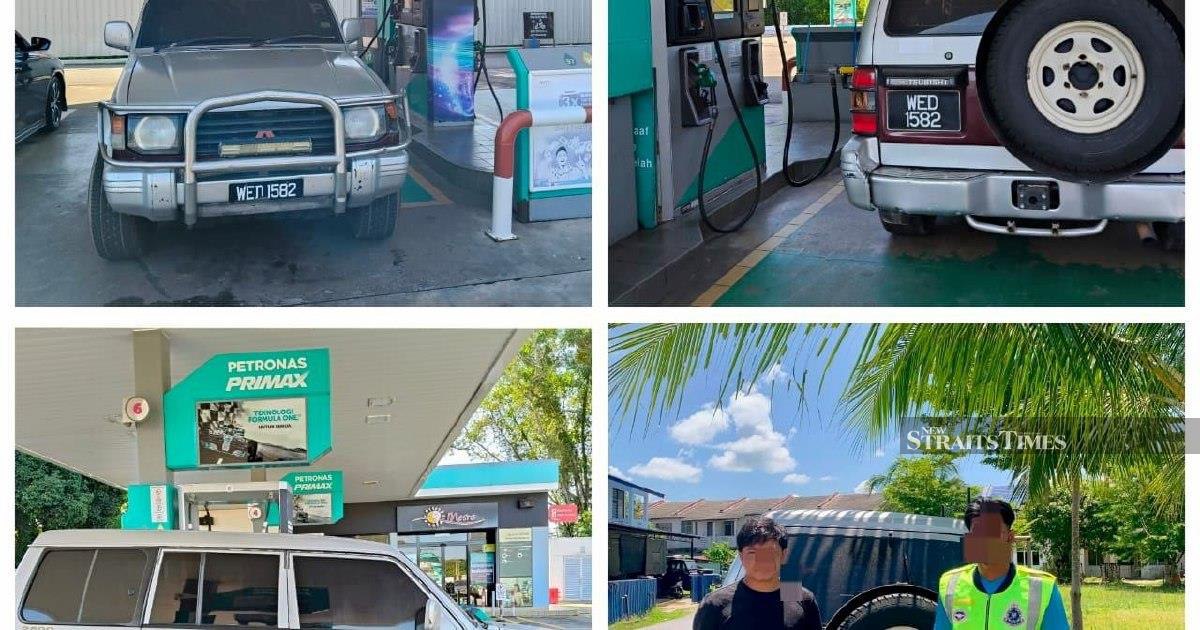
Law enforcement officers apprehended a 36-year-old suspect at a petrol station in Rantau Panjang yesterday, acting on suspicions that he was engaged in a pattern of fuel procurement for illicit border trade with Thailand. The arrest highlights ongoing challenges facing Malaysian authorities in combating petrol smuggling operations along the permeable northern frontier, where price differentials between the two nations continue to incentivise illegal cross-border trafficking.
Rantau Panjang, a key transit point in Kelantan's border district with Thailand, has long been identified as a hotspot for smuggling activities. The relatively close proximity to Thai territory and the established network of informal trading routes make the location particularly attractive for operators seeking to move subsidised Malaysian fuel across the border. This latest arrest underscores the persistence of such operations despite increased enforcement efforts by customs and border agencies.
The circumstances of the arrest reveal a calculated approach to fuel smuggling. Rather than attempting a single large-scale transaction that might trigger scrutiny from petrol station staff or monitoring authorities, the suspect allegedly adopted a multi-trip strategy, making repeated visits to accumulate quantities of fuel that could subsequently be transported. This method aims to evade detection by distributing purchases across separate transactions and timeframes, a tactic that smuggling networks have increasingly adopted to circumvent regulatory safeguards.
Fuel subsidies remain a critical factor driving smuggling along Malaysia's northern border. The significant price gap between Malaysian petrol, benefiting from government subsidisation, and Thai retail fuel creates powerful economic incentives for cross-border traders. Since Malaysia spends billions annually supporting fuel prices domestically, diversion of subsidised petrol to neighbouring countries represents a substantial drain on public resources and undermines the intended beneficiaries of the subsidy programme.
The Thai side of the equation compounds the problem. Thailand's petrol prices, whilst not as steeply elevated as some regional neighbours, remain substantially higher than Malaysian pump prices, making Malaysian fuel an attractive commodity for Thai retailers and distributors seeking cost advantages. This price differential essentially transforms the border into a de facto market where smuggling becomes a rational economic decision for those willing to accept the legal and operational risks.
Border security agencies have intensified operations in recent years to stem the flow of contraband fuel. However, the distributed nature of smuggling networks—with numerous small operators making sporadic runs rather than relying on centralised distribution—complicates enforcement. Each individual smuggler operates independently, making it difficult to dismantle entire organisations. The arrest of a single operator, whilst tactically important, addresses only a fraction of the broader trafficking problem.
Automobile fuel smuggling differs from other border contraband in significant ways. The physical characteristics of petrol—its volatility, flammability, and the specialised containers required for safe transport—create inherent operational constraints. Smugglers cannot simply walk across borders with contraband in ordinary bags. Instead, they typically employ vehicles with specially modified tanks or jerry cans, which themselves become investigative markers that alert border officials. This makes the logistics of fuel smuggling more visible than some other illicit goods, yet operations persist.
The case raises questions about petrol station compliance procedures. Staff at fuel retailers bear responsibility for identifying and reporting suspicious patterns of purchasing behaviour, such as customers making unusually large or frequent purchases, particularly if such activity occurs during specific time windows or involves cash payments. While petrol station franchisees and employees cannot be expected to conduct law enforcement investigations independently, their frontline position makes them valuable information sources for official agencies.
Prosecution outcomes in smuggling cases have traditionally involved meaningful custodial sentences and substantial fines, intended to deter participation in such networks. However, the economics of smuggling often make individual penalties appear manageable costs of business for those involved in the trade at scale. This suggests that enforcement alone, without complementary measures addressing the underlying price differential or enhancing border surveillance technology, may prove insufficient to eliminate the problem entirely.
Regional context underscores the difficulty of tackling cross-border fuel smuggling through domestic action alone. Both Malaysia and Thailand have formal trade relationships and numerous legitimate economic linkages, yet these same border corridors facilitate illegal activities. Coordinated bilateral initiatives targeting smuggling networks, intelligence sharing between customs authorities, and harmonised enforcement approaches could potentially yield better outcomes than unilateral crackdowns.
Looking forward, the arrest at Rantau Panjang serves as a reminder that Malaysia's subsidy programme, whilst economically significant for domestic consumers, creates distortions that fuel illegal cross-border commerce. Whether future policy adjustments might address these structural incentives, or whether enforcement will continue to rely primarily on apprehending individual smugglers, remains an open question for policymakers.

