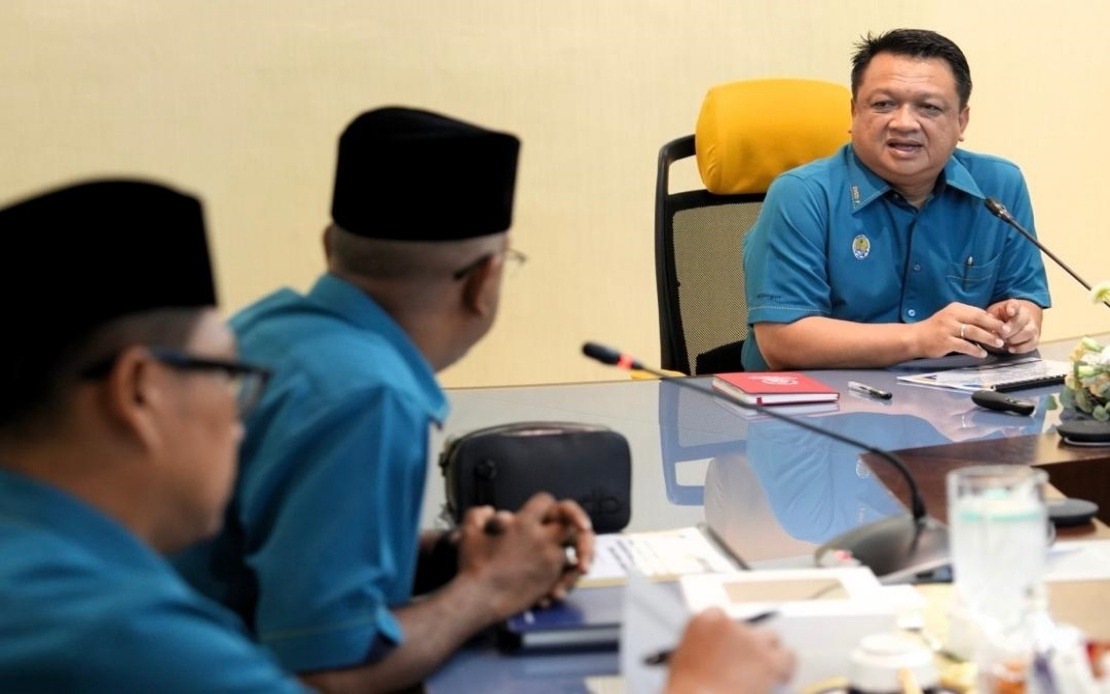
Perlis stands poised to become Malaysia's laboratory for sustainable development, according to a proposal from the state's Raja Muda, Tuanku Syed Faizuddin Putra Jamalullail. The sovereign suggested that the state's compact geography and manageable scale make it ideally suited to pioneer comprehensive environmental policies that could later be scaled nationally. Speaking during an audience with Kangar Municipal Council representatives at the Arau Royal Gallery, the Raja Muda outlined an ambitious blueprint for transforming Perlis into what officials are calling a 'Green Smart State'—a designation that would position the state as a model for climate action across Southeast Asia.
The vision encompasses a transition to renewable energy sources, particularly solar and biomass installations, coupled with sophisticated waste management infrastructure. Should Perlis achieve zero-carbon status as envisioned, it would publicly demonstrate the state's alignment with global climate commitments while providing a practical demonstration that such transformation is achievable within the Malaysian context. The Raja Muda's remarks underscore a growing recognition among Malaysian leadership that smaller states can serve as effective testbeds for policies that larger, more complex jurisdictions find difficult to implement rapidly.
The Kangar Municipal Council has already advanced this agenda considerably through development of the Green City Action Plan, a strategic document prepared in collaboration with multiple agencies including the Ministry of Economy, the IMT-GT Joint Business Council, ICLEI—Local Governments for Sustainability, and the Asian Development Bank. Council president Affendi Rajini Kanth unveiled the framework, which received formal approval on February 10 following extensive consultation and technical development. The GCAP represents more than a conventional sustainability initiative; it functions as a comprehensive roadmap for restructuring how the state generates energy, manages waste, transports citizens, and conserves water resources.
Among the identified catalysts for implementation are five priority projects designed to accelerate transformation across multiple sectors. Solar photovoltaic systems are slated for installation across government, public, and private buildings throughout Perlis, addressing energy demand while reducing dependency on conventional grid power. The state intends to prepare a dedicated Low Carbon Transport Plan that will fundamentally reshape mobility patterns in urban and semi-urban areas. Complementing this transport strategy is a commitment to develop Micro-Mobility Zones and Non-Motorised Transport facilities, encouraging citizens to adopt walking and cycling for shorter journeys while reducing vehicular emissions in town centres.
Waste management capabilities will be substantially enhanced through an 80-tonne-per-day Material Recovery Facility, a critical infrastructure investment that will strengthen segregation of recyclable materials and increase diversion of waste from landfills. This facility represents a significant step toward circular economy principles, as recovered materials can be reintroduced into manufacturing processes rather than being permanently discarded. Simultaneously, the state is developing a comprehensive rainwater harvesting system that will ensure water security and reduce pressure on conventional supply systems during dry periods, a consideration of growing importance as climate variability increases.
Disaster preparedness receives equal emphasis within the framework, recognising that climate resilience extends beyond emissions reduction to encompassing community safety. The Perlis State Disaster Management Plan and enhancement of the Perlis Integrated Command Centre reflect understanding that sustainable development requires protection against extreme weather events and natural disasters likely to intensify as climate patterns shift. This integrated approach—combining mitigation of emissions with adaptation to environmental change—distinguishes Perlis's strategy from narrower decarbonisation efforts.
For Malaysian policymakers observing from other states, Perlis's pilot status offers valuable advantages. The state's administrative simplicity and scale enable faster decision-making and implementation compared to larger states grappling with more complex governance structures. Success in Perlis would provide documented evidence of technical feasibility, cost projections, and social acceptance for policies that Selangor, Johor, and Sabah might subsequently consider. The approach aligns Perlis with Malaysia's broader commitment to sustainable development goals and the national target for greenhouse gas emission reductions, creating coherence between local action and federal direction.
The collaborative framework involving international development institutions, particularly the Asian Development Bank, signals that Perlis's transformation will benefit from expertise and potentially financial support extending beyond state resources. The IMT-GT Joint Business Council involvement connects the initiative to broader regional sustainability efforts affecting Indonesia and Thailand, positioning Perlis within transnational environmental governance. This external architecture transforms what might otherwise be a provincial initiative into a regionally significant demonstration project.
Implementation of these initiatives will generate practical knowledge about adapting global sustainability frameworks to Malaysian conditions. Questions about optimal sizing of solar installations for tropical climates, effectiveness of biomass energy sourcing from local agricultural waste, and public adoption patterns for non-motorised transport solutions will find answers through Perlis's operational experience. Such granular data proves invaluable for subsequent replication elsewhere. The state effectively becomes a living laboratory where theory meets implementation, revealing unforeseen obstacles and unexpected opportunities.
Politically, Perlis's positioning as a green pioneer advances the state's national profile and potentially attracts investment in clean technology sectors. Entrepreneurs and businesses interested in renewable energy, waste management technology, and sustainable transport solutions may view Perlis as an early adopter market with supportive policy environments. This economic dimension complements the environmental objectives, creating a business case for sustainability that extends beyond moral imperatives or regulatory compliance.
The success metrics will ultimately prove crucial. Whether Perlis can authentically move toward zero-carbon status while maintaining economic vitality and liveable communities will determine whether other states embrace similar pathways. Failure would reinforce scepticism about the feasibility of rapid transition, while success would catalyse national momentum. The state's relatively small population and economy afford some advantages for rapid transformation, but also limit scalability assumptions. Nevertheless, the Perlis initiative represents genuine strategic thinking about how Malaysian governance can position itself as climate-responsible while generating evidence that informs more ambitious future action.

