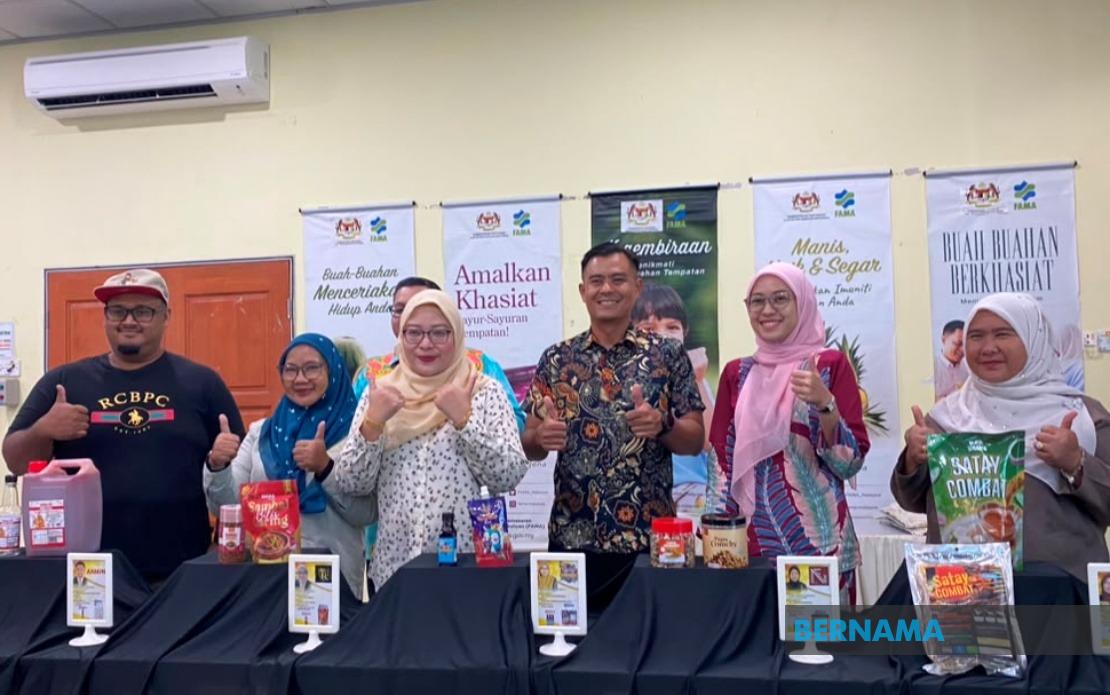
The Perlis branch of the Federal Agricultural Marketing Authority (FAMA) has moved to strengthen the agro-food sector in the state by distributing RM510,500 in development grants to nine entrepreneurs operating within the Agro-Food and Agro-Based Industry (IMAT) ecosystem. The initiative, which was completed as of late July, reflects a concerted effort to elevate product quality, enhance market positioning, and expand commercial opportunities for small and medium-sized enterprises engaged in agriculture-related businesses across Perlis.
FAMA Perlis director Mohd Anzara Azizan outlined the composition of the grant allocation during a ceremony presenting awards to successful applicants. The largest tranche, amounting to RM392,000, was earmarked for agro-tourism development, acknowledging the growing importance of farm-based tourism experiences in diversifying income streams for rural entrepreneurs. A further RM83,500 was reserved for product image and packaging improvement initiatives, recognising that visual presentation and branding play critical roles in consumer purchasing decisions, particularly in competitive retail environments. The remaining funds were distributed as RM25,000 for outlet improvements through the KSHOPPE programme and RM10,000 for marketing equipment support, each targeting specific bottlenecks faced by emerging businesses.
The grant schemes represent part of a broader FAMA strategy to systematically address barriers that prevent small agro-based operators from scaling operations and competing effectively in domestic and regional markets. By providing direct financial support coupled with technical guidance, FAMA aims to help entrepreneurs transition from subsistence-level production to sustainable commercial enterprises. The focus on packaging and product image is particularly significant, as it addresses a common weakness among Malaysian micro and small enterprises that often struggle to present products in ways that appeal to modern retail channels and discerning consumers.
According to Mohd Anzara, the IMAT Market Development and Product Matching Project specifically targets enterprises classified as Stage One to Stage Three SMEs, a deliberate calibration that ensures support reaches businesses at critical inflection points in their development trajectory. These early-stage enterprises often lack capital reserves to invest in upgrades that would enhance competitiveness, making grant assistance instrumental in breaking through growth plateaus. The structured approach reflects FAMA's understanding that sustainable sector development requires targeted interventions at different business maturity levels.
Data presented by the FAMA director reveals that the initiative is delivering measurable results within the Perlis agro-food sector. Across 319 registered IMAT entrepreneurs in the state, cumulative sales reached RM4.8 million as of the reporting date, representing a 30 per cent increase when compared to the equivalent period the previous year. This growth trajectory suggests that FAMA's combination of grant funding and business support services is yielding tangible commercial outcomes, validating the investment in infrastructure and guidance that the authority provides.
The 30 per cent year-on-year sales increase carries broader implications for the state's agricultural economy and rural development objectives. Perlis, Malaysia's smallest state by land area, has historically relied heavily on conventional agriculture, particularly paddy cultivation and livestock farming. The surge in agro-food entrepreneurship suggests a successful transition toward value-added agricultural activities that generate higher margins and employment. For a state with limited industrial capacity, this sector growth represents an important pathway for income diversification and youth retention in rural communities.
Beyond direct financial assistance, FAMA undertakes active market stewardship functions that complement its grant programmes. Mohd Anzara highlighted that the authority monitors product pricing and marketing practices among recipients to ensure that competitive advantages do not stem from unsustainable price dumping. This oversight mechanism protects not only the broader integrity of the agro-food marketplace but also shields entrepreneurs from race-to-the-bottom dynamics that could undermine sector profitability. Such vigilance is essential in environments where multiple small producers might otherwise compete destructively on price alone.
FAMA's portfolio of support mechanisms extends considerably beyond the four grant categories deployed in this Perlis distribution. The authority administers nearly nine distinct grant and support service offerings designed to address the multifaceted needs of IMAT entrepreneurs. These range from working capital provision to capacity-building programmes and market linkage initiatives. The existence of this comprehensive toolkit suggests that FAMA has invested considerable effort in diagnosing the barriers facing agro-food enterprises and designing targeted solutions, though uptake rates and utilisation efficiency would merit closer examination.
The appeal issued by Mohd Anzara for greater utilisation of FAMA's facilities underscores a potential gap between available support and actual application rates. This common pattern in government assistance programmes reflects multiple constraints facing entrepreneurs, including limited awareness of schemes, complex application procedures, documentation requirements, or misalignment between available support and perceived business needs. Addressing uptake barriers would likely yield substantial returns, as FAMA's evident capacity to deploy funds and support entrepreneurs could be leveraged more extensively to accelerate agro-food sector development across Perlis and broader Malaysia.
For regional context, Perlis's agro-food entrepreneurship drive sits within a Southeast Asian landscape increasingly focused on agricultural modernisation and value addition. Thailand, Vietnam, and Indonesia have invested heavily in agro-based SME development, recognising that small-scale producers represent the backbone of agricultural employment in the region. Malaysia's systematic approach through FAMA, combining financial support with technical guidance and market oversight, reflects international best practices in rural economic development. However, sustained impact requires continuous refinement based on feedback from beneficiaries and rigorous measurement of long-term outcomes beyond the immediate year-on-year sales metrics.
The distribution of RM510,500 to Perlis agro-food entrepreneurs ultimately exemplifies how targeted, well-designed government support can catalyse entrepreneurial activity in sectors critical to rural livelihoods. As Malaysia pursues agricultural modernisation and seeks to develop high-value-added activities in its rural heartlands, the Perlis FAMA initiative demonstrates a practical, results-oriented approach. However, realising the full potential of such programmes requires sustained funding, continuous programme refinement, and broadening awareness among entrepreneurs who could benefit from available support but remain unaware of opportunities or perceive barriers to access.

