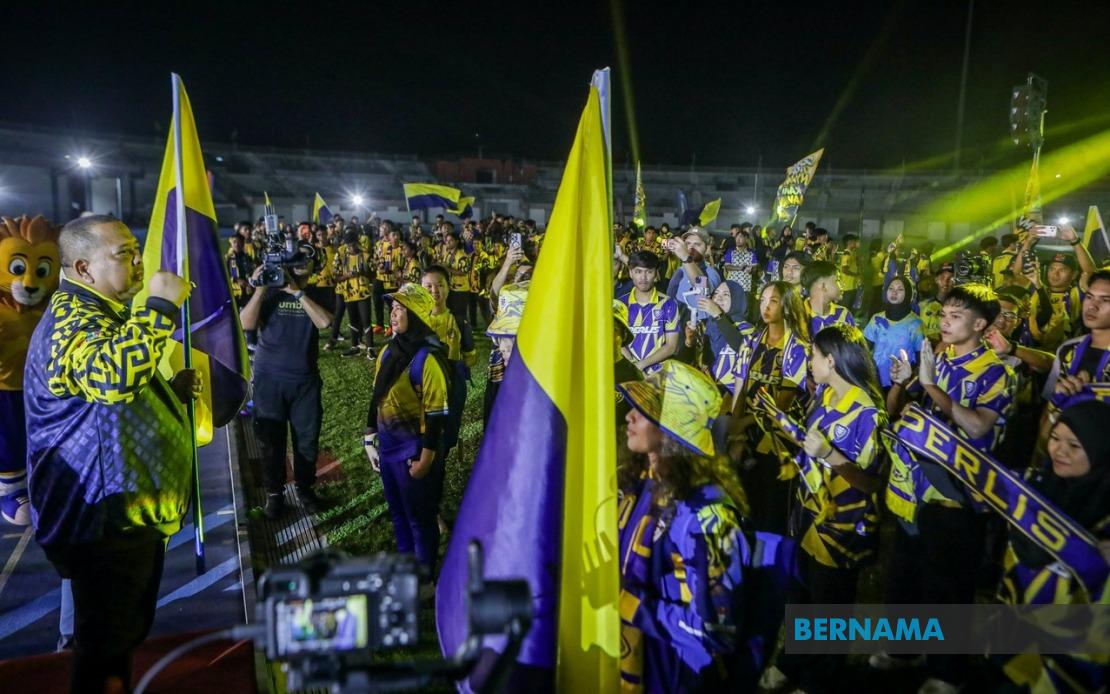
Perlis has marked a historic milestone in its sporting endeavours at the Malaysia Games, securing 17 gold medals during the biennial championship held in Selangor—the state's strongest showing in SUKMA history. This accomplishment underscores a decade-long commitment from the northern state to elevate its athletic standards and competitive profile within Malaysia's premier multi-sport event.
Menteri Besar Abu Bakar Hamzah announced the achievement whilst chairing an Exco Meeting at Kompleks Seri Putra, emphasising that the medal haul reflects the tangible fruits of a coordinated, multi-stakeholder approach to sports excellence. The state government's strategic investment, he noted, has galvanised athletes, coaching staff, sports associations, and the State Sports Council into a unified push for performance enhancement—a formula that appears to be delivering measurable results across a diverse range of disciplines.
Among the standout performances was Perlis's demonstration of technical prowess in athletics, where local competitors broke the SUKMA games record in shot put, establishing a new benchmark for future competitors at the championship. Equally impressive was the state's weightlifting contingent, which achieved overall champion status in their sport category, reinforcing Perlis's growing reputation as a breeding ground for strength-based athletic talent. These victories are particularly significant as they demonstrate excellence not merely in participation, but in elite-level performance that pushes the boundaries of established competitive standards.
The complete medal tally of 42—comprising 17 gold, seven silver, and 18 bronze—illustrates Perlis's broad-based competitive depth. This distribution suggests the state has successfully cultivated talent across multiple sports rather than relying on isolated pockets of excellence, a more sustainable model for long-term competitiveness. For a state of Perlis's size and resource constraints relative to larger Malaysian counterparts, this diversification of sporting strength represents strategic success.
Abu Bakar outlined the administrative infrastructure underpinning this achievement, highlighting focused investment in talent identification, elite training programmes, coaching development, sports science integration, facility upgrades, and athlete welfare provisions. This holistic approach—addressing not merely the athletes themselves but the entire ecosystem supporting them—reflects contemporary best practices in sports governance observed across developed sporting nations. The emphasis on sports science and coaching quality suggests Perlis has moved beyond ad-hoc support to institutionalised systems designed for reproducible excellence.
The recognition of athlete achievement extends beyond symbolic celebration. The state government is currently deliberating incentive structures to reward SUKMA medallists, with formal presentation ceremonies scheduled following the conclusion of Para SUKMA Selangor 2026. This approach recognises that tangible recognition and financial reward serve dual purposes: they validate athlete sacrifice whilst establishing positive incentive frameworks that encourage emerging talent to pursue competitive sport seriously.
For Malaysian sports observers, Perlis's trajectory carries broader implications about competitive federalism within the national sports ecosystem. The state's ascent demonstrates that competitive excellence need not be monopolised by larger, resource-rich states. Strategic planning, coherent policy implementation, and sustained commitment can enable smaller jurisdictions to punch above their demographic weight. This democratisation of sporting success strengthens the overall quality of the SUKMA championship itself, as increased competitive depth among all participating states elevates the entire competition.
From a Southeast Asian perspective, Perlis's achievement gains added significance as Malaysia maintains its sporting leadership throughout the region. The state's strong showing contributes to national narratives of athletic capability and reinforces Malaysia's position as a serious sporting nation within ASEAN frameworks. Internationally, such performances attract talent and coaching expertise, creating virtuous cycles of improvement that benefit not merely individual states but the nation's overall sporting prestige.
Looking forward, Abu Bakar's commitment to sustaining and enhancing this performance trajectory suggests Perlis intends to consolidate rather than celebrate complacently. Maintaining gold medal productivity at future SUKMA editions whilst expanding the medal portfolio will require consistent policy focus and budgetary commitment. The challenge for state administrators lies in translating short-term SUKMA success into long-term institutional capacity, ensuring that athletic infrastructure and coaching quality continue advancing rather than plateauing once the initial enthusiasm of record-breaking achievement wanes.
The sporting achievement also reflects broader state government priorities under Abu Bakar's administration, positioning sports development as integral to Perlis's development agenda. In increasingly competitive jurisdictional environments, sporting reputation contributes to state branding, tourist attraction, and resident pride. SUKMA success thus functions not purely as athletic competition but as visible demonstration of state capacity and forward momentum, with implications extending well beyond sporting domains into economic and social policy spheres.

