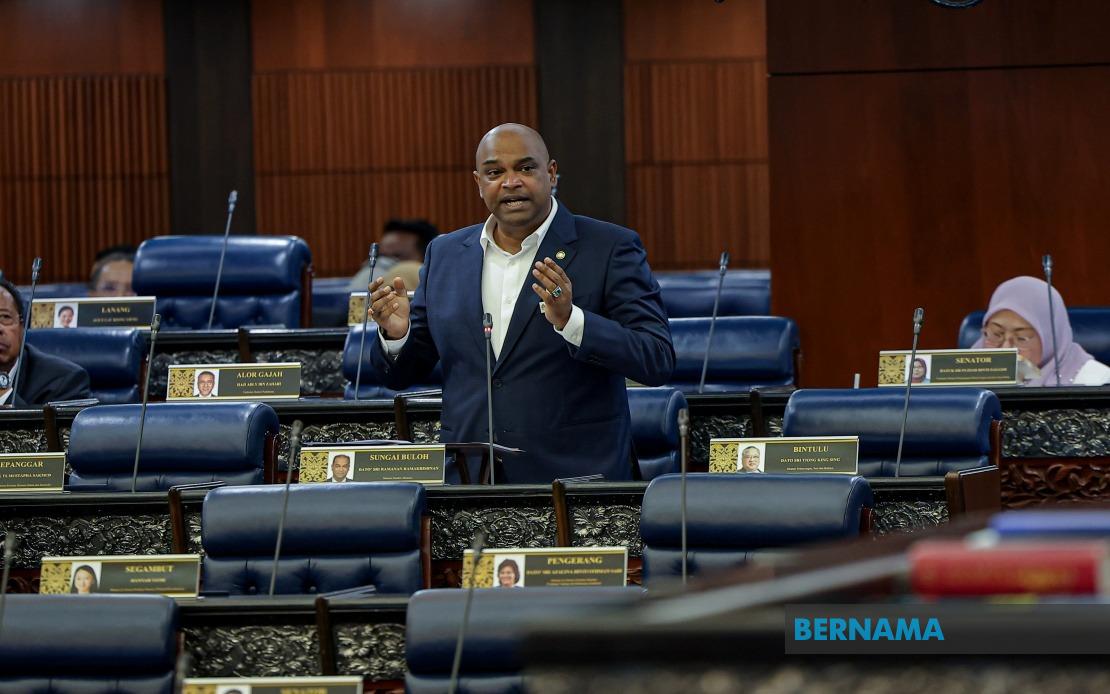
Malaysia's Social Security Organisation (PERKESO) has achieved strong operational performance in claims processing, exceeding 96 per cent compliance rates on average throughout last year, Human Resources Minister Datuk Seri R. Ramanan revealed in Parliament today. The milestone reflects PERKESO's commitment to improving service delivery across all its benefit schemes, providing greater assurance to the millions of Malaysian workers and self-employed individuals who depend on social protection coverage.
The organisation rolled out enhanced Customer Charter standards beginning last year, establishing clear processing timelines that apply to all benefits provided under the LINDUNG Pekerja, LINDUNG Kendiri and LINDUNG Kasih schemes, contingent upon complete documentation being submitted by claimants. This transparency initiative aims to set realistic expectations and hold the organisation accountable to defined performance benchmarks. For time-sensitive claims, PERKESO has committed to completing processing within two days for Funeral Benefit and Temporary Disablement Benefit applications, while more complex claims involving Permanent Disablement Benefit, Invalidity Pension, Survivor's Pension and Dependant's Benefit are processed within three working days.
The LINDUNG Kerjaya scheme, introduced to provide cover for gig economy and informal sector workers, demonstrates even stronger performance metrics. The 2025 Customer Charter for this scheme stipulates a uniform two-day processing period for all benefits calculated from the date complete applications arrive at PERKESO offices. Remarkably, the organisation achieved a 99.68 per cent compliance rate for claims processing and benefit payments under this scheme, suggesting that dedicated focus on specific programme areas can yield exceptional results. This performance level is particularly significant given the operational complexity of serving the informal workforce, which often faces documentation and verification challenges.
PERKESO has made substantial investments in digitalisation infrastructure to support these improved timelines. The LINDUNG Faedah PERKESO portal represents a key initiative enabling online claims submission and status tracking, reducing the need for physical visits to branch offices. The organisation has also deployed the 1Best system, a comprehensive internal processing platform that was fully operationalised during the current year, streamlining backend operations and reducing manual processing bottlenecks that historically caused delays. These technological upgrades address a longstanding pain point for Malaysian workers navigating social security systems.
Beyond digital platforms, PERKESO introduced the PRIHATIN mobile application to democratise access to benefit information and claims guidance. This user-friendly tool allows contributors to explore available benefits, understand eligibility requirements, and track application status without requiring specialised knowledge or office visits. Such accessibility is crucial in Malaysia's context, where many workers in rural and underserved areas face geographical barriers to accessing government services. The application represents recognition that digital inclusion extends beyond mere platform availability to encompassing intuitive design that serves diverse user demographics.
The organisation has also established the Prihatin Squad (SPP), a dedicated advisory service tasked with guiding contributors and beneficiaries through claims procedures. These specialists provide direct assistance to workers, beneficiaries and insured persons navigating the system, offering personalised support that complements automated and self-service channels. This hybrid service model acknowledges that different users have varying needs, preferences and technological literacy levels, requiring a comprehensive approach rather than reliance on any single delivery mechanism.
For urgent situations, PERKESO has simplified emergency procedures enabling claims completion within 24 hours, recognising that workers facing immediate hardship from workplace accidents cannot wait standard processing periods. The organisation strengthened this rapid response capacity through the INSPIRE System, which establishes direct digital linkages between hospitals and PERKESO offices. This integration eliminates redundant information submission, reduces verification delays and enables seamless communication between medical providers documenting worker injuries and benefits administrators processing consequent claims. Such coordination proves especially valuable for serious workplace incidents requiring immediate income replacement.
Fraud detection represents another critical operational concern where PERKESO has invested in enhanced capabilities. The organisation employs a multi-layered verification approach combining artificial intelligence screening for preliminary assessment with subsequent manual review as a quality assurance measure. This balanced methodology leverages technological efficiency while maintaining the human judgement necessary for handling edge cases, disputed claims and situations requiring contextual understanding beyond algorithmic assessment. By maintaining this dual-verification structure, PERKESO seeks to minimise both false rejections that wrongly deny legitimate claimants and fraudulent approvals that compromise scheme sustainability.
The performance improvements reflect broader policy efforts to strengthen Malaysia's social safety net during an era of economic uncertainty and structural workforce changes. As informal employment expands and traditional employer-employee relationships evolve, social security organisations face mounting complexity in verification, coverage determination and benefit administration. PERKESO's progress in managing these challenges offers valuable lessons for regional peers in Thailand, Indonesia and the Philippines grappling with similar dynamics. The Malaysian experience demonstrates that combining standardised processing timelines, transparent performance metrics, digital infrastructure investment and augmented customer support can meaningfully improve service delivery without compromising fraud prevention.
For Malaysian workers and employers, these improvements translate to greater predictability and reduced anxiety during periods of income disruption caused by workplace accidents, illness or unemployment. The enhanced processing speeds particularly benefit lower-income workers lacking financial reserves to sustain extended waiting periods for benefit payments. Meanwhile, employers gain confidence that their mandatory contributions support a functioning system capable of delivering prompt assistance to affected employees, supporting workplace retention and morale. These dynamics reinforce the fundamental purpose of social security: providing income security that enables workforce participation and economic contribution across demographic and employment status categories.

