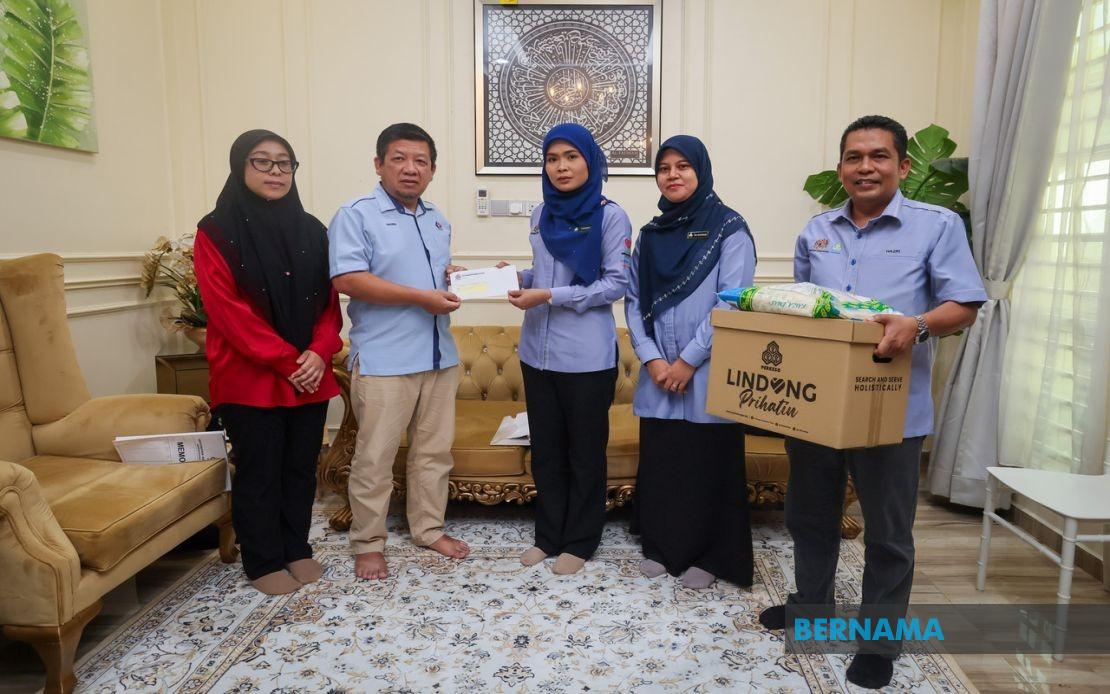
The Social Security Organisation (PERKESO) has channeled nearly RM3.5 million in various benefit schemes to workers and their dependants across Kelantan in the opening half of 2024, reflecting ongoing support for the state's employed population and their families. Speaking at Taman Mekasar in Pasir Mas, Nor Aziemah Ismail, PERKESO's deputy director for Kelantan, disclosed the distribution figures while highlighting the organisation's commitment to rapid claim processing and comprehensive coverage of employment-related risks.
The lion's share of this payout—RM2.388 million—comprised Temporary Disablement Benefit payments made under the Employees' Social Security Act 1969. This scheme exists to support workers who face temporary incapacity stemming from workplace accidents, allowing them to maintain financial stability while recovering and unable to fulfill their employment obligations. For workers in Kelantan, particularly those in manufacturing, construction, and other accident-prone sectors, this benefit provides crucial income replacement during periods of enforced absence from work.
Beyond temporary disablement support, PERKESO extended RM73,000 in Dependants' Benefit payments to surviving family members of workers whose deaths were directly attributable to employment-related incidents. This scheme acknowledges that workplace fatalities carry profound financial consequences not merely for the deceased but for entire households suddenly deprived of a primary earner. The relatively modest figure suggests either strong safety practices or underreporting, both matters warranting closer examination by occupational safety authorities and labour organisations.
Funeral assistance represented another substantial component of the organisation's outlay, with nearly RM1 million disbursed to families of deceased workers during the same period. Under this programme, each eligible claim receives a flat payment of RM3,000, designed to defray immediate expenses associated with funeral rites and preparations. PERKESO has established a streamlined approval process targeting completion within 24 hours of receiving complete documentation, recognising that bereaved families require swift financial relief to manage arrangements without delay or excessive hardship.
A notably progressive element of PERKESO's operations is the 24-Hour Employment Injury Scheme, which extends protection beyond conventional working hours. This framework acknowledges workplace realities in modern Malaysia, where employment-related injuries frequently occur outside formal workplace environments or traditional business hours. The scheme encompasses incidents occurring during travel to employment sites, participation in work-related social activities, or even personal errands undertaken during work periods. In Kelantan, nine claims have been approved under this heading, with RM1,300 in sick leave benefits distributed to qualifying recipients.
The approved cases illustrate the scheme's practical breadth. One claimant suffered injury while participating in a motorcycle convoy—potentially a workplace social or community engagement activity—while another was injured while accompanying a child to tuition classes, arguably an activity combining personal and workplace-related considerations. Such flexibility distinguishes PERKESO's approach from more rigid schemes and reflects evolving understandings of how modern work intertwines with daily life, particularly in Malaysian contexts where informal sector activities and dual household responsibilities are prevalent.
The Kelantan statistics assume particular significance given the state's economic composition and labour profile. As a state with substantial agricultural, fishing, and small-to-medium enterprise activity, alongside growing manufacturing presence, workplace hazards remain endemic. The distribution of nearly RM3.5 million in a six-month period suggests consistent incidence of workplace injuries and fatalities, underscoring the ongoing relevance of social security protections for workers without substantial private insurance or savings buffers.
PERKESO's emphasis on rapid claim processing deserves attention as a service delivery indicator. The 24-hour target for funeral benefit approvals, contingent upon complete documentation, reflects administrative efficiency while placing responsibility on claimants and employers to prepare submissions carefully. For Malaysian workers and their families—particularly those in lower-income brackets most vulnerable to employment risks—such expedited processing can mean the difference between managing crises and facing compounded financial distress.
The organisation's operations in Kelantan also highlight broader patterns in Malaysia's social security architecture. PERKESO schemes operate in parallel with other social safety nets, including the Employment Insurance System introduced in 2017 and various state-level welfare programmes. For workers unfamiliar with these overlapping schemes, navigating entitlements and application procedures remains complex. Greater public education and coordination between agencies could enhance coverage rates and ensure eligible individuals access available support.
Looking forward, the steady flow of benefit disbursements in Kelantan raises questions about occupational safety trends and whether workplace accident rates are stabilising, increasing, or simply reflecting consistent exposure to employment hazards. Malaysian policymakers and occupational safety authorities should examine whether the scheme's utilisation patterns indicate where targeted prevention efforts might yield greatest returns. Investment in workplace safety training, hazard elimination, and employer compliance mechanisms could ultimately reduce both human suffering and government expenditure on downstream benefits.
The provision of nearly RM3.5 million to Kelantan workers and beneficiaries demonstrates that PERKESO remains operationally active in fulfilling its statutory obligations, even as Malaysia navigates broader economic transitions and labour market shifts. For Malaysian workers in precarious employment, informal sectors, or hazardous occupations, these safety net mechanisms represent essential protection against circumstances beyond individual control, underscoring the enduring relevance of mandatory social security in maintaining household stability across the nation.

