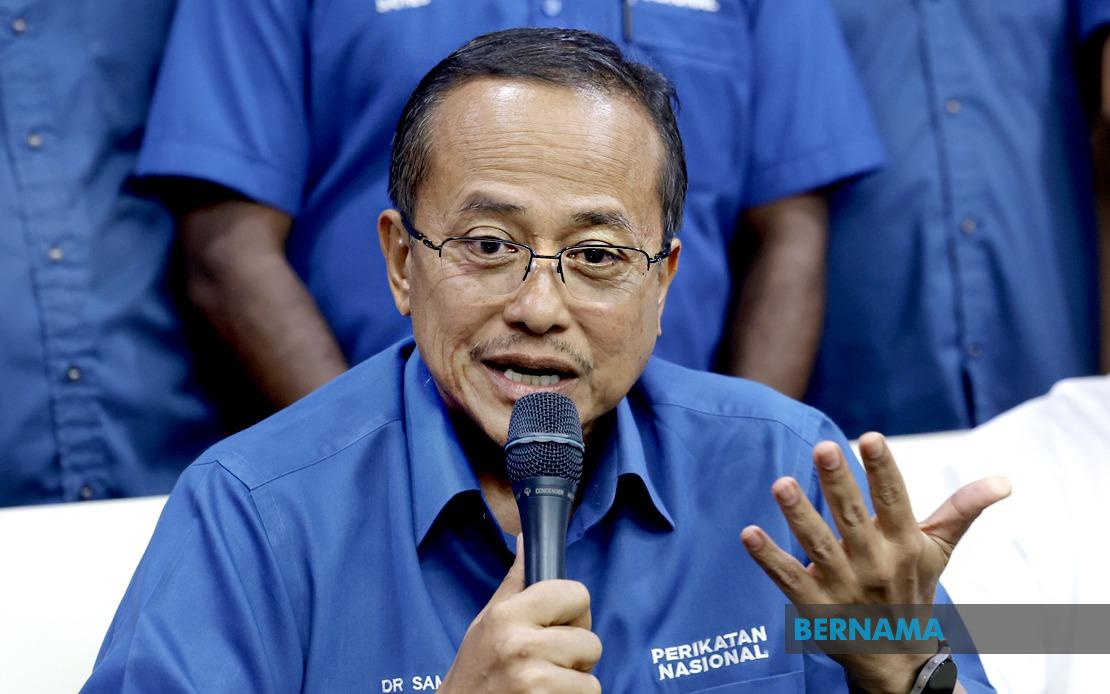
Perikatan Nasional formally presented its election platform for the 16th Negeri Sembilan State Election in Seremban on July 25, offering voters a six-pronged strategy aimed at economic and social development. The coalition's manifesto, branded under the theme 'PN Sepakat Hebatkan Negeri Sembilan', was unveiled by party chairman Datuk Seri Dr Ahmad Samsuri Mokhtar and represents a comprehensive policy agenda across multiple governance domains.
The six foundational pillars of PN's campaign platform address what the coalition identifies as critical areas for the state's progress. Governance reform constitutes the first pillar, signalling PN's intent to reshape institutional practices and administrative efficiency in state-level operations. The coalition has positioned itself as a reformist force, seeking to differentiate its approach from competing coalitions by emphasising transparency and accountability mechanisms within the state administration.
Youth engagement and family welfare emerge as significant planks within PN's broader vision for Negeri Sembilan. This reflects broader Malaysian political trends, where younger voters and family-centred policies have become increasingly central to electoral messaging. By prioritising these demographics, PN attempts to broaden its appeal beyond traditional support bases and address emerging concerns among millennial and Gen-Z voters, whose participation could prove decisive in a closely contested election.
Economic revitalisation forms another cornerstone of the manifesto, addressing persistent concerns about job creation, business development, and investment attraction in Negeri Sembilan. The state, positioned between Selangor and Pahah, has historically struggled to maintain competitive economic momentum compared to larger neighbouring states. PN's economic pillar likely encompasses proposals for small and medium enterprise support, infrastructure development, and sector-specific growth initiatives targeting both urban and rural constituencies.
Social welfare provisions constitute a fourth pillar, encompassing targeted assistance programmes for vulnerable populations and community-based support systems. This addresses immediate concerns among lower-income voters and reflects broader Malaysian political discourse around cost-of-living pressures and economic inequality. By emphasising welfare commitments, PN signals responsiveness to household-level economic anxieties that have characterised recent electoral cycles nationwide.
Education policy and employment generation round out PN's six-point framework. These twin pillars acknowledge the connection between human capital development and economic opportunity, suggesting PN views educational investment as foundational to long-term state prosperity. Employment generation targets align with broader aspirations for improved living standards and reduced youth unemployment, addressing a demographic cohort that has become increasingly politically volatile.
The election timeline provides limited space for campaign momentum-building. Early voting commenced on July 28, with general polling scheduled for August 1, compressing the official campaign period and placing premium value on manifesto launch events and media coverage. PN's decision to formally present its platform reflects recognition that substantive policy articulation remains necessary despite shortened campaign windows, particularly when competing against established political networks and incumbent advantages.
Negeri Sembilan's electoral significance extends beyond state-level governance, carrying implications for broader coalition positioning at the national level. The state has demonstrated swing-voting characteristics in recent elections, making it a potential bellwether for electoral sentiment across central Malaysia. Results here could influence perceptions of PN's electoral viability and policy appeal heading toward potential national-level political realignments.
The manifesto's framing around six pillars reflects contemporary campaign strategy, offering memorable policy anchors for voter retention while providing sufficient breadth to address diverse constituency interests. By organising proposals around thematic pillars rather than detailed position papers, PN maximises accessibility for general voters while preserving flexibility in implementation details. This approach has become standard among Malaysian political coalitions seeking to balance comprehensive policy coverage with campaign narrative simplicity.
For Malaysian voters and regional observers, the Negeri Sembilan election outcome carries several interpretative dimensions. It will indicate whether PN's reformist messaging and policy platform resonate with state voters, whether the coalition can translate manifesto commitments into electoral gains, and whether incumbent political forces retain sufficient organisational advantage to overcome policy-based competition. The result will also provide early indicators regarding coalition strength and voter preferences as Malaysia approaches potential future electoral cycles at state and federal levels.
The specificity with which PN has articulated policy priorities across governance, economy, welfare, education and family matters suggests the coalition has invested substantially in campaign preparation for this particular election. Whether such policy emphasis translates into measurable electoral advantage will depend on implementation credibility perceptions, competitor response, and whether these six pillars effectively address voter priorities as understood through recent polling data and constituency-level engagement.

