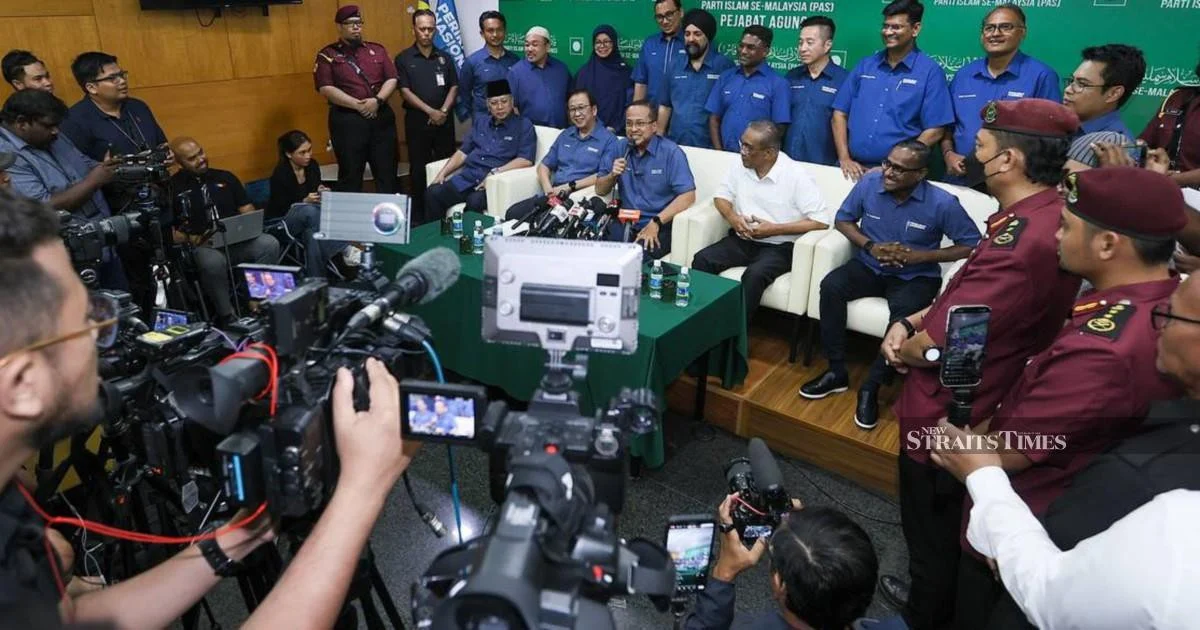
Perikatan Nasional is moving swiftly to crystallise its electoral blueprint for Johor by holding a special meeting this afternoon to lock in seat allocations among its component parties. The decision to conduct this crucial session underscores the coalition's determination to present a unified front as campaigning preparations intensify in Malaysia's southernmost state, a region traditionally viewed as a political battleground.
The gathering represents a critical juncture in PN's internal negotiations, as the coalition seeks to distribute constituencies in a manner that balances the interests of its member parties whilst maximising electoral prospects. Such seat negotiations are notoriously complex in Malaysian politics, often requiring delicate compromises between larger parties and their smaller allies to maintain coalition cohesion. For Johor specifically, the allocation process carries considerable weight given the state's 56 assembly seats and its historical significance in national politics.
Penikatan Nasional's approach to formalising its seat strategy reflects a broader pattern emerging across Malaysian political coalitions, where advance planning and internal consensus-building precede major electoral contests. By committing to a defined seat allocation framework before campaigning officially commences, PN aims to avoid the public squabbles that sometimes plague other coalitions during election cycles. Such disputes, when they surface, can undermine voter confidence and provide ammunition to rival political camps.
The Johor election itself carries implications extending far beyond the state's borders. As a major state with substantial population and economic clout, Johor's political complexion influences the broader regional balance and shapes narratives about which coalitions possess genuine grassroots support. The state has historically been a testing ground for new political configurations and voter preferences, making its electoral outcomes closely watched by political observers across Malaysia and the region.
PN's constituent parties bring different strengths and considerations to the negotiating table. Whilst the coalition commands considerable support in certain constituencies, particularly in areas with specific demographic concentrations, other seats present more contested terrain where seat-sharing decisions could determine whether PN gains or loses ground. The finalisation process today will reveal how effectively the coalition has managed these competing interests and whether all member parties are satisfied with their allocated constituencies.
For Malaysian political analysts, the seat allocation announcement will provide crucial insights into PN's strategic priorities for Johor. The distribution pattern—which parties receive competitive seats versus holding or defending marginal constituencies—signals where the coalition believes it can make gains and which areas it considers manageable risks. Such allocation strategies often reflect months of internal polling and ground-level intelligence gathering.
The timing of today's meeting also suggests PN is keen to establish momentum ahead of potential campaign periods. Early crystallisation of seat arrangements allows the coalition's parties to begin fielding candidate nominations, conducting grassroots mobilisation, and launching preliminary messaging. In Malaysian elections, parties that move quickly to lock in their candidacies often gain tactical advantages over slower-moving competitors.
For ordinary Johor voters, the seat allocation process represents something largely invisible but ultimately consequential. The candidates who emerge from this selection framework will be the individuals bidding for their votes in coming months. The quality, integrity, and track records of these nominees—directly influenced by how each party interprets its allocated seats—will shape the character of the election debate and the calibre of representation available to constituents.
Peikatan Nasional's evolution as a coalition continues to be tested by such practical questions of internal resource distribution. Unlike established coalitions with long-standing power-sharing conventions, PN remains relatively newer to such negotiations at significant scale. How smoothly today's meeting proceeds and whether the announced allocations generate consensus across component parties will offer indicators of the coalition's institutional maturity and its capacity to function as a cohesive force during high-stakes electoral contests.
The broader political landscape in Malaysia remains fluid, with different coalitions positioning themselves in multiple states. Johor's particular importance stems partly from its status as economically vibrant and demographically significant, but also from its historical unpredictability. Voters in the state have demonstrated willingness to shift allegiances across electoral cycles, suggesting that no coalition can take these seats for granted regardless of previous electoral configurations.