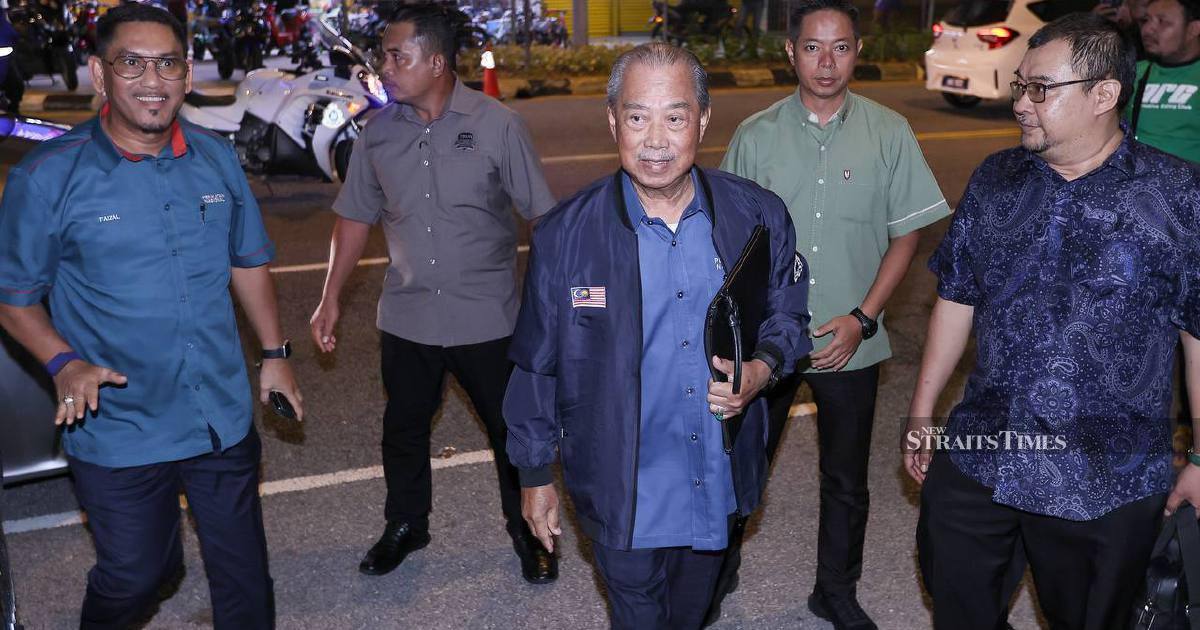
Perikatan Nasional, the increasingly assertive opposition coalition that has reshaped Malaysia's political landscape over the past three years, assembled its top leadership at PAS headquarters in central Kuala Lumpur for an emergency Supreme Council session Thursday evening. The hastily-arranged gathering brought together senior figures from the alliance's constituent parties at a moment when internal cohesion and strategic direction have become paramount concerns for the bloc that encompasses Parti Islam SeMalaysia, Parti Pribumi Bersatu Malaysia, and smaller component parties. The unexpected nature of the late-night convening underscores the coalition's preference for expedited decision-making when confronted with developments it deems urgent enough to warrant immediate attention from its highest decision-making body.
The Perikatan Nasional coalition has emerged as a formidable force in Malaysian politics, particularly following the 2022 general election when it consolidated significant parliamentary support while the ruling Pakatan Harapan government navigated challenges in sustaining its own internal stability. The coalition's composition reflects competing political ambitions and ideological perspectives, creating a dynamic that requires careful management to maintain unity. The timing of an emergency Supreme Council meeting suggests that leadership has identified circumstances demanding collective deliberation before positions can be properly articulated or strategies implemented. Such gatherings typically occur when coalitions face decisions affecting their overall direction, internal balance, or public standing.
The decision to convene at PAS headquarters carries symbolic weight, given that Parti Islam SeMalaysia remains the numerically dominant component of the Perikatan Nasional alliance and has provided much of its parliamentary foundation. The venue selection may signal that discussions centre on matters of particular concern to the Islamic party or reflect broader protocols governing where coalition decisions are formally processed. PAS leadership's influence within Perikatan Nasional extends beyond simple vote-counting, encompassing significant influence over policy positions, particularly regarding religious and cultural matters that resonate with the coalition's electoral base. The physical gathering of senior council members underscores the seriousness attributed to whatever matters prompted the emergency convocation.
Emergency sessions of this nature within Malaysian political coalitions traditionally occur when coalitions confront developments that could alter their parliamentary standing, affect their public image, or threaten internal cohesion. The coalition may be responding to developments within the government or within its own ranks requiring rapid collective response. Federal politics in Malaysia during this period has been characterised by significant shifts in allegiances, with individual politicians and even entire party blocs occasionally moving between coalitions. Such movements can simultaneously strengthen and destabilise coalitions, depending on who moves, their parliamentary value, and the messaging surrounding transitions. Perikatan Nasional's leadership would need to rapidly assess implications and craft appropriate responses to maintain its narrative dominance within the opposition landscape.
The composition of Perikatan Nasional itself reflects Malaysia's complex multiethnic and multi-religious political environment. PAS brings substantial support from conservative Muslim voters, particularly in rural areas and smaller towns across Peninsular Malaysia. Bersatu, under Muhyiddin Yassin's leadership, positions itself as a multiethnic moderate force that bridges Malay-Muslim and broader Malaysian political interests. Smaller partners within the coalition add additional dimensions to the coalition's political character. Managing such diverse components requires sophisticated internal diplomacy, and emergency sessions often serve as venues where competing interests within the coalition can be articulated before positions are finalised for public consumption.
The opposition coalition's evolution reflects broader transformation in Malaysian politics over the preceding two decades. The rise of Perikatan Nasional as a significant political force occurred through several phases: initial cooperation between PAS and other parties, subsequent expansion and consolidation, and more recent positioning as a viable alternative to existing federal government structures. The coalition has successfully attracted support from constituencies dissatisfied with Pakatan Harapan's governance record while simultaneously articulating distinct policy positions on issues ranging from religious governance to economic management. This political repositioning has required careful calibration, particularly when balancing the perspectives of religious conservatives with broader Malaysian aspirations for inclusive governance.
The emergency nature of the Thursday evening session suggests that urgent matters could not await normal council scheduling. Malaysian political coalitions typically maintain regular meeting schedules, with extraordinary sessions reserved for developments deemed time-sensitive by senior leadership. Such circumstances might involve responding to government policy announcements perceived as threatening coalition interests, addressing defections or internal disputes, coordinating parliamentary strategy ahead of significant legislative sessions, or responding to developments in state-level politics that carry federal implications. The Perikatan Nasional's geographical representation spans multiple states where it governs or operates significant opposition presence, making state-level developments potentially consequential for federal coalition stability.
The broader political context surrounding Thursday's gathering included ongoing dynamics within the federal government itself, where Prime Minister Anwar Ibrahim continued managing his own coalition's internal pressures. The relationship between Pakatan Harapan's governing coalition and Perikatan Nasional opposition remains a defining feature of contemporary Malaysian politics, with both sides employing sophisticated messaging, parliamentary tactics, and coalition management strategies. The Perikatan Nasional's capacity to mount credible opposition challenges while maintaining its own internal unity significantly influences national political dynamics and public discourse around alternative governance arrangements.
The specifics of what prompted the emergency convocation would typically be articulated through subsequent statements from coalition leadership, though Malaysian political practice sometimes involves careful public communication around sensitive internal deliberations. The fact that such senior-level discussions were occurring simultaneously across multiple party leaderships suggests matters of genuine significance to the coalition's trajectory. For Malaysian observers following opposition politics, the Friday morning aftermath of such evening sessions traditionally brought clarifying statements, policy announcements, or coordinated messaging indicating what outcomes had emerged from leadership discussions. The Perikatan Nasional's ability to rapidly mobilise its Supreme Council indicated organisational capacity, even as the specific drivers of Thursday's urgency would require subsequent clarification from coalition spokespeople navigating both internal and public communication imperatives.