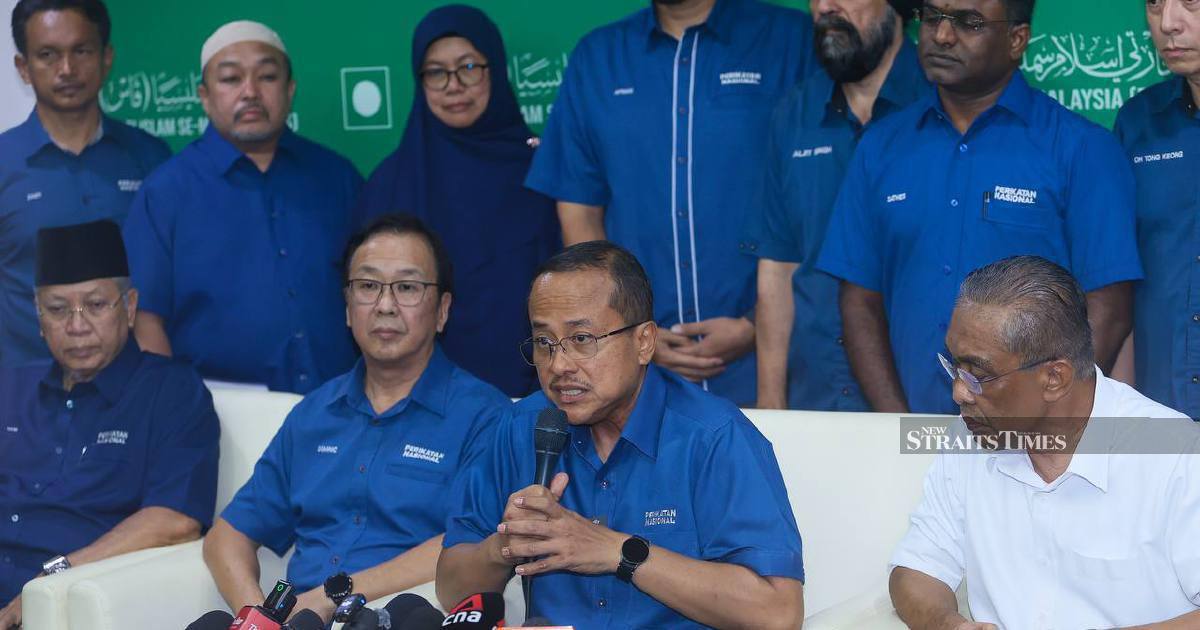
Perikatan Nasional has moved to expand its membership base by formally accepting two additional political parties into the coalition, according to an announcement from PN chairman Datuk Seri Dr Ahmad Samsuri Mokhtar following an unscheduled Supreme Council meeting in Kuala Lumpur. The decision marks a continuation of the bloc's consolidation efforts, though the enlargement comes at a time when internal divisions over coalition identity and strategic direction remain notably unresolved.
The expansion represents a significant development for the opposition coalition, which has been actively recruiting member parties as it seeks to strengthen its organisational presence and grassroots reach ahead of future electoral contests. By broadening its membership, PN aims to enhance its appeal across different demographic and geographic constituencies, a strategy common among coalitions attempting to position themselves as serious contenders for federal power. The timing of the expansion, coupled with the emergency nature of the meeting itself, suggests that coalition leadership views party recruitment as a priority concern.
However, the meeting's agenda revealed deeper fault lines within the bloc that remain unaddressed. Most notably, disagreements over PN's broader vision—referred to locally as Wawasan—were deliberately excluded from tonight's discussions, according to Samsuri's account. This omission is particularly significant because a clearly articulated party vision is typically fundamental to a coalition's ability to communicate its values and policy platform to voters. The absence of progress on this front indicates that fundamental questions about what PN stands for and where it intends to lead remain contentious among member parties.
Equally telling was the decision to defer debate over the coalition's official logo and visual branding. Logos serve as critical symbolic expressions of party identity and are central to campaign messaging and public recognition. The fact that PN chose not to tackle this contentious issue during an emergency meeting—the kind of gathering usually reserved for urgent or high-stakes matters—underscores how fractious internal negotiations have become on matters of fundamental coalition presentation. These symbolic disputes often mask deeper disagreements about leadership, direction, and the distribution of influence within the bloc.
For Malaysian observers, the deliberate sidelining of vision and branding discussions raises questions about the coalition's internal cohesion and decision-making processes. When a bloc's leadership opts to postpone discussions on identity-defining questions in favour of rapid party recruitment, it may suggest either confidence that differences can be resolved later or, conversely, anxiety about surfacing those disputes prematurely. Either interpretation carries implications for how effectively PN can function as a unified political force capable of governing.
The expansion strategy itself merits scrutiny within the Malaysian political context. Larger coalitions do not automatically translate into more effective governance or stronger electoral performance; fragmentation of decision-making authority and dilution of core messaging can actually weaken a bloc's competitive position. The two incoming parties will need to be integrated into existing structures while maintaining the balance of power among established heavyweights within PN.
This development arrives at a moment when Malaysian opposition politics faces significant questions about coordination and direction. The past several years have witnessed considerable fluidity in opposition alignment, with various blocs rising and falling in political relevance. PN's current expansion strategy reflects a determination to remain a significant player in that landscape, though the unresolved questions about vision and identity suggest that internal consolidation remains a work in progress.
From a Southeast Asian perspective, PN's experiences reflect broader challenges facing opposition coalitions across the region. The tension between rapid coalition-building and the slower work of developing shared ideological commitments and strategic vision is familiar to political movements in Thailand, Indonesia, and the Philippines. How PN manages to navigate these tensions will likely influence not only Malaysian politics but also provide lessons for regional political observers assessing coalition dynamics.
The deferral of vision and branding discussions does not necessarily indicate that these issues will remain unresolved indefinitely. Rather, it suggests a tactical decision to prioritise party recruitment in the immediate term while addressing integration and identity questions once new members have formally joined the coalition structure. Whether this sequencing proves strategically sound will become clearer as PN moves forward with its expansion agenda and faces renewed pressure to articulate what distinguishes it from competing political blocs.
For the Malaysian electorate and political analysts monitoring PN's trajectory, the coming weeks and months will reveal whether the coalition can successfully reconcile its organisational ambitions with the ideological coherence necessary for sustained political influence. The two newly admitted parties will inevitably face expectations to contribute to resolving the deferred questions about vision and branding, potentially reshaping internal coalition dynamics in the process. Samsuri and other PN leaders will need to demonstrate that party expansion constitutes genuine strengthening rather than superficial enlargement without corresponding clarity of purpose.