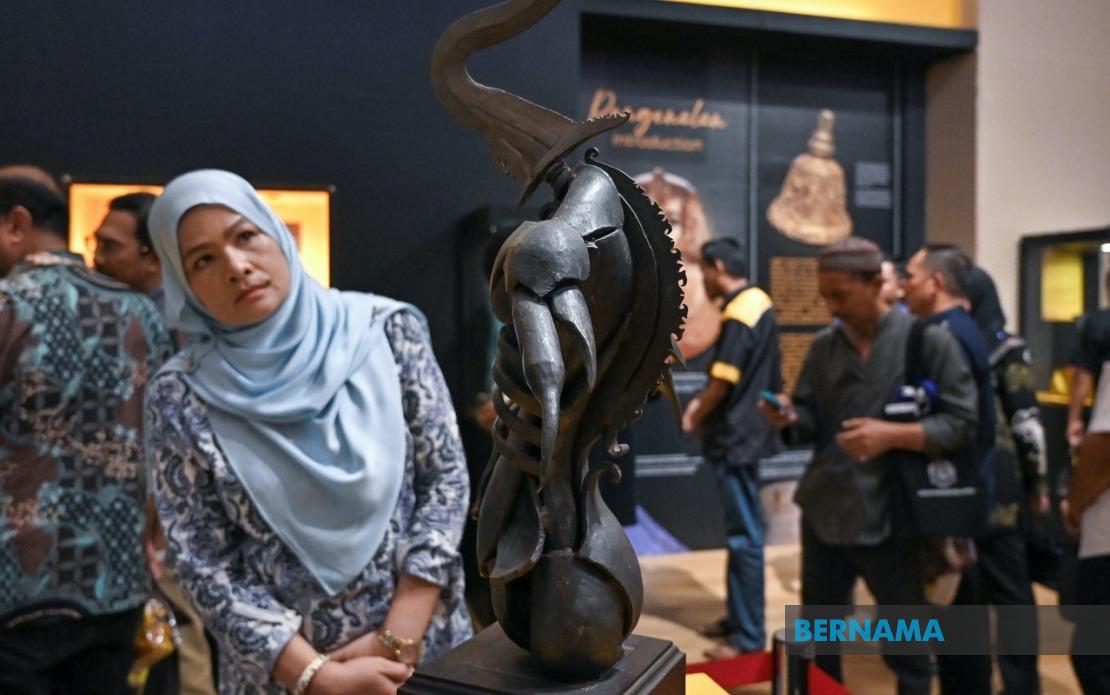
The Perak Museum in Taiping has opened an ambitious exhibition bringing together 140 metal artefacts of considerable historical and cultural importance, marking a significant moment in Malaysian heritage preservation. Running through December 31, the 'Magic and Metal: Spirit, Power and Art' exhibition represents the first comprehensive assembly of the museum's early metal-based collections, presenting visitors with rare insight into how metalwork functioned as more than mere utilitarian objects within traditional Malay society.
Museum director Mohd Nasrulamiazam Mohd Nasir outlined the exhibition's conceptual framework during its official opening by Department of Museums Malaysia director-general Datuk Kamarul Baharin A. Kasim. The three pillars—spirit, power and art—guide visitors through an understanding of how metal transcended its material properties to embody mystical significance, political authority and aesthetic refinement. This interpretative approach reflects contemporary museology's shift toward contextualising artefacts within their original spiritual and social meanings, rather than treating them as isolated historical curiosities.
The exhibition's reach extends beyond the Perak Museum's own holdings through strategic institutional partnerships that enhance its scope and depth. Sculpture collections from Raja Syahriman Raja Aziddin contribute artistic perspectives on metalwork's creative dimensions, whilst Yayasan Al-Amin supplies silver ornaments representing the decorative traditions of royal and elite households. Nor Azahar Ibrahim's Malay weaponry collection completes the narrative by showcasing metal's role in projection of power and sovereignty, demonstrating how a single material carried multiple layers of meaning across different contexts within Malay civilisation.
Several pieces within the exhibition command particular attention for their historical resonance. A nineteenth-century Malay weapon featuring an ornate snail-shell hilt belonged to Sultan Abdullah Muhammad Shah II, the 26th Sultan of Perak, connecting visitors directly to the region's royal past and the craftsmanship standards expected in objects associated with sovereignty. An eighteenth-century suit of Bugis warrior armour extends the exhibition's geographic and cultural horizons beyond Peninsular Malay traditions, incorporating the metalworking legacy of the broader Southeast Asian maritime world. A spoon and fork set owned by Raja Laut Ibni Sultan Muhammad Shah, son of Selangor's third Sultan, illustrates how precious metals functioned in intimate domestic contexts and represented status within household hierarchies.
The decision to emphasise metal's mystical and symbolic dimensions rather than purely its material or technical properties reflects an important curatorial philosophy gaining traction across Southeast Asian museums. Western museum tradition often privileges chronology and technique; this exhibition instead recognises that in Malay and broader Southeast Asian contexts, objects carried spiritual potency and served as conduits for invisible forces. By centring this framework, the Perak Museum makes space for indigenous epistemologies within heritage discourse—an increasingly vital correction to colonial-era museum practices that stripped artefacts of their original conceptual contexts.
The exhibition arrives at a moment when Malaysian museums are intensifying efforts to position themselves as authentic centres of knowledge production rather than mere custodians of objects. The Department of Museums Malaysia's broader agenda emphasises museums' role in research, heritage preservation and public education about historical and cultural values. The Perak Museum's ambitious target of 100,000 visitors signals institutional confidence in public appetite for thoughtfully curated exhibitions about Malaysia's pre-modern heritage. With nearly 20,000 visitors recorded since the June opening, the exhibition appears on track to achieve or exceed expectations, suggesting strong regional interest in material culture narratives.
For Malaysian and Southeast Asian audiences, the exhibition offers particular relevance in countering global narratives about the region's metalworking traditions. Malay and Southeast Asian metalwork often remains overshadowed in international heritage discourse by more heavily documented traditions from East Asia or South Asia. By bringing these 140 pieces together in sustained thematic examination, the Perak Museum asserts the sophistication and distinctiveness of local metalcraft traditions whilst establishing their equal claim to scholarly and public attention. This visibility also carries implications for contemporary artisans and heritage craftspeople seeking to revive traditional techniques—the exhibition implicitly validates these efforts by positioning historical metalwork as embodying values worth preserving and understanding.
The exhibition's extended run through year-end allows regional audiences substantial opportunity to engage with the material. Scholars, collectors, students and general visitors from across Malaysia and potentially from Singapore and other neighbouring countries can make the journey to Taiping to examine these artefacts in person. The Perak Museum's strategic location, midway between Kuala Lumpur and Penang within the heritage-rich Perak state, positions it well to draw visitors along the northwest corridor. For those unable to visit, institutions undertaking subsequent touring exhibitions or producing substantial exhibition catalogues could extend the intellectual and educational reach of this curatorial work.
The 'Magic and Metal' exhibition ultimately demonstrates how contemporary Malaysian museums are reasserting authority over their own heritage narratives. Rather than positioning Malay metalwork as historical artifact divorced from living cultural contexts, the exhibition framework invites viewers to contemplate how spiritual and aesthetic dimensions of material culture remain meaningful across temporal distance. In doing so, the Perak Museum contributes to the wider Southeast Asian project of recovering and amplifying indigenous knowledge systems, ensuring that future generations encounter their heritage on terms shaped by their own cultural values rather than exclusively through external interpretive frameworks.

