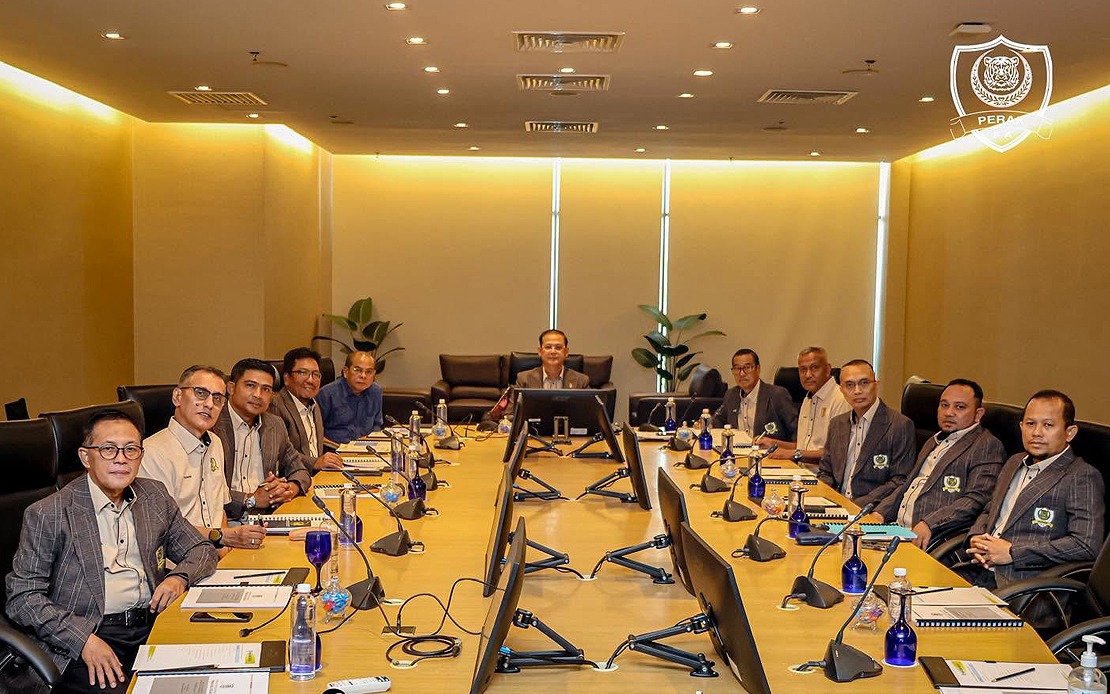
The Perak Football Association announced plans to bring in a new head coach for the forthcoming 2026-2027 Liga A1 Semi-Pro season, marking a strategic shift in the state's football management structure. The decision stems from updated regulations issued by the Amateur Football League, which now requires all participating teams to employ a head coach holding an AFC Pro Diploma Coaching License—a significant upgrade in credentialing standards that aims to elevate the quality of semi-professional football across Malaysia's states.
Beyond meeting the mandatory licensing threshold, the association will prioritize candidates demonstrating substantial experience in grassroots football development, contemporary coaching methodologies, and a verifiable accomplishment record spanning state, national, and international competitions. This multi-tiered selection process reflects a deliberate effort to marry regulatory compliance with strategic competence, ensuring that Perak's football programme gains access to world-class technical guidance. The appointment decision also factors in the state's broader football development roadmap, which dovetails with Perak Sejahtera 2030—a comprehensive state development initiative—and aims to fortify the squad's competitive standing in the coming years.
Under the outgoing tenure of Syamsul Saad, a former player turned tactician, Perak achieved a respectable fifth-place league finish in the previous campaign while simultaneously reaching the Malaysia Cup quarterfinals and the MFL Challenge Cup semifinals. Despite this encouraging trajectory, the association determined that the introduction of elevated coaching standards warranted a managerial transition to position the team optimally for future challenges. The continuity of Saad's accomplishments demonstrates that the groundwork for sustained improvement exists, and the new appointment seeks to build upon that foundation rather than dismantle it entirely.
Crucially, the Perak Football Association has committed to retaining the existing coaching staff rather than implementing a wholesale overhaul. This measured approach reflects recognition that institutional knowledge and established working relationships hold considerable value in team development. By pairing the incoming head coach with the retained technical team, the association intends to create a bolstered coaching hierarchy capable of delivering more sophisticated tactical instruction and specialized player development. This collaborative structure, if executed thoughtfully, can prevent disruption to player adaptation and team cohesion while introducing fresh strategic perspectives.
The association has also moved to secure continuity with performer-evaluated players from the outgoing season, extending new contracts to those who satisfied the association's performance benchmarks. This selective retention strategy balances the need for fresh talent infusion with the preservation of proven squad elements, maintaining organisational momentum while creating pathways for emerging talent. The decision signals confidence in the existing roster's foundational quality while leaving room for targeted recruitment of specialists or young prospects who can elevate overall squad depth.
Beyond domestic league competition, Perak will broaden its competitive exposure by participating in the Liga A2 Amateur tournament and the President's Cup, strategic initiatives designed to furnish opportunities for promising young players emerging from grassroots development ecosystems. These parallel competitions serve as talent incubators and performance testing grounds for junior players matriculating from Malaysia Games development schemes, Liga A1 Semi-Pro pathways, and the Liga Perak Sejahtera 2030 programme. By operating across multiple competitive tiers simultaneously, the association creates a comprehensive player pipeline extending from grassroots identification through semi-professional consolidation.
The deliberate architecture of this multi-league participation strategy has yielded tangible results. Through coordinated implementation of grassroots development initiatives spanning the three competition levels, Perak has successfully cultivated approximately 70 players within the 18-to-24 age demographic—a cohort representing the critical transition zone between youth development and senior football maturity. This substantive player production figure underscores the viability of the association's talent development philosophy and demonstrates that systematic investment in grassroots infrastructure generates measurable outcomes measurable in player quantity and, presumably, qualitative development trajectory.
The coaching credential requirement introduced by the Amateur Football League reflects a broader regional trend toward professionalizing semi-elite football structures. Malaysia's competitive football landscape has historically contended with inconsistent coaching standards across state-level teams, creating disparities in tactical sophistication and player development methodology. By mandating AFC Pro Diploma certification—a credential recognized throughout Asian football—the league seeks to eliminate substandard coaching practices and establish baseline technical competence across all participating associations. For Perak, compliance with this requirement positions the state within contemporary international best practices while signalling commitment to sustainable competitive improvement.
The appointment process carries implications extending beyond Perak's isolated competitive trajectory. As one of Malaysia's established football states, Perak's coaching transition will likely influence practices across other state associations navigating similar regulatory transitions. The selection criteria emphasizing grassroots development experience reflects shifting priorities within Malaysian football administration, which increasingly recognizes that sustainable competitive success originates in youth talent cultivation rather than short-term senior squad intervention. This philosophical reorientation, evident in Perak's approach, may gradually reshape how state associations conceptualize their roles—evolving from discrete competitive entities toward integrated football development ecosystems.
Menteri Besar Datuk Saarani Mohamad's continued support for football development initiatives demonstrates political backing for the Perak Football Association's strategic direction. Government endorsement of sports development programmes typically facilitates resource allocation, facility improvements, and institutional stability—prerequisites for implementing multi-year talent development schemes. The political commitment to sustaining competitive football reflects broader recognition that sports achievement contributes to state identity and community morale, justifying continued administrative prioritization and resource dedication.
The forthcoming 2026-2027 season will test whether the new coaching appointment, coupled with existing staff retention and targeted squad continuity, generates competitive advancement beyond Perak's recent fifth-place positioning. Success will likely hinge on the incoming head coach's capacity to integrate seamlessly with retained staff, implement strategic innovations without destabilizing existing team culture, and effectively leverage the expanding player pool emerging from grassroots development pipelines. The appointment represents an investment in structural improvement rather than reactive management, reflecting mature institutional thinking about sustainable football development trajectories.

