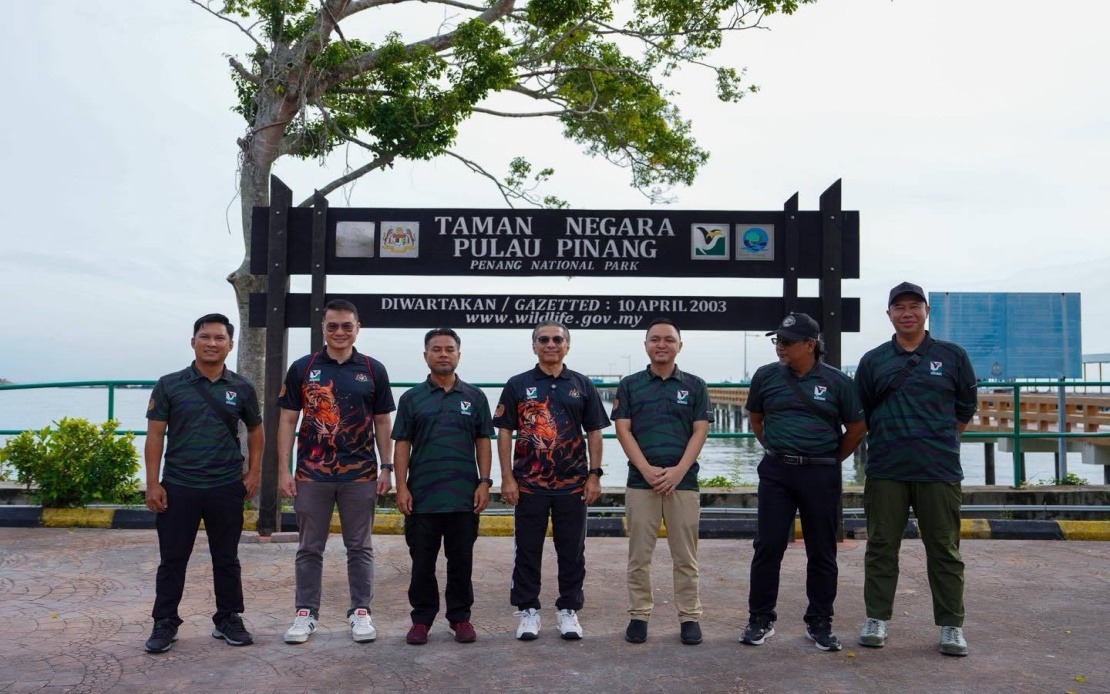
Penang National Park's remarkable mosaic of forests, mangrove coastlines, wildlife sanctuaries and its distinctive meromictic lake represents far more than a collection of scenic assets. Rather, the preserve embodies a delicate ecological system that demands thoughtful stewardship extending well beyond the boundaries of official protection policies. This reality became the focal point of Deputy Minister of Natural Resources and Environmental Sustainability Syed Ibrahim Syed Noh's recent field inspection, which underscored a fundamental shift in how Malaysia approaches biodiversity preservation: viewing conservation as an endeavour that demands active participation from citizens rather than passive observation from afar.
The traditional model of nature conservation—cordoning off protected areas and limiting access—no longer suffices in a rapidly changing world facing mounting environmental pressures. Syed Ibrahim articulated during his Teluk Bahang visit that the Ministry of Natural Resources and Environmental Sustainability recognizes that genuine ecosystem stewardship requires mobilizing communities as partners in the preservation process. This philosophy represents a departure from top-down resource management toward collaborative frameworks that empower ordinary Malaysians to become custodians of their natural heritage rather than mere visitors to it.
During his inspection, which included a briefing from the Penang Department of Wildlife and National Parks, Syed Ibrahim witnessed firsthand the park's ecological complexity. The coastal boat tour highlighted the intricate relationship between terrestrial and marine ecosystems, demonstrating how seemingly isolated natural features interconnect to sustain broader ecological health. Such connectivity becomes particularly significant for Southeast Asian countries like Malaysia, where biodiversity hotspots often face fragmentation pressures from urbanization and development.
The Turtle Conservation Centre at Kerachut Beach exemplifies how targeted conservation initiatives can protect endangered species while simultaneously creating touchpoints for public engagement. The facility's work preserving Green Turtles and Olive Ridley Turtles demonstrates that effective environmental stewardship combines scientific expertise with hands-on habitat protection. For Malaysia, where marine biodiversity faces mounting threats from climate change and human activity, such dedicated sanctuaries serve as both research laboratories and living classrooms for understanding ecosystem vulnerability.
The meromictic lake—a water body with distinct layers that do not mix—represents a natural phenomenon of singular ecological significance. This geological feature's presence within Penang National Park illustrates the extraordinary biodiversity concentration in relatively compact areas. Understanding such specialized ecosystems helps scientists and policymakers recognize that conservation cannot employ one-size-fits-all approaches; different habitats demand tailored management strategies that account for their unique characteristics and vulnerabilities.
Education emerges as the linchpin connecting conservation science to public consciousness. Syed Ibrahim emphasized that interactive learning experiences, such as those offered at Entopia Penang, cultivate appreciation for biodiversity among younger generations who will inherit responsibility for environmental stewardship. In Malaysia's context of rapid development and competing land-use pressures, fostering early understanding of ecological value becomes increasingly critical. When citizens comprehend the intricate relationships sustaining natural systems, they become more likely to support preservation policies and adopt sustainable personal practices.
Ecotourism, properly managed and regulated, presents a compelling economic argument for conservation that resonates across government levels and private sectors. Rather than viewing tourism as antithetical to protection, Syed Ibrahim framed responsible ecotourism as a bridge connecting people with nature while generating revenue streams that can fund ongoing conservation work. This approach holds particular relevance for Malaysia, where many state governments seek economic diversification beyond traditional extractive industries. Penang's experience demonstrates that natural attractions can anchor sustainable tourism economies when coupled with rigorous environmental management standards.
The convergence of multiple conservation approaches at Penang National Park—protected species programs, ecological education initiatives, and managed public access—reflects sophisticated understanding of modern conservation challenges. Isolated efforts, no matter how well-intentioned, rarely succeed against systemic threats to biodiversity. Instead, comprehensive strategies addressing ecological protection, scientific research, community education, and sustainable economic activity create mutually reinforcing systems where each component strengthens the others.
For Malaysia specifically, the implications extend beyond Penang's borders. As Southeast Asia confronts accelerating habitat loss and species extinction, demonstrating viable conservation models becomes strategically important. The peninsula and Sabah and Sarawak harbour some of Earth's most biodiverse ecosystems, yet face persistent pressures from agricultural expansion, logging, and infrastructure development. Successful community-engaged conservation frameworks developed in accessible locations like Penang can provide templates applicable to more remote or economically challenged regions throughout the nation.
Syed Ibrahim's emphasis on viewing natural preservation as a legacy responsibility rather than a present-day burden reframes conservation rhetoric in psychologically compelling terms. When citizens understand that protecting biodiversity represents honouring commitments to descendants rather than making sacrifices for abstract environmental goals, participation levels typically increase. This intergenerational framing aligns with Malaysian cultural values emphasizing family continuity and ancestral respect.
The Ministry of Natural Resources and Environmental Sustainability's grounding of conservation policy in field realities rather than distant bureaucratic calculations suggests pragmatic recognition that policies disconnected from on-the-ground conditions often fail. By personally visiting protected areas, engaging with management staff, and observing both successes and challenges directly, senior officials develop nuanced understanding essential for crafting implementable policy frameworks.
Moving forward, Malaysia's conservation trajectory will likely increasingly emphasize these integrative approaches combining protection with participation, education with economic opportunity, and ecosystem science with community values. Penang National Park, through its diverse conservation initiatives and commitment to public engagement, offers a compelling model demonstrating that nature preservation and human flourishing need not represent competing interests but rather complementary objectives achievable through thoughtful, inclusive environmental stewardship.

