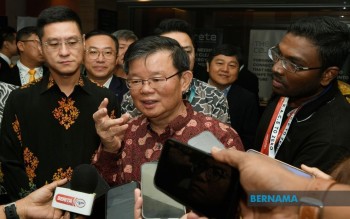
Twenty-five manufacturing firms have submitted applications to access the Penang Climate Mitigation Fund, a fresh financing initiative designed to accelerate the state's transition towards cleaner production methods and renewable energy adoption. Five of these applications are currently being evaluated by the fund managers, with Chief Minister Chow Kon Yeow revealing the progress during his address at the R.A.C.E To Zero: Penang Edition conference in George Town on August 13. The strong initial interest signals growing recognition among Penang's industrial base that environmental responsibility and commercial viability are increasingly inseparable in today's global supply chains.
The Climate Mitigation Fund was established through a strategic partnership between the Penang state government and Alliance Bank under the broader Penang Green Industry Programme. The initiative launched with RM20 million in committed capital—comprising RM5 million from the state coffers and RM15 million from the banking partner—though both parties have signalled potential to expand this allocation to RM100 million as the programme demonstrates traction. This layered funding structure reflects confidence that demand from manufacturers will justify scaling up the facility, particularly as international buyers impose stricter environmental compliance requirements on their supplier networks.
Eligible small and medium enterprises as well as mid-tier companies can borrow up to RM500,000 through preferential financing arrangements, with the loans supported by grant components, comprehensive sustainability assessments, and advisory services from environmental specialists. Rather than simply providing capital, the fund functions as a holistic support system guiding firms through the process of identifying efficiency opportunities, implementing technological upgrades, and demonstrating measurable emissions reductions. This consultative approach addresses a critical barrier many smaller manufacturers face: technical capacity gaps in evaluating and executing complex sustainability projects.
For Penang, the timing of this initiative aligns with a critical economic moment. The state's electrical and electronics sector generated RM436.9 billion in exports last year, accounting for approximately 68 per cent of Malaysia's total E&E shipments globally. This concentration of high-value manufacturing makes Penang simultaneously vulnerable and strategically positioned. Vulnerable because global technology companies are embedding carbon reduction targets throughout their supply chains, meaning Penang-based component manufacturers cannot ignore environmental performance without risking orders. Positioned because early movers towards clean production will capture a growing share of sourcing decisions made by multinational corporations competing on sustainability credentials.
Chow emphasised that clean energy and carbon efficiency have transcended their traditional role as environmental imperatives to become essential competitive factors. Multinational procurement teams increasingly interrogate supplier locations on energy sourcing, asking pointed questions about electricity mix and carbon intensity. Companies that can credibly demonstrate access to renewable power and lower Scope 2 emissions—emissions generated through purchased electricity consumption—acquire a tangible advantage in tender competitions. For Penang's manufacturers, often competing against facilities in countries with abundant hydro or solar resources, upgrading to cleaner energy pathways represents a necessary adaptation rather than a discretionary choice.
The state government is pursuing a multi-pronged approach to reshape Penang's energy infrastructure. The Penang Energy Framework, unveiled in November 2024, commits the state to reducing energy intensity by 25 per cent while ensuring renewable sources comprise at least 10 per cent of the total energy mix by 2030. Given Penang's topography and population density, rooftop solar has emerged as the most pragmatic renewable solution. Newly enacted building regulations now mandate that new commercial and industrial structures utilise a minimum of 75 per cent of available roof area for photovoltaic installations or demonstrate equivalent renewable energy procurement aligned with their Tenaga Nasional Berhad tariff category.
Beyond rooftop installations, state authorities are exploring additional renewable pathways. The Penang Water Supply Corporation is investigating floating solar arrays on its reservoirs—a technique that simultaneously generates electricity and reduces water evaporation losses. Silicon Island, Penang's ambitious technology and manufacturing hub currently under development, will integrate renewable generation from its conception, including a dedicated Green Tech Park powered by solar capacity. These initiatives reflect a recognition that sustainable development cannot be retrofitted onto existing infrastructure alone; new facilities must embed environmental performance from their initial design phases.
Energy efficiency standards form the second pillar of Penang's transformation strategy. The state is implementing intensity benchmarking systems that allow facilities to measure consumption patterns, compare performance against sectoral norms, and identify improvement opportunities through granular data analytics. Government and local authority properties are undergoing systematic assessments to quantify their renewable energy and efficiency potential. For newly constructed state facilities, the target specifies that at least five per cent of total energy consumption must originate from renewable sources, while existing government properties are encouraged to work towards the same benchmark.
Crucially, Penang's energy policies operate within a broader federal framework. The National Energy Efficiency Action Plan 2.0, developed by the federal government, targets an 11.6 per cent reduction in national energy demand intensity by 2035. Chow stressed that achieving these ambitious targets requires vertical policy alignment—federal and state governments moving synchronously towards cleaner energy supplies, greater efficiency performance, and strengthened global competitiveness. Penang's initiatives effectively constitute the state's implementation strategy for contributing towards national efficiency goals while simultaneously addressing the specific industrial composition and geographical constraints of the peninsula's northeastern manufacturing hub.
The convergence of financing support through the Climate Mitigation Fund, targeted regulatory incentives through building codes, and aspirational targets embedded in the Penang Energy Framework creates a structured ecosystem encouraging private sector participation. For Malaysian investors and manufacturers monitoring regional sustainability trends, Penang's coordinated approach offers a practical template. The early applications signal that companies recognise the dual imperative: compliance with emerging global carbon requirements, and operational cost reductions through efficiency improvements. As these first cohorts of projects complete their implementation cycles over the coming 18-24 months, documented results will likely accelerate adoption rates among the broader manufacturing base, transforming green investment from novelty initiative into baseline business practice.

