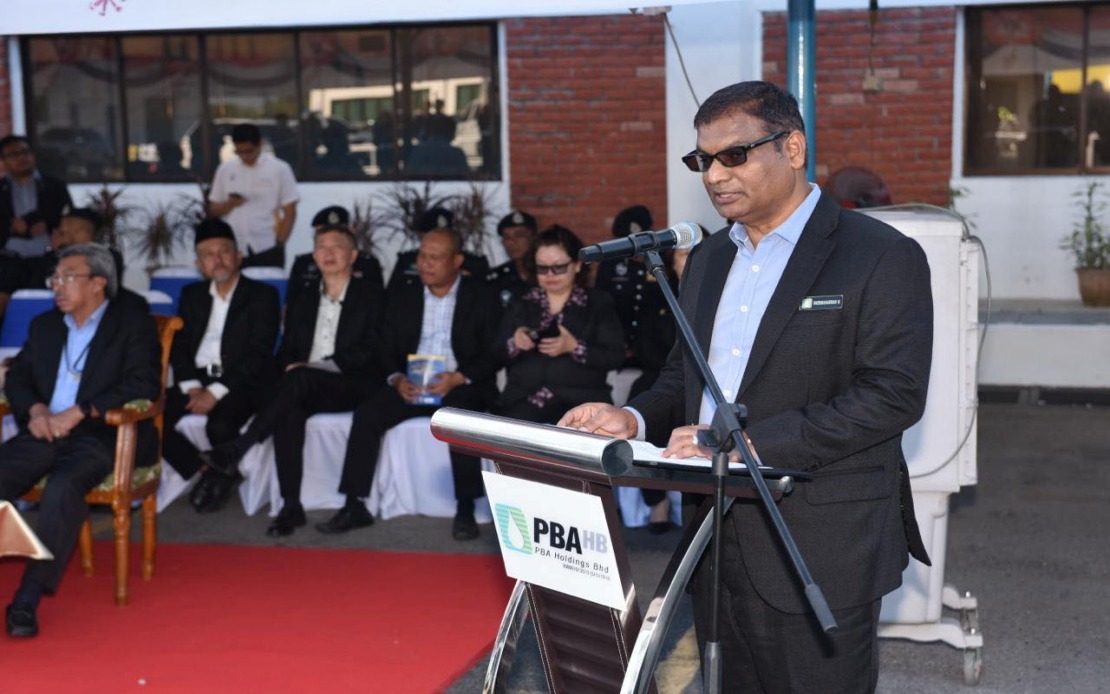
Penang Water Supply Corporation (PBAPP) is charting an ambitious infrastructure roadmap to address the peninsula's tightening water situation, announcing plans to bring a new treatment facility online by 2027 that will inject 80 million litres daily into the supply chain. The plant, to be constructed in Seberang Perai Selatan (SPS), represents a critical piece of the corporation's strategy to keep pace with the region's rapid transformation as manufacturers and residents compete for scarce resources. Chief Executive Officer Datuk K. Pathmanathan outlined the development during a statement released Thursday, emphasising that the facility reflects PBAPP's commitment to underpinning Penang's economic expansion without allowing infrastructure constraints to throttle growth.
The new treatment plant will operate under a Build-Operate-Transfer arrangement, a financing structure increasingly common in Malaysian water projects that typically allows private operators to recover costs before handing operations back to government agencies. PBAPP has identified Sungai Kerian as the source for raw water, a decision that taps existing resources in the region while minimising additional investment in new extraction infrastructure. The corporation has indicated that comprehensive technical specifications will emerge in coming months, suggesting the project remains in relatively early planning phases despite the 2027 target date. This timeline suggests PBAPP is moving with urgency to secure approvals and mobilise engineering resources, reflecting genuine anxiety about supply adequacy in the medium term.
The SPS initiative forms part of a graduated expansion strategy that extends through the early 2030s, with two additional major projects queued to commence operation once the 80 MLD facility is operating. By 2030, PBAPP expects to activate the Sungai Kerian Linear River Aeration (LRA) plant, a 114 million litre daily installation that will further reinforce supply stability within the district. The corporation has embedded this facility into its Water Contingency Plan 2030, a document that presumably details sector-wide resilience measures should demand surge beyond current projections or supply sources prove less reliable than anticipated. The sequencing reflects realistic planning: the 80 MLD plant provides immediate relief, the 114 MLD installation offers medium-term buffers, while a more transformative solution matures in parallel.
The most significant element of PBAPP's long-term strategy involves the Perak-Penang Water Project, anticipated to commence deliveries by 2031 with supplies ranging between 300 and 500 million litres daily transported from neighbouring Perak. This inter-state water transfer arrangement fundamentally reorients Penang's supply architecture, shifting reliance away from local sources toward cross-border agreements that will require sustained political coordination and interstate water tariffs. The Perak-Penang project would simultaneously support Seberang Perai Tengah, suggesting planners anticipate demand growth across the northern Seberang Perai corridor outpacing current supply capacity. Such regional water-sharing arrangements carry geopolitical dimensions, as they embed economic interdependencies and create vulnerability should relations between Penang and Perak administrations deteriorate or should Perak itself face supply pressures that necessitate revisiting export allocations.
Chief Minister Chow Kon Yeow's administration has positioned water security as foundational to Penang's development trajectory, with PBAPP functioning as the vehicle for translating political commitment into physical assets. The corporation's framing emphasises that growth should not be constrained by infrastructure limitations—a philosophy that justifies substantial capital expenditure and long-term planning. This approach reflects broader aspirations to position Penang as an investment destination capable of hosting advanced manufacturing and supporting residential expansion without the water-related rationing that occasionally disrupts less-equipped regions. The political dimension matters because water infrastructure decisions fundamentally shape urban form and economic competitiveness, making PBAPP's planning decisions consequential far beyond narrow utility management.
Currently, PBAPP operates a compact treatment plant in SPS that commenced operations in March of the previous year, a RM8.1 million installation engineered to produce 6.4 million litres daily from Sungai Kerian water. This facility serves approximately 4,000 users and was explicitly conceived as a temporary bridging measure, designed to sustain supply for three years while longer-term infrastructure comes online. The existing compact plant's modest capacity and deliberately temporary status underscore how acutely local demand has outpaced conventional infrastructure, necessitating interim solutions while major projects navigate approval and construction cycles. Its performance as a proof-of-concept for Sungai Kerian-sourced supply likely informed PBAPP's confidence in designating the same river as the water source for the larger 2027 facility.
Demand drivers in SPS are substantial and multifaceted, extending beyond household consumption into industrial water requirements that dwarf residential usage. The district currently registers 87,611 water users with average daily consumption reaching 116.8 million litres, equivalent to 13.5 per cent of Penang's entire water intake despite SPS housing only a fraction of the state's population. This heavily skewed consumption ratio reflects the district's role as industrial anchor, particularly through manufacturing operations that require processing water at scales that simple residential comparisons obscure. Demand projections anticipate significant escalation driven by ongoing development approvals, suggesting current supply gaps will widen considerably should expansion proceed without corresponding increases in treatment capacity.
The Batu Kawan Industrial Park 3 project exemplifies the magnitude of future industrial water demand. This RM2.2 billion undertaking spans approximately 165 hectares and is projected to generate water consumption approaching 220 million litres daily by the 2030s, a figure approaching current total SPS intake. The industrial park's scale indicates that single facilities can absorb nearly as much water as entire current districts consume, illustrating how marginal industrial expansions translate into massive incremental demand once fully operational. Beyond BKIP3, semiconductor manufacturing through the proposed Siliconware Precision plant and residential developments such as SkyWorld Cassia will further compound water pressure, creating cumulative demand growth that no single project can fully accommodate.
The investment scale and timeline suggest PBAPP operates under genuine pressure to mobilise capital and secure approvals within compressed timeframes. The 80 MLD facility by 2027, the 114 MLD installation by 2030, and the 300-500 MLD inter-state transfer by 2031 collectively represent billions in capital deployment across less than a decade. Executing such an ambitious agenda requires securing financing, navigating environmental assessments, obtaining land tenure, and maintaining political support across multiple administrations and election cycles. The Perak-Penang Water Project introduces additional complexity by requiring interstate agreement on water pricing, allocation formulas, and infrastructure ownership, matters that operate at administrative levels beyond PBAPP's direct control. Any delays in approvals or construction would immediately constrain capacity relative to demand growth, potentially necessitating rationing measures that undermine the administration's growth narrative.
For Malaysian and Southeast Asian observers, PBAPP's strategy illustrates broader regional patterns of water stress intensifying as industrial development and urbanisation accelerate. Penang's approach—combining local source expansion, inter-state transfers, and BOT private investment—mirrors strategies adopted across the region as governments confront the reality that natural water availability has become a binding constraint on industrial-scale expansion. The willingness to import water across state lines at presumably substantial cost signals that demand has outpaced local renewable supply capacity, a condition increasingly common in water-scarce regions. This dynamic creates incentives for water-intensive industries to locate in areas with secure access, potentially shaping future manufacturing geography as supply constraints crystallise into locational advantages for regions with assured water availability.

