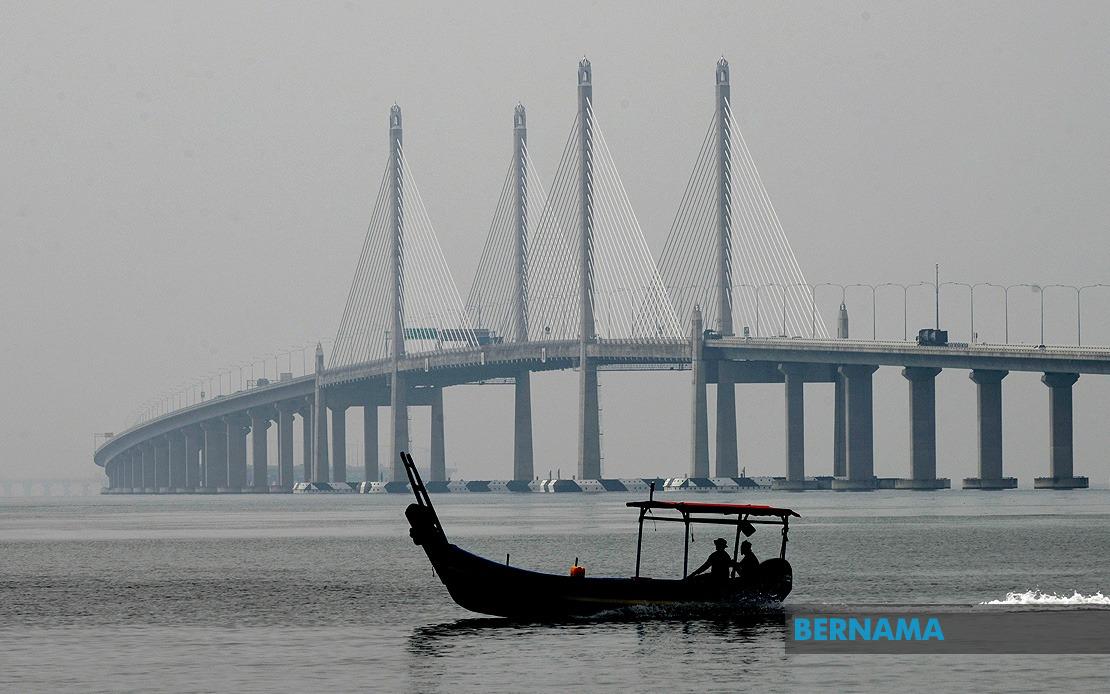
Penang authorities are preparing to convene talks with industry stakeholders to navigate a contentious issue balancing public safety with economic livelihood, as fishing restrictions under two major bridges have created friction among boat operators and associated businesses. The discussions, set for the coming week, will involve the Penang Rural Development, Agro-technology and Food Security and Entrepreneurship Committee, which has identified the need for a nuanced resolution that respects both regulatory frameworks and community welfare.
The fishing ban applies to areas beneath the Penang Bridge and the Sultan Abdul Halim Mu'adzam Shah Bridge, collectively known as JSAHMS or the Second Penang Bridge. These locations have been formally designated as restricted areas and prohibited places under the Protected Areas and Protected Places Act 1959, classified as National Key Points due to their critical infrastructure status. The legal designation carries significant weight, establishing a regulatory foundation that cannot be easily overridden without careful consideration of national security implications.
According to Datuk Rashidi Zinol, chairman of the committee, complaints were recently lodged by boat operators during a direct engagement. These stakeholders, representing both tourist boat services and commercial fishing enterprises, presented substantive concerns about how the enforcement has undermined their operational capacity. The operators contended that the fishing restrictions have directly contracted market activity, resulting in diminished client demand and consequently reduced revenue streams for their services and associated ancillary operations.
The economic ramifications extend well beyond the primary boat operators themselves. Rashidi highlighted how the restrictions have created a cascading effect throughout interconnected supply chains and informal economic networks. Fishing equipment suppliers, ice producers, food vendors, and numerous small businesses dependent on fishing activity have all experienced reduced patronage and income. This demonstrates how targeted regulatory measures, while justified on security grounds, can inadvertently disrupt broader economic ecosystems and livelihoods throughout a community.
The core tension underlying these discussions reflects a fundamental governance challenge: how to maintain critical infrastructure security and public safety whilst preserving economic opportunities for communities who have historically depended on these waterways. The Penang bridges represent vital national assets requiring protective measures, yet the enforcement mechanisms have triggered unintended consequences that warrant serious policy consideration. This represents a common dilemma in Southeast Asian coastal economies where maritime livelihoods and modern infrastructure coexist in shared spaces.
Rashidi's commitment to seeking a "balanced approach" signals official recognition that the current implementation may require refinement. Rather than simply maintaining the status quo, the committee appears open to exploring potential solutions that could accommodate safety imperatives whilst creating pathways for regulated activity. This pragmatic stance suggests that absolute prohibitions might not represent the only viable policy option, and that collaborative problem-solving could yield more sustainable outcomes.
The upcoming consultations will necessarily involve multiple stakeholder categories. Beyond the boat operators themselves, discussions should reasonably include maritime safety authorities, national security personnel overseeing the key points designation, local business representatives, and potentially maritime workers' organisations. Achieving genuine balance requires understanding perspectives from all affected parties and identifying creative solutions rather than perpetuating conflict between security concerns and livelihood preservation.
Potential pathways forward could involve designated fishing zones with restricted timing, enhanced safety protocols rather than outright prohibitions, or permit systems that allow monitored activity whilst maintaining security oversight. Other port cities and coastal regions have implemented comparable frameworks that maintain infrastructure protection whilst permitting supervised economic activity. Learning from these international precedents could inform Penang's approach.
The timing of this initiative reflects broader policy maturation within Malaysian regional governance. Rather than imposing top-down restrictions without stakeholder consultation, the committee's decision to engage directly with affected communities demonstrates a shift towards more inclusive policy formulation. This approach, whilst potentially more time-consuming, typically yields more durable solutions and reduces implementation resistance.
For Malaysia's maritime economy more broadly, this situation underscores ongoing tensions between modernisation and traditional livelihoods. As infrastructure development continues throughout Southeast Asia, balancing new facilities with pre-existing economic activities becomes increasingly complex. The Penang precedent may influence how other states manage comparable situations, making these discussions potentially instructive beyond the immediate geographic context.
The fishing community's concerns also highlight broader vulnerabilities within informal and semi-formal maritime economies. Communities dependent on unrestricted access to fishing grounds face increasing pressures from infrastructure development, environmental regulations, and security measures. Finding sustainable solutions requires not merely accommodating current restrictions but potentially supporting economic diversification and livelihood resilience.
Successful resolution of the Penang bridge fishing controversy depends on officials approaching negotiations with genuine commitment to accommodation rather than performative consultation. The measures' legitimacy ultimately rests on whether affected communities perceive the process as fair and outcomes as reasonably balancing competing interests. Next week's discussions will indicate whether Penang's governance approach can genuinely reconcile these competing demands.

