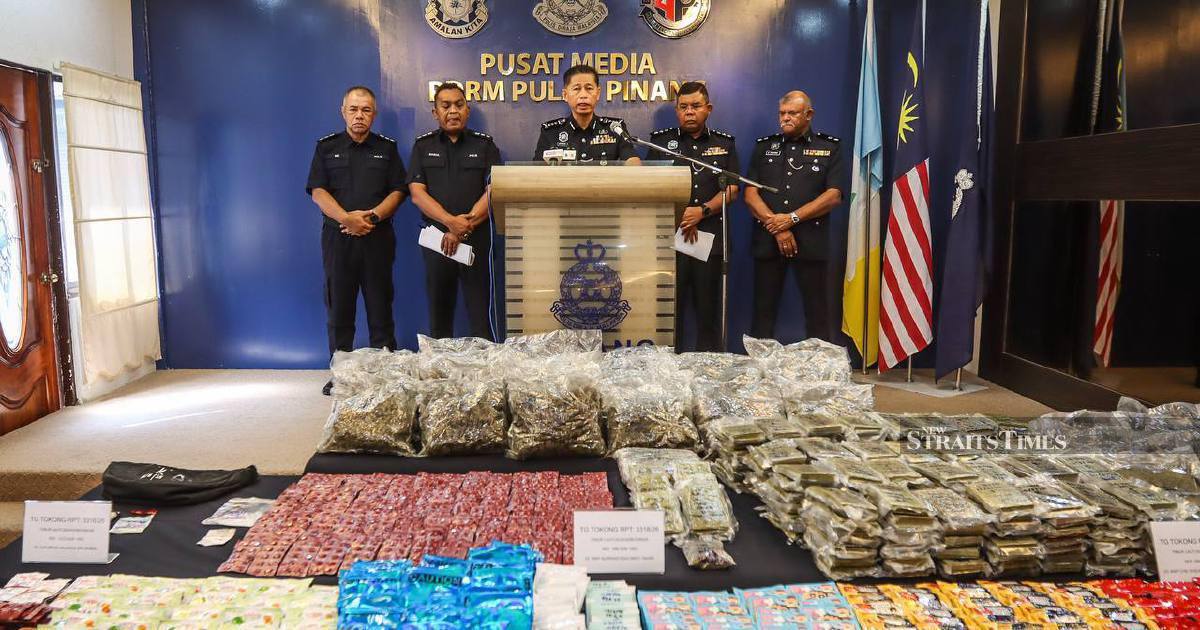
Penang police have successfully concluded a series of carefully coordinated operations targeting organised drug-trafficking networks operating across the island, resulting in the arrest of seven individuals and the recovery of contraband substances valued at RM3.2 million. The operation represents a notable enforcement victory for the state police narcotics division and underscores ongoing efforts to combat drug distribution networks that have long been considered a critical public order concern in the northern region.
The scale of the seizure reflects the sophisticated nature of contemporary drug trafficking operations in Malaysia, where criminal organisations have increasingly professionalised their supply chains and distribution methods. The involvement of a married couple among those detained suggests that some trafficking networks operate along family lines, a pattern that enforcement authorities have observed with growing frequency across the country. This familial dimension to drug crimes presents particular challenges for police, as it can complicate investigative work and create complications in custody proceedings.
The three separate syndicates targeted in these operations likely represent distinct criminal entities with different territorial focuses or specialisations within Penang's broader drug economy. Police enforcement strategies typically identify networks based on their operational methods, the types of substances they distribute, and their market positioning. By dismantling multiple organisations simultaneously, authorities aim to disrupt supply chains sufficiently to affect local availability and pricing, though experience suggests that removal of one criminal network often creates competitive opportunities for rival groups.
The RM3.2 million valuation of seized drugs reflects street-level pricing, which means the actual quantity of substances recovered would depend significantly on the composition of seizures and the specific drugs involved. Narcotics enforcement typically distinguishes between bulk quantities destined for distribution and street-level retail amounts, with different substances commanding vastly different per-gram values in illicit markets. Understanding the precise breakdown of what was recovered—whether methamphetamine, heroin, synthetic drugs, or cannabis products—would provide greater insight into the syndicates' operations and market positioning.
Penang's position as a major maritime hub and its proximity to Thailand and Kedah along established trafficking corridors means the state remains particularly vulnerable to drug smuggling activities. International criminal organisations have historically used Penang as a transshipment point for substances destined for broader regional distribution, making local enforcement efforts critical to disrupting larger supply networks. The recovery of substantial quantities in state-level operations therefore carries implications beyond Penang's borders, potentially affecting drug availability throughout Northern Malaysia and into neighbouring regions.
The seven arrests resulting from these operations will now enter Malaysia's formal criminal justice system, where narcotics offences carry severe penalties depending on the quantities involved and specific charges laid. Malaysia maintains some of the region's strictest drug laws, with trafficking convictions carrying potential capital punishment, lengthy custodial sentences, or substantial fines. The inclusion of a married couple among those arrested raises particular concerns for family structures and dependent children, aspects that Malaysian social services typically address in the aftermath of such enforcement actions.
Successful dismantling of trafficking syndicates requires sustained effort beyond the immediate arrest and seizure phase. Police typically invest considerable resources in post-arrest investigations to identify upstream suppliers and downstream customers, working to map the full scope of each criminal organisation's operations. Intelligence gathered during these phases frequently proves valuable in identifying still-operational networks and locating clandestine production or storage facilities that initial raids may not have uncovered. The coordination of operations across three separate investigations suggests a level of intelligence-led policing capability that has been gradually strengthened within Malaysian police forces in recent years.
The visibility afforded by public announcements of such operations serves multiple enforcement objectives. Beyond the immediate impact on the targeted syndicates, official communications about major drug seizures aim to deter potential participants in the illicit trade, demonstrate police capability and determination to the broader public, and maintain political momentum for continued resource allocation to narcotics enforcement. However, research on drug policy effectiveness indicates that enforcement alone, without complementary prevention and treatment initiatives, typically produces limited long-term reductions in drug market activity.
For Malaysian citizens and regional observers, these Penang police operations represent ongoing tensions inherent in drug policy implementation across Southeast Asia. The region faces simultaneous pressures to intensify enforcement against trafficking organisations, address growing patterns of drug abuse within communities, and maintain international cooperation frameworks on narcotics control. Penang's continuing vulnerability to organised drug trafficking reflects broader structural challenges affecting the entire region, including poverty, corruption, weak regulatory capacity in some jurisdictions, and the enormous profitability of illicit drug markets. Sustainable solutions would require coordinated approaches extending well beyond police enforcement into areas including economic development, community services, and transnational criminal justice cooperation.

