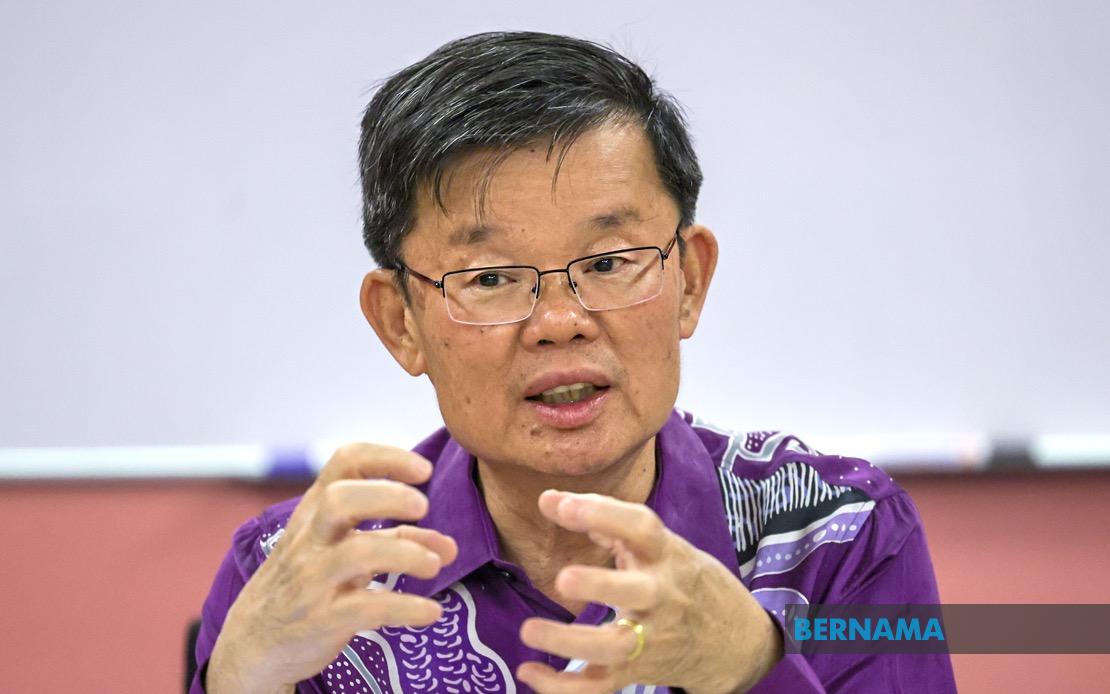
Penang Pakatan Harapan (PH) will continue to include its Barisan Nasional (BN) coalition partner in the state executive council until the next general election, Chief Minister Chow Kon Yeow announced at a press conference in George Town on August 8. The decision reflects the coalition's commitment to the Unity Government framework that has governed Penang since the 2023 state election.
The choice to maintain this arrangement stems from the formal electoral pact struck between PH and BN during the 2023 campaign, which fundamentally reshaped Penang's political landscape. Chow explained that the Penang PH leadership believed the partnership remained valuable for achieving shared policy objectives and demonstrated that cooperation between traditionally opposing coalitions could yield tangible results for the public. By preserving the status quo until the next general election, the coalition signals continuity and stability in governance during a critical period of economic and administrative development.
Datak Rashidi Zinol, who chairs the State Rural Development, Agrotechnology and Food Security Committee, will retain his position as the BN representative within the executive council. This appointment reflects the coalition's attempt to balance representation across party lines while maintaining functional governance structures. The decision avoids potential disruption that could arise from removing BN from decision-making roles, thereby preserving the partnership that has proven electorally successful in Penang.
Chow acknowledged that Penang PH had studied recent state election outcomes in Johor and Negeri Sembilan to inform its strategic direction. These results provided valuable insights into shifting voter preferences and emerging political dynamics across Malaysia. Rather than reacting defensively to other states' outcomes, the coalition intends to conduct comprehensive analysis of each electoral seat in Penang from multiple angles. This granular approach suggests preparation for intensified competition in the sixteenth general election, where national political tides could influence local results differently than in 2023.
Strengthening the coalition's political messaging has become a priority. Chow outlined plans to fortify PH's narrative by openly addressing areas where the coalition underperformed or faced criticism. This candid approach contrasts with traditional Malaysian political communication styles, signalling an effort to build credibility through transparency. The administration also plans to expand digital platform utilisation to reach voters more effectively and engage the growing Undi18 demographic, young voters who entered the electoral roll at eighteen years old and represent a demographic cohort with distinct political interests and communication preferences.
The Penang administration projects confidence in its governance record, emphasising state stability and institutional integrity as cornerstones of its appeal to voters. Officials pointed to economic growth achievements, successful investment attraction, and job creation initiatives as tangible evidence of effective administration. These accomplishments form the foundation of PH's argument that the coalition deserves continued public support. However, Chow cautioned against complacency, noting that public opinion and sentiment frequently shift more rapidly than the underlying facts of administrative performance, a reality Malaysian politicians know well given the volatility of recent electoral cycles.
The 2023 state election produced a commanding mandate for the Unity Government coalition. PH parties secured 29 of 40 seats contested, with the Democratic Action Party (DAP) winning all 19 seats it fought, PKR capturing seven, and Parti Amanah Negara securing one. BN's two-seat contribution, while numerically modest, provided critical psychological and legitimacy benefits to the coalition by representing a break from decades of Penang politics dominated by either PH or BN in sole control. This unity arrangement helped create the perception of a government with genuinely broad-based support rather than a partisan administration.
The decision to retain the BN representative reflects broader concerns about maintaining coalition cohesion ahead of a potentially challenging national electoral cycle. Removing BN from executive roles now could trigger grievances that undermine cooperation during the general election campaign, when unified messaging and coordinated campaigning become essential. By preserving institutional roles, PH attempts to demonstrate that the electoral pact represents genuine partnership rather than a temporary convenience that evaporates once votes are counted.
This arrangement positions Penang as a test case for Unity Government viability at the state level. The coalition's willingness to share executive power with a traditional rival, and to maintain that power-sharing through an entire electoral cycle, suggests either genuine ideological alignment or pragmatic recognition that Malaysian politics increasingly requires cross-coalition cooperation to achieve stable governance. For Malaysia's broader political trajectory, the Penang model offers insights into whether rival coalitions can coexist productively in shared governance arrangements, particularly relevant as debates continue about federal coalition stability and future electoral outcomes.

