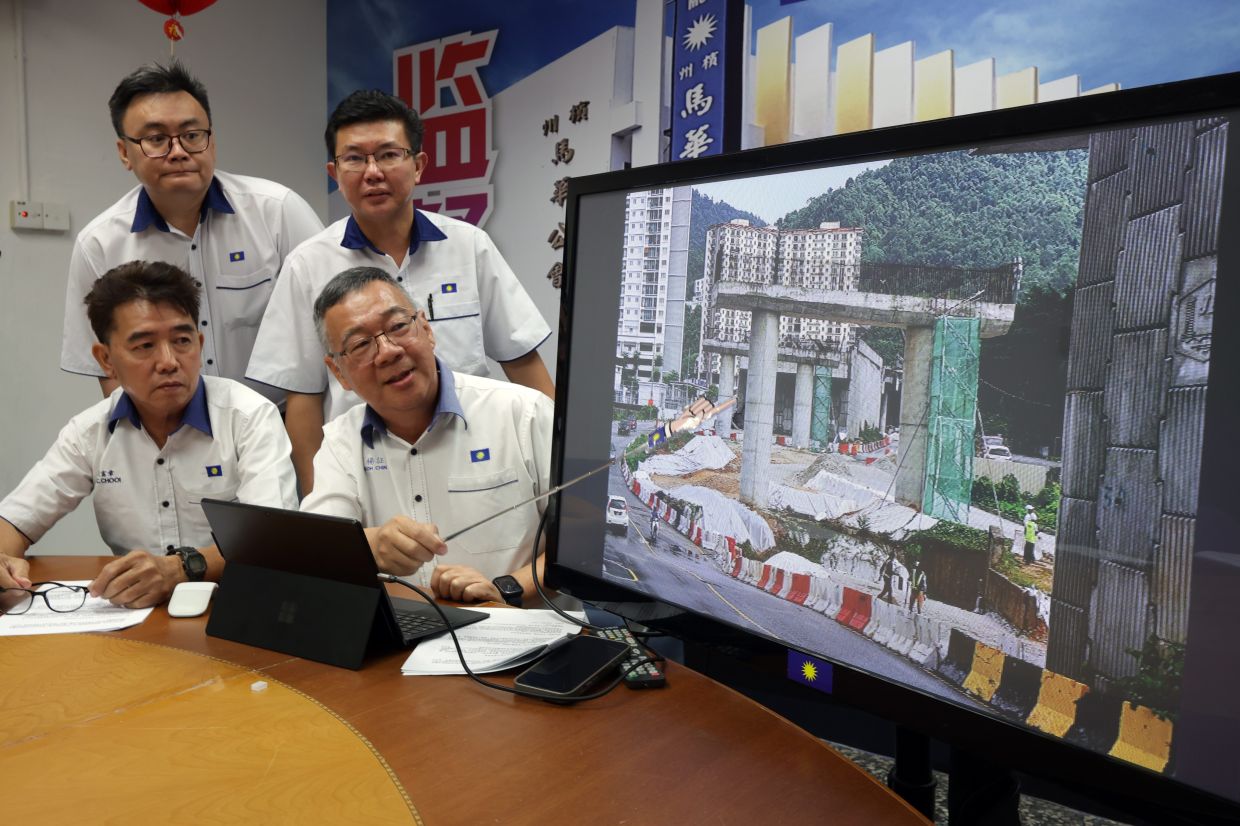
Penang MCA has intensified scrutiny of the Air Itam-Tun Dr Lim Chong Eu Expressway bypass project, demanding that the state government release detailed documentation on financial disbursements, consultant assessments and completion verification reports. The opposition party's challenge goes beyond the familiar narrative of construction delays, instead framing the issue as a fundamental matter of government accountability to taxpayers and residents whose daily lives depend on the infrastructure.
Yeoh Chin Kah, the party's secretary, has reframed the debate surrounding this long-troubled megaproject. Rather than focusing solely on postponed timelines, he has zeroed in on the erosion of public confidence that occurs when reported metrics appear disconnected from observable reality. This shift in emphasis reflects growing frustration among stakeholders who have watched the project's completion date slip multiple times, most recently extending to April 12, 2027.
The core of Penang MCA's concern centres on a mathematical and practical inconsistency. The state government claimed the project reached 80 per cent completion in May, then jumped to 89 per cent by December. Yet a site inspection conducted by party members on July 1 painted a starkly different picture. Along critical stretches including Valley Road, Changkat Tembaga and Jalan Thean Teik, the work remained in comparatively early stages. MCA representatives observed bridge support pillars standing in isolation, with no corresponding superstructure elements visible. Roadway surfacing had not advanced substantially, and essential finishing elements such as safety guardrails, noise-dampening barriers, electrical and mechanical systems, and connecting road networks remained incomplete across numerous sections.
This discrepancy matters profoundly for several reasons. First, it raises legitimate questions about how project progress is being measured and reported. Construction completion percentages, if calculated incorrectly or misleadingly, can mask underlying problems that prevent timely delivery. Second, the gap between reported progress and physical evidence suggests either serious communication failures within the project management structure or deliberate opacity. For residents in Air Itam, Bandar Baru Air Itam and Paya Terubong—numbering around 300,000 people—accurate information about when they might experience reduced travel times and eased congestion is not merely academic; it shapes their commuting decisions, business planning and quality of life.
Yeoh has given the state government a seven-day window to furnish comprehensive documentation, establishing a clear deadline that reflects the party's determination to move beyond vague reassurances. Should the government decline, Penang MCA has signalled it will escalate the matter by lodging formal complaints with the National Audit Department and the Malaysian Anti-Corruption Commission. This escalation strategy carries weight because it places the matter within the purview of agencies with statutory investigative powers and the authority to scrutinise public expenditure practices.
The party also announced plans to establish a dedicated monitoring committee, which would create an ongoing parallel oversight mechanism independent of the state administration. Such a structure would allow systematic tracking of reported progress against independently verified site conditions, providing both early warning of further slippage and a documented record for public review. This represents a sophisticated response to chronic information asymmetries that have characterised the project since its inception.
The 6-kilometre toll-free bypass represents the second phase of Penang's ambitious undersea tunnel and paired roads initiative. The infrastructure combines elevated viaducts, subterranean passages and surface-level roads to create a comprehensive alternative route. The strategic importance of completing this link cannot be overstated: it promises to redistribute traffic from congested arteries, create economic opportunities in underserved communities and establish more balanced urban mobility patterns across the northern corridor of the state.
Countering the criticism, Paya Terubong assemblyman Wong Hon Wai provided his own assessment during recent contact with the media. Wong cited a 91 per cent completion figure and expressed confidence that the April 2027 target remains achievable. He referenced a June 30 meeting with the construction team and detailed upcoming milestones, including the launching of 12 bridge beams on the Gelugor section scheduled for this month through August, with the final six beams targeted for the fourth quarter. Wong also explained that all bridge beams on the Bandar Baru Air Itam side have already been installed.
However, Wong's remarks inadvertently reinforced some of MCA's concerns. His disclosure that additional deck and parapet work remains in progress, followed by mandatory Road Safety Audits conducted by government agencies before any opening, suggests the project faces substantially more activity than the completion figures might imply. The necessity for post-construction auditing and bureaucratic sign-offs introduces further unpredictability into the timeline. Even after construction concludes, regulatory and safety protocols could extend the period before public access becomes possible.
The Air Itam bypass project exemplifies challenges that plague major infrastructure initiatives across Southeast Asia. Insufficient transparency during execution breeds suspicion, delays compound public dissatisfaction, and conflicting accounts from different officials create confusion rather than clarity. For Malaysian policymakers monitoring this situation, the lesson is instructive: establishing independent verification mechanisms, publishing granular progress reports and ensuring consistent communication from all stakeholders from project inception would prevent the credibility gaps now afflicting this initiative.
The dispute also reflects deeper questions about infrastructure governance in Malaysia. When a project carries a price tag substantial enough to influence regional development, the public has a legitimate claim to detailed, verifiable information about how taxpayer money is being deployed and what timeline can realistically be expected. Penang MCA's push for document disclosure and independent monitoring aligns with international best practices for megaproject management, where transparency serves as both an accountability mechanism and a means of building sustainable public support for necessary development.
As the state government considers its response to MCA's demands, it faces a choice between defensive resistance or proactive transparency. Releasing the requested documents, acknowledging delays honestly and establishing clear revised timelines would likely restore confidence more effectively than continued claims of progress that residents and observers can visibly contradict. The residents depending on this bypass—numbering in the hundreds of thousands—deserve neither optimistic fiction nor bureaucratic opacity, but rather honest, detailed and verifiable information about when their commuting burden might finally ease.

