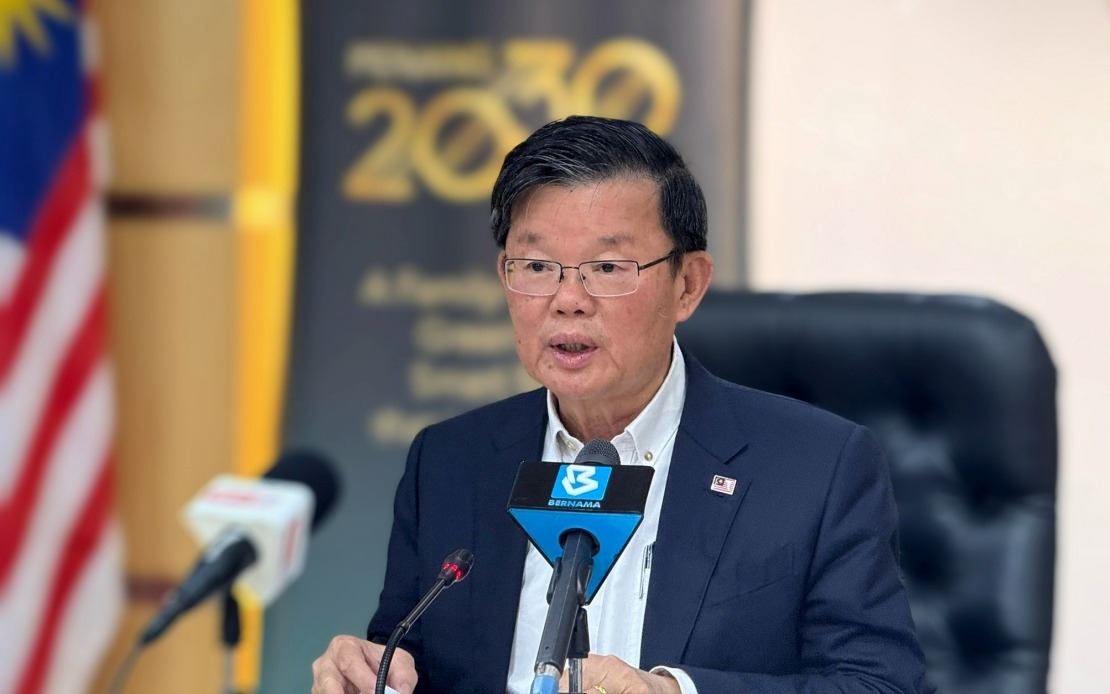
The Penang government has brought in international consultancy PricewaterhouseCoopers Advisory Services Sdn Bhd to develop the foundational documents for its ambitious Penang International Financial Centre initiative, a move that underscores the state's determination to establish itself as a regional financial powerhouse. Chief Minister Chow Kon Yeow announced the appointment following approval by the PIFC Special Task Force Committee, with PwC formally engaged from June 15 onwards to complete three critical documents within a 20-week timeframe.
The scope of PwC's assignment extends beyond merely drafting a white paper; the consultancy will develop a comprehensive Strategic Blueprint and Action Plan that address the multifaceted requirements of establishing a world-class financial centre. These documents will articulate the strategic rationale underpinning the PIFC concept, define the regulatory architecture necessary to support international financial operations, and map out the phased approach to implementation. The Strategic Blueprint specifically tackles governance structures, physical and digital infrastructure requirements, fiscal incentives for market participants, and a realistic timeline for rolling out the initiative in successive phases.
According to Chow's statement, PwC has already submitted a preliminary progress report to the committee at its July 17 meeting, revealing initial analysis that positions the PIFC as a natural extension of Penang's existing strengths. The state has long established itself as a critical node in global electrical and electronics supply chains, housing major manufacturers and component suppliers. Rather than pursuing an entirely new economic direction, the proposed financial centre would leverage this foundation to create a financial ecosystem that supports and amplifies these existing industries, facilitating capital flows, trade financing, and technology-driven financial services tailored to the E&E sector and related fields.
The initiative represents a strategic calculation that Penang can differentiate itself in the competitive landscape of Asian financial centres by embedding financial services within its existing manufacturing and technology ecosystem. This approach contrasts with traditional financial hubs that operate somewhat independently from broader industrial activity. By tying the PIFC to Penang's proven manufacturing capabilities and supply chain expertise, the state government hopes to create a unique value proposition that attracts financial institutions, fintech companies, and capital markets participants interested in sector-specific financial solutions.
Beyond the technical aspects of financial regulation and infrastructure, PwC has been assigned responsibility for extensive stakeholder engagement across multiple constituencies. This engagement strategy encompasses local and international industry players with vested interests in Penang's economic development, financial regulators who must ultimately approve the framework, academic institutions that can contribute research and talent development, and other partners whose cooperation is essential for success. This consultative approach recognises that ambitious economic initiatives of this scale require broad buy-in and cannot be imposed through top-down directives alone.
The engagement process also serves a crucial function in stress-testing the PIFC concept against practical realities and diverse perspectives. International financial institutions bring experience from other regional hubs, regulators can identify potential compliance and risk management issues early, and academics can ground discussions in theoretical frameworks and evidence-based best practices. Local industry players ensure that the financial centre responds to genuine needs rather than pursuing an abstract ideal disconnected from actual business requirements. This comprehensive consultation increases the likelihood that the resulting framework will be both technically sound and commercially viable.
Chow expressed confidence that the PIFC initiative would catalyse the emergence of a technology-focused financial ecosystem that enhances competitiveness across the Northern Region while simultaneously strengthening Penang's long-term economic trajectory. The framing of the PIFC as a regional initiative rather than purely a Penang-centric project reflects broader thinking about how the state can position itself within the larger Malaysian and Southeast Asian context. A thriving financial centre in Penang could attract investment and talent to the entire Northern Region, creating spillover benefits for Kedah, Perlis, and potentially northern Selangor.
The timeline for completion reflects the government's urgency in moving from planning to implementation. The white paper was originally targeted for completion by late July or early August, though the formal 20-week consultancy period from June 15 would extend into November. This accelerated schedule suggests that preliminary groundwork has already been completed and that PwC is building upon existing government analysis rather than beginning from scratch. The compressed timeframe also indicates political determination to progress the initiative despite competing demands on government resources and attention.
For Malaysia more broadly, the PIFC initiative reflects evolving thinking about how states and regions can develop distinctive economic niches within the national framework. Rather than pursuing generic diversification, Penang's approach emphasises building on genuine comparative advantages—in this case, established expertise in high-technology manufacturing and supply chain management. This model could prove instructive for other Malaysian states seeking to develop financial services capabilities without attempting to directly compete with Kuala Lumpur's dominant financial centre position.
The involvement of PwC also signals the government's commitment to international best practices and standards in developing the PIFC framework. The consultancy's global network and experience with financial centre development in multiple jurisdictions bring valuable perspective on what works, what fails, and how to navigate the complex regulatory landscape governing international financial services. However, success ultimately depends on whether the resulting blueprint can be translated into concrete action through coordinated government policy, infrastructure investment, and regulatory reform.
The government's appreciation for stakeholder cooperation and explicit recognition of the PIFC Special Task Force Committee's contributions suggests that institutional coordination will be central to implementation. Financial centre development requires alignment across multiple government agencies including finance, trade, technology, and urban development ministries. Clear governance structures and shared commitment to objectives become increasingly important as the initiative moves from strategic planning into operational execution.
As the PwC consultancy progresses, attention will focus on whether the emerging framework can realistically be implemented given Malaysia's existing regulatory structures and fiscal constraints. The white paper will need to address potential tensions between international best practices and domestic policy requirements, regulatory coordination between federal and state authorities, and the specific infrastructure investments necessary to make Penang an attractive location for international financial services companies. The documents ultimately produced will reveal whether the PIFC concept represents a genuinely transformative vision for Penang's future or an aspirational initiative constrained by practical limitations.

