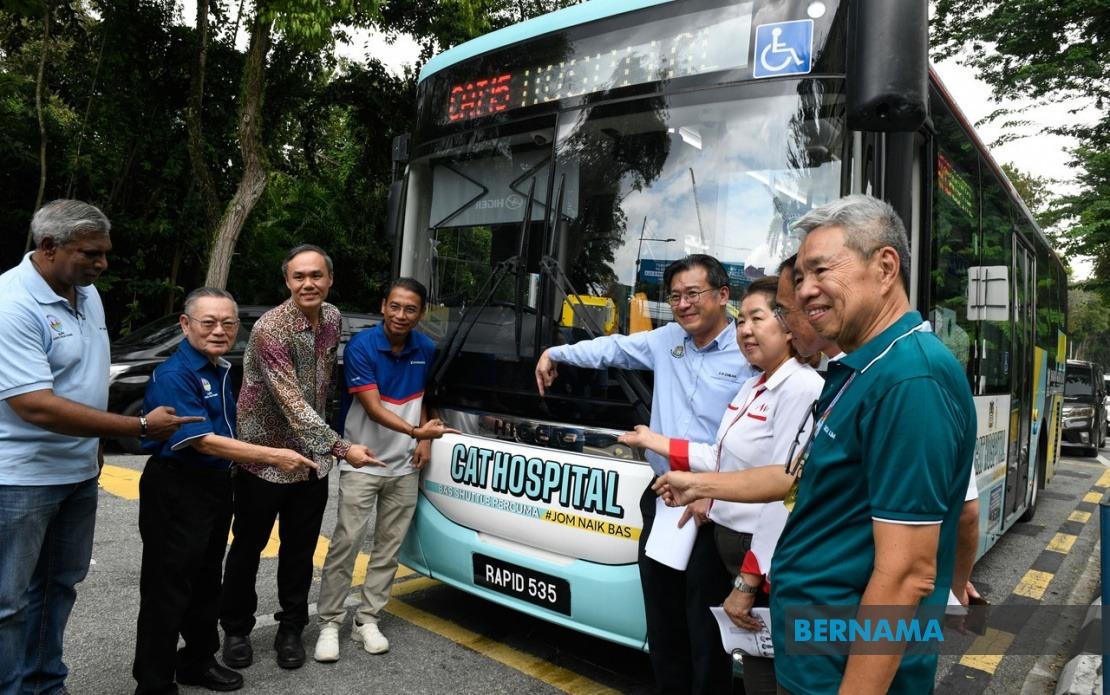
The Penang Island City Council (MBPP) has committed RM900,000 in annual funding to operate a free shuttle bus service designed to improve public transport accessibility across the city centre. The Central Area Transit (CAT) service connects Komtar, Penang's major transport hub, with Penang Hospital (HPP) alongside three private hospitals and various healthcare establishments in the heart of George Town. This initiative reflects growing recognition among local authorities that medical facilities require dedicated transport solutions to serve patients, caregivers, and senior citizens effectively.
According to MBPP Engineering Director Cheah Chin Kooi, the underlying motivation extends beyond convenience—the service aims to shift commuting patterns away from private vehicles toward public transport while simultaneously tackling congestion and parking difficulties endemic to the hospital precinct. The timing reflects practical realities: Penang Hospital's recent expansion created acute parking constraints, spurring the council to conduct a comprehensive survey that identified public transport deficiency as a critical gap. The free service addresses this need by removing financial barriers to hospital access, a particularly important consideration for lower-income patients and families managing recurring visits.
Since commencing operations on January 1, the service has demonstrated stronger-than-expected uptake. Initial projections suggested approximately 300 daily passengers, but actual figures have climbed to roughly 600, representing a 100 percent increase within months. This trajectory suggests the service fills a genuine demand that was previously unmet by existing transport networks. The growth pattern also indicates that removing user fees significantly influences adoption rates for medical-related travel, offering valuable lessons for other Malaysian states considering similar interventions.
The operational structure involves three Rapid Penang buses servicing the eight-kilometre route between Komtar and the hospital district, with departures scheduled from 6 am to 8 pm. The timetable maintains 20-minute intervals, generating 36 daily trips. This frequency represents a careful balance—frequent enough to discourage private vehicle use without excessive operational redundancy. The chosen hours align with typical medical facility operating patterns while accommodating both early morning patient admissions and evening visitor traffic, though the 8 pm cut-off may exclude night-shift healthcare workers and emergency-related trips.
Rapid Bus Sdn Bhd, the operator managing northern region services, partnered with MBPP on this initiative, linking municipal planning objectives with established transport infrastructure. This collaboration model—where city councils direct policy and funding while established operators handle implementation—has become increasingly common across Malaysian municipalities seeking cost-effective solutions without building competing service networks. The arrangement also provides Rapid Bus with guaranteed revenue from the council subsidy, creating stability that justifies resource allocation to the route.
The hospital's infrastructure improvements run parallel to the transport initiative, demonstrating integrated urban planning. Penang Hospital management upgraded pedestrian walkways along Jalan Residensi and initiated works to enhance the main entrance on Jalan Utama, specifically designed to facilitate seamless transitions between the bus service and hospital facilities. These complementary investments signal recognition that transport solutions require supporting infrastructure—adequate signage, shelter, and safe walking paths transform buses from mere vehicles into functional components of healthcare accessibility. Without these enhancements, the best-designed service would still present practical barriers to vulnerable passenger groups.
The free model differs from traditional municipal bus systems, which typically charge nominal fares. Healthcare-oriented free services acknowledge the involuntary nature of hospital visits—patients lack the discretionary capacity to shift demand based on price. This approach also reduces administrative costs associated with fare collection, ticketing, and revenue management, which can consume significant operational budgets. For elderly passengers and those accompanying sick family members, eliminating the transaction itself reduces cognitive load during stressful circumstances.
Context within Penang's broader transportation landscape reveals a city grappling with congestion exacerbated by rapid growth and increasing vehicle ownership. The George Town heritage zone particularly struggles with narrow streets and limited parking, making targeted interventions like this shuttle service strategically valuable. Penang's status as a major medical tourism destination—attracting patients from across Southeast Asia seeking treatment—adds another dimension to hospital accessibility planning. Improved transport to HPP and private hospitals enhances the city's healthcare competitiveness.
The initiative carries broader implications for Malaysian urban planning frameworks. As healthcare facilities expand and patient volumes increase nationwide, municipal authorities face similar parking and congestion challenges. Penang's approach—dedicating sustained funding to dedicated hospital transport rather than peripheral parking solutions—offers a replicable model. The RM900,000 annual outlay, while significant, likely proves economical compared to constructing multi-level carparks in constrained urban areas.
Looking forward, success metrics extend beyond ridership numbers. Environmental benefits emerge from reducing vehicle trips, with 300 additional daily bus passengers potentially representing fewer private vehicles in circulation. Public health dimensions also matter: improved hospital accessibility may improve treatment-seeking behaviour among lower-income populations reluctant to bear transport costs. The service's impact on healthcare equity—whether it genuinely removes transport barriers for disadvantaged groups—warrants future evaluation.
The involvement of Penang Women's Development Corporation in the service launch signals attention to gender-specific transport considerations. Women often shoulder caregiving responsibilities and may benefit particularly from free, frequent public transport to medical facilities. This multi-stakeholder engagement approach, involving municipal engineers, healthcare administrators, and social development organisations, reflects sophisticated understanding that sustainable public transport solutions require alignment across institutional silos.
Challenge areas remain. The 8 pm service closure may inadequately serve night-shift healthcare workers and emergency-related trips occurring outside operating hours. Seasonal variations in patient volumes during monsoon periods or disease outbreaks might strain capacity on existing three-bus allocation. Long-term sustainability depends on continued budget allocation despite potential municipal fiscal pressures. Nevertheless, the current investment demonstrates substantive commitment to healthcare accessibility through public transport, positioning Penang as a regional leader in integrating medical facility planning with urban mobility policy.

