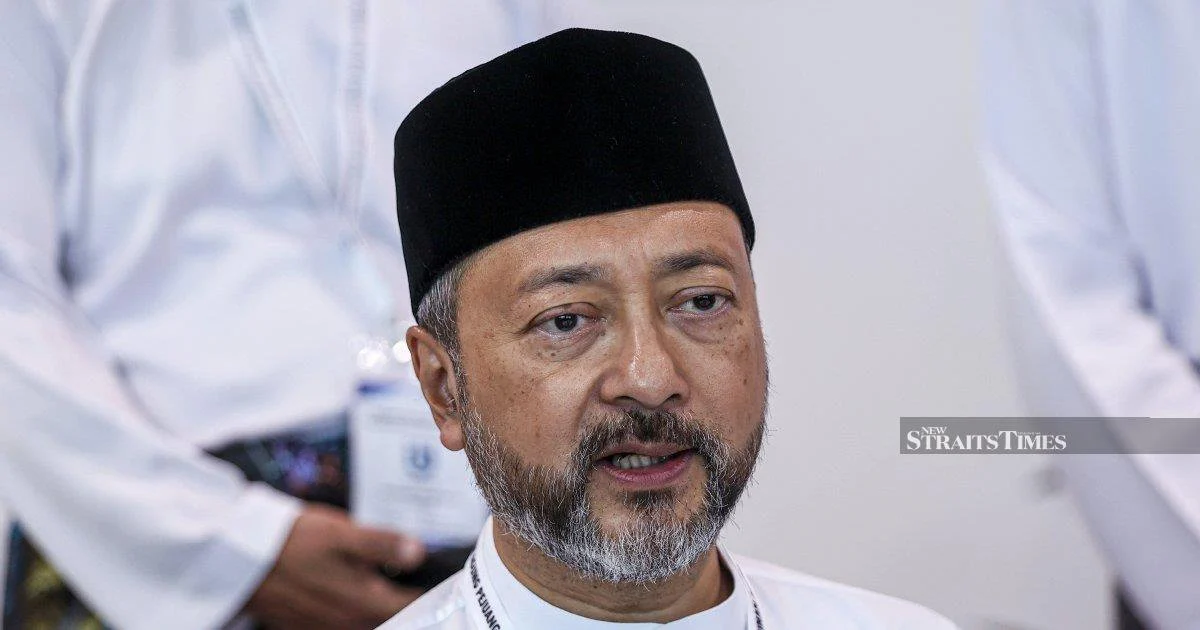
Parti Pejuang Tanah Air's (Pejuang) formal admission into Perikatan Nasional marks a significant step in a much larger political realignment process designed to strengthen opposition and address the country's mounting institutional and economic challenges, according to the party's president Datuk Seri Mukhriz Mahathir. Speaking in Kuala Lumpur, Mukhriz characterised the development not as an isolated arrangement but as the initial phase of an ambitious effort to bring together fragmented political blocs.
The addition of Pejuang to the PN coalition reflects shifting dynamics within Malaysia's fractured opposition landscape, where multiple players have long struggled to present a coherent alternative to the ruling coalition. Pejuang, established in 2020 as a vehicle for Mahathir's political ambitions following his exit from Bersatu, has operated largely as a single-leader entity with limited parliamentary representation. Its decision to formalise membership within Perikatan Nasional—rather than maintaining loose alignment or independence—suggests a deliberate strategic pivot toward institutional consolidation and pooled resources.
Mukhriz's framing of this merger as part of a "broader unity effort" carries several implications for Malaysia's political trajectory. Opposition coalitions in Malaysia have historically suffered from internal contradictions, competing leadership claims, and differing ideological commitments that undermine cohesion, particularly during election campaigns. The PN framework, which already encompasses Bersatu, PAS, and several other parties, has demonstrated relative durability compared to previous opposition pacts. Incorporating Pejuang into this structure represents an attempt to reduce fragmentation and create institutional mechanisms for coordinated action across multiple policy domains.
For Mukhriz personally, the move normalises his party's status within a larger political structure after years of functioning as an outsider entity. While Pejuang has maintained a vocal opposition presence and attracted notable defectors from other parties, it lacked the organisational depth and electoral machinery of established coalition partners. Formal PN membership provides access to coordinated campaign infrastructure, pooled fundraising mechanisms, and shared strategic planning—resources that individual parties struggle to develop independently in Malaysia's increasingly expensive political environment.
The timing of this formalisation coincides with a period of visible strain within the current federal government alliance, where component parties continue to manoeuvre for electoral advantage and cabinet representation ahead of anticipated national elections. By consolidating opposition forces, PN seeks to present itself as a functionally organised alternative administration capable of managing national affairs. This positioning directly challenges the legitimacy claims of the incumbent coalition, which has grappled with internal fractures, corruption-related controversies, and declining public confidence across multiple voter demographics.
Mukhriz's invocation of "growing national challenges" as justification for political unity taps into widespread public concern regarding economic management, cost-of-living pressures, education standards, healthcare delivery, and institutional transparency. Opposition messaging increasingly emphasises that fragmentary political arrangements have allowed the government to govern without sufficient scrutiny or accountability. By unifying under the PN banner, Pejuang and its coalition partners position themselves as offering disciplined, coordinated governance that current arrangements allegedly lack.
Pejuang's integration also addresses a practical electoral mathematics problem that has plagued opposition politics. In Malaysia's first-past-the-post system, vote splitting between non-government parties frequently results in victory for ruling coalition candidates even in constituencies where opposition voters hold numerical majorities. Consolidation within a single coalition reduces such wastage and theoretically improves opposition performance in three-cornered and four-cornered contests. This structural consideration likely influenced Pejuang's calculations regarding formal membership rather than continued independence.
The party's entry may also signal Perikatan Nasional's broader ambitions to expand beyond its traditional Malay-Muslim demographic base. While PAS and Bersatu have demonstrated particular strength in specific regional and communal constituencies, incorporating diverse political operators like Pejuang potentially broadens PN's appeal and claims to represent Malaysia's full political spectrum. This diversification strategy becomes particularly relevant given shifting voting patterns among younger urban voters and the persistent competition for Chinese and Indian community support.
Yet the merger raises questions about maintaining coalition coherence as membership expands. Pejuang's association with Mahathir and his distinctive political brand—emphasising Bumiputera interests, Islamic governance frameworks, and strong executive authority—may create tensions with other PN components holding differing visions or constituencies. Historical precedent suggests that opposition coalitions struggle to maintain discipline once component parties exceed a certain threshold of diversity or when dominant figures within the coalition harbour divergent ambitions. Managing these tensions while projecting unified purpose during election cycles will test PN's institutional capacity.
Mukhriz's characterisation of the PN entry as the "beginning" of broader unification efforts suggests ongoing discussions with other potential partners outside the current coalition framework. Various smaller parties and independent figures have maintained ambiguous positions regarding which opposition bloc to support, and PN appears positioned to court these actors. Should such recruitment succeed, PN would consolidate the opposition's organisational advantage and reduce the fragmentation that has historically benefited the ruling coalition.
The political significance of Pejuang's formalisation ultimately depends on PN's ability to translate institutional membership into electoral performance and policy coordination across multiple governance domains. Opposition unity in Malaysia remains perpetually fragile, vulnerable to personality conflicts, resource competition, and competing visions regarding the direction of economic and social policy. Mukhriz's assertion that the coalition addresses "national challenges" will require demonstration through concrete policy positions and coordinated advocacy on issues resonating with Malaysian voters.