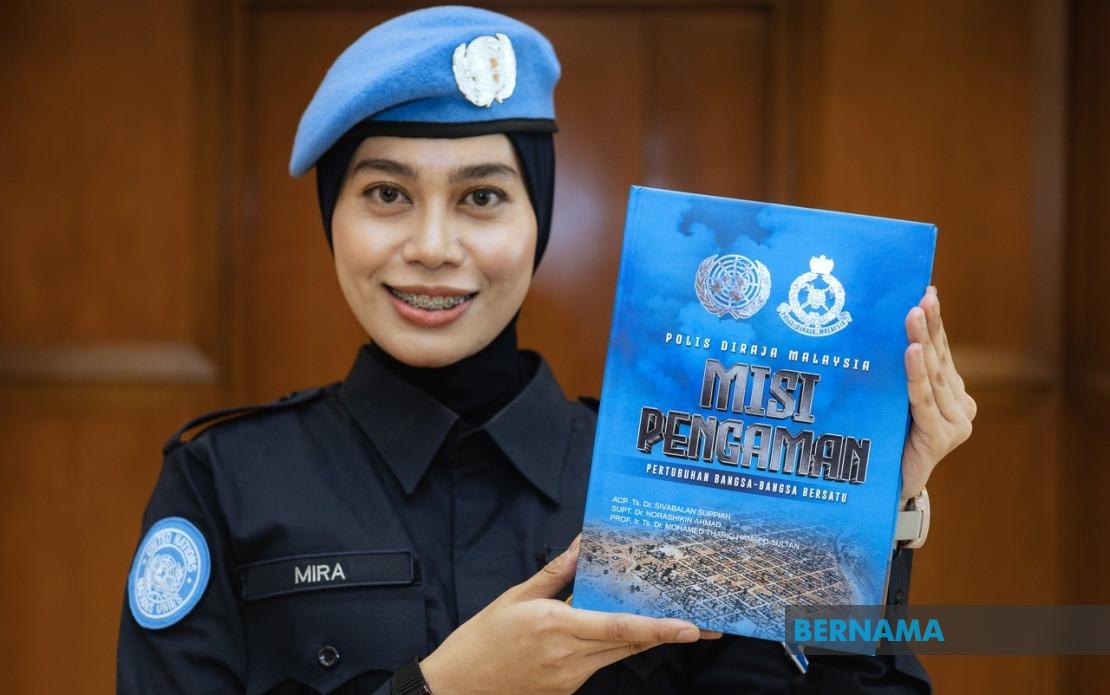
The Royal Malaysia Police has marked a significant milestone with the launch of a comprehensive 500-page book chronicling its involvement in 13 United Nations peacekeeping operations worldwide. Unveiled in Kuala Lumpur, the publication represents a formal documentation of Malaysian law enforcement's transformation from a domestically focused institution to a globally recognized contributor to international peace and security efforts under the UN banner.
Inspector-General of Police Tan Sri Mohd Khaled Ismail positioned the book as more than a historical record, describing it as a masterclass in crisis management and strategic leadership. He emphasized that the publication captures not merely the institutional developments within PDRM but also the personal sacrifices and bravery exhibited by individual officers deployed to challenging environments across the globe. This narrative approach underscores the human dimension of peacekeeping operations, moving beyond standard military or police accounts to highlight the individual experiences that shape Malaysia's international reputation.
The evolution documented in the book traces PDRM's journey from an organization primarily concerned with domestic security threats to an institution recognized for excellence under UN operational frameworks. Mohd Khaled noted that this transformation reflects broader changes in Malaysia's policing doctrine, with the force developing capabilities and approaches that have gained international acceptance and respect. The evolution is particularly significant for Southeast Asia, where Malaysia's model offers potential lessons for regional neighbors developing their own international peacekeeping capacities.
A key insight presented in the publication concerns practical implementation of cross-cultural cooperation and decision-making in conflict zones. The book presents action plans derived from real operational experience, demonstrating how Malaysian officers have navigated the complexities of working alongside diverse international contingents in uncertain and resource-constrained environments. These practical frameworks hold value beyond peacekeeping contexts, offering Malaysian security professionals and academics insights into international best practices and collaborative methodologies.
Mohd Khaled highlighted Malaysia's national policing model, termed 'Acuan Kepolisian Watan', as a cornerstone concept validated through international deployment. The book's documentation of how this model functions in varied global contexts serves as evidence that Malaysian policing doctrine is not merely domestically effective but genuinely adaptable to different operational theaters. This validation carries strategic implications for Malaysia's standing within the international community and could enhance opportunities for future knowledge-sharing arrangements with other nations.
The framing of PDRM's peacekeeping contributions extends beyond conventional security metrics to encompass broader humanitarian principles. Mohd Khaled explicitly connected these missions to Malaysia MADANI, the government's broader development framework, suggesting that peacekeeping represents a manifestation of national values centered on human dignity and hope. This positioning aligns international police deployments with domestic policy objectives, creating a coherent narrative about Malaysia's commitment to human-centered governance both domestically and internationally.
The collaborative nature of the publication reflects institutional partnership between security agencies, academic institutions, and civil society organizations. UPM Press, Yayasan Generasi Malaysia, and the National Book Development Foundation joined forces with PDRM to produce the volume, establishing a model for knowledge preservation and dissemination that transcends traditional security sector boundaries. Such collaboration suggests a strategic approach to documenting institutional memory and ensuring that operational lessons are captured systematically for future generations of Malaysian peacekeepers and security professionals.
At the launch ceremony, PDRM received formal recognition from ASEAN Records for maintaining the largest national police contingent deployed to any single host country across the entire series of UN peacekeeping missions. This regional acknowledgment underscores Malaysia's distinctive contribution to UN operations and positions the country as a significant security actor within ASEAN. The recognition validates Malaysia's investment in international peacekeeping and provides tangible evidence of the nation's leadership role in regional security matters.
The 13 missions documented in the book span diverse regions and operational contexts, suggesting that PDRM personnel have accumulated experience across multiple conflict environments and peacekeeping frameworks. This breadth of experience distinguishes Malaysian law enforcement professionals in the international arena and potentially enhances their value to future UN operations. For Malaysian policy makers, the documented experience represents an asset that can be leveraged in bilateral security partnerships and regional cooperation initiatives beyond traditional peacekeeping structures.
The launch occurs at a moment when international peacekeeping operations face evolving challenges, from climate-related security concerns to hybrid threats combining conventional and non-conventional elements. By systematizing its historical experience, PDRM positions itself to contribute contemporary insights to international discussions about peacekeeping effectiveness and police force modernization. The publication thus serves both historical and forward-looking purposes, documenting past achievements while establishing a foundation for adapting Malaysian policing expertise to emerging international security challenges.
For Malaysian readers and security professionals, the book provides accessible documentation of how national institutions contribute to global peace architecture. It demonstrates that peacekeeping represents not merely a humanitarian gesture but a strategic investment in Malaysia's international standing and soft power. The volume's comprehensive approach, combining personal accounts with institutional analysis, offers insights valuable for understanding how professional organizations maintain standards and reputation across diverse operational contexts, a consideration relevant to multiple sectors beyond security.
The initiative to formally document and publish these experiences reflects confidence in Malaysia's peacekeeping contributions and suggests continued commitment to international engagement through UN mechanisms. As Malaysia navigates regional security challenges and broader geopolitical shifts, the systematic preservation of institutional knowledge about international operations positions the country to draw upon this experience strategically. The book thus represents both a celebration of past achievements and a practical tool for informing future policy decisions regarding Malaysia's role in international peace and security initiatives.

