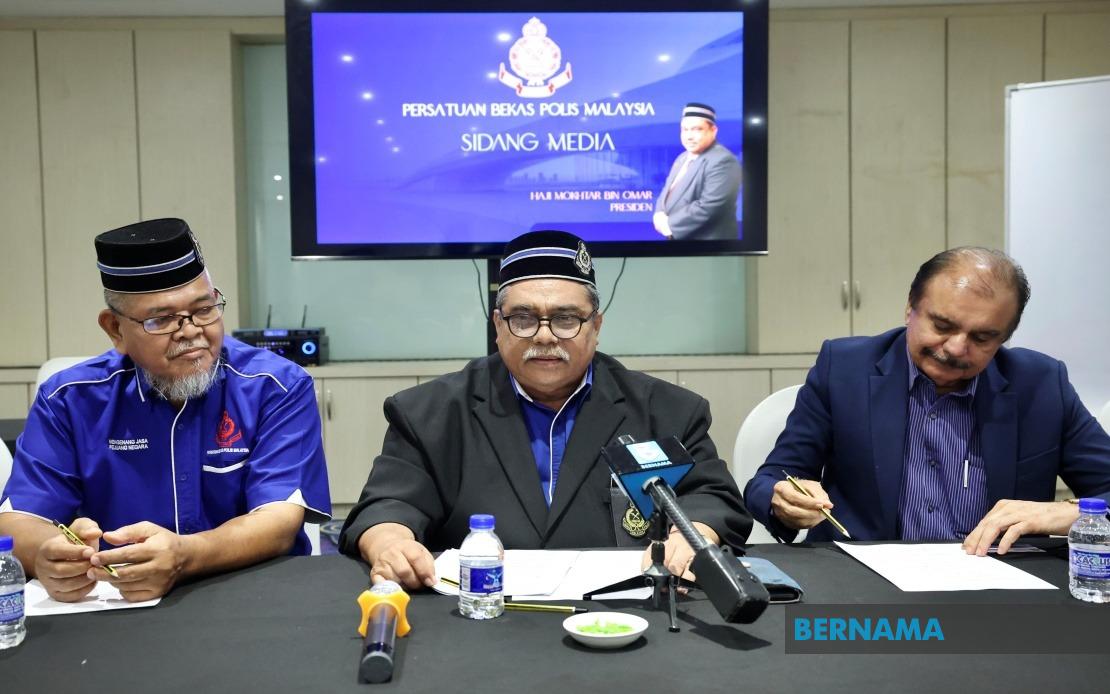
The Malaysian Ex-Police Association (PBPM) has launched a fresh appeal to federal authorities seeking regular monthly allowances for retired police officers who fall outside the pension scheme, arguing that the government has both a moral and fiscal obligation to support this vulnerable cohort. PBPM president Mokhtar Omar made the case during a press conference in Kuala Lumpur, emphasizing that the requested assistance represents a modest investment in recognition of decades of service during a critical period in the nation's security history.
According to PBPM records spanning back to 1972, approximately 40,000 of the association's 86,000 registered members are classified as non-pensionable former police personnel. This substantial group encompasses individuals who served in specialized units including the Special Squad, as well as members of the Home Guard and contract-based inspectors who were active during the Emergency era. The non-pensionable designation reflects administrative and legal frameworks governing police employment that resulted in many personnel being excluded from formal pension entitlements upon retirement, a distinction that has created a significant welfare gap.
The timing of this appeal reflects mounting economic pressures facing this demographic. As Malaysia grapples with persistent inflation and cost-of-living concerns, many former officers now operate without regular income streams and have exhausted their savings. Mokhtar stressed that these individuals contributed substantially to national security during one of Malaysia's most challenging periods, yet now face reduced circumstances in their later years. The association has framed the request as both a debt of honor and a practical matter, noting that the pool of eligible recipients shrinks annually as older members pass away, making intervention increasingly time-sensitive.
The PBPM has put forward concrete proposals designed to address immediate financial hardship. The association recommends establishing a monthly special allowance ranging from RM300 to RM500 for beneficiaries, a figure calibrated to provide meaningful relief without imposing unsustainable budgetary demands on the state. Mokhtar argued that the cumulative cost would remain manageable relative to total government expenditure, particularly given the dwindling number of eligible recipients and their advanced age. This pragmatic approach appears designed to overcome potential objections centered on fiscal constraints, by presenting the initiative as temporary and limited in scope.
Beyond the monthly allowance proposal, the PBPM has advanced a broader agenda for welfare system reform centered on the Police Heritage Trust Fund (TAWP). The association seeks a comprehensive review of this existing mechanism with the dual objectives of increasing assistance rates and broadening eligibility criteria. The expanded scope would encompass educational support for dependents, healthcare access, and disaster relief assistance—recognizing that retired personnel face diverse challenges that extend beyond basic living expenses. This multi-faceted approach suggests the association views pension reform as part of a larger conversation about how the state supports those who served in security roles.
The association's frustration is palpable in its parallel decision to mobilize private-sector resources. PBPM Information Chief Datuk Dr Basant Singh Sidhu announced plans for a fundraising gala dinner scheduled for October, aiming to generate RM1 million through corporate donations and contributions from multinational enterprises and philanthropic individuals. The fact that the association feels compelled to launch independent fundraising efforts underscores the inadequacy of current government support structures. This initiative reflects both resourcefulness and an implicit criticism of state capacity or willingness to fully address veteran welfare needs.
Proceeds from the October fundraiser will finance targeted assistance programs addressing specific welfare gaps. The association plans to distribute medical equipment, wheelchairs, hearing aids, and nutritional supplements to members demonstrating need. These tangible items represent practical interventions addressing age-related health challenges common among elderly former police officers. By identifying specific support categories, the PBPM demonstrates a detailed understanding of its constituency's requirements and positions itself as an effective intermediary between vulnerable members and relief resources.
The PBPM's campaign arrives within a broader regional context where governments increasingly grapple with obligations to aging security personnel. Malaysia's approach has historically lagged peer nations in Southeast Asia, where some countries provide more comprehensive pension coverage for uniformed services. The PBPM implicitly invites comparison by emphasizing the relative modesty of requested assistance levels. For Malaysian policymakers, the issue intersects with questions about national gratitude, fiscal responsibility, and how societies honor those who accepted risk during periods of national emergency.
The non-pensionable classification itself warrants scrutiny. Many of these former officers accepted lower employment terms as available options during the Emergency period, when formal pension protections were less developed. The administrative distinction between pensionable and non-pensionable personnel now creates a two-tier welfare system where some retired officers receive regular stipends while equally deserving counterparts receive nothing. This disparity has grown more acute as inflation erodes the purchasing power of savings accumulated during lower-income careers.
The aging trajectory of this population adds urgency to the PBPM's advocacy. Members who served during the Emergency—now spanning back more than sixty years—constitute a rapidly diminishing cohort. Within the next decade, the population eligible for such assistance may decline substantially through natural attrition. This demographic reality transforms the issue from a long-term budgetary commitment into a time-limited obligation, potentially making it more palatable to fiscal conservatives who might otherwise resist new welfare expenditures.
For the broader ex-servicemen community across Malaysia, the PBPM's push carries implications beyond its immediate membership. Success in securing government-endorsed monthly assistance for non-pensionable former police could establish precedent for similar claims by retired military personnel, firefighters, and other public-safety workers. Conversely, failure to address the issue may harden resentment among those who view themselves as having sacrificed for national security without receiving commensurate recognition. Policymakers thus face a decision with ripple effects throughout veteran-support frameworks.

