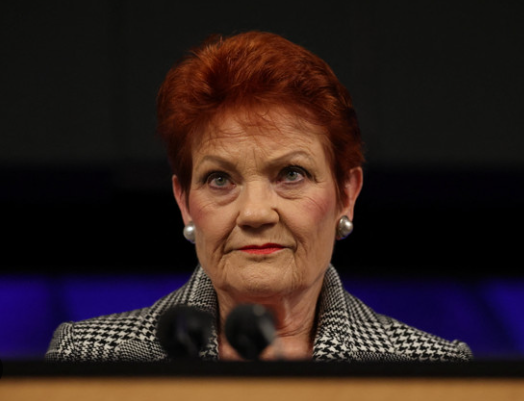
An Australian federal court has rejected far-right senator Pauline Hanson's attempt to overturn a legal determination that her comments towards a Muslim colleague constituted racial vilification. The decision, handed down on Monday, closes a chapter in a dispute that has crystallised ongoing tensions in Australian politics around immigration, respect, and the limits of acceptable public discourse.
The case centred on remarks Hanson made in 2022 after Greens senator Mehreen Faruqi, who was born in Pakistan, criticised the British monarchy following Queen Elizabeth II's death. Faruqi had posted that she could not mourn what she described as the leader of a racist empire built on the dispossession of colonised peoples. In response, Hanson posted on social media that Faruqi had benefited from Australian citizenship and property ownership, before telling her to "pack your bags and piss off back to Pakistan." The Australian Federal Court determined in 2024 that these statements constituted a "strong form of racism," finding them to breach racial vilification laws. Hanson's legal challenge to that finding, mounted on constitutional free speech grounds, was unsuccessful.
Hanson's response to the court loss revealed little contrition, framing her original outburst as a justified reaction to what she characterised as disrespect shown to the late monarch. She insisted she had simply been expressing her displeasure at Faruqi's comments rather than engaging in deliberate racial attacks. This framing highlights a recurring pattern in her political approach: she positions herself as a defender of traditional values and national pride against what she views as unpatriotic critiques. The distinction between robust political debate and crossing into racial vilification remains contested in her political narrative.
The timing of this court decision comes as Hanson's political fortunes have experienced a significant upturn. Her One Nation party has moved from the margins of Australian politics into polling territory that suggests it is now among the country's most popular political formations. This surge reflects broader voter sentiment around immigration policy, government efficiency, and scepticism towards established institutions. Hanson has capitalised on these currents by advocating positions that resonate with her base: stringent controls on immigration, deportation of undocumented migrants, and what she frames as necessary restrictions on government overreach.
For Malaysian and Southeast Asian observers, the Hanson case presents an instructive study in how populist politicians navigate democratic constraints. Australia's multicultural framework, underpinned by racial discrimination legislation, theoretically provides legal recourse against vilification. Yet Hanson's rising popularity despite—or perhaps partly because of—such legal findings suggests that legal accountability does not automatically translate into political consequence. Her ability to frame adverse court decisions as restrictions on free speech rather than necessary protections for marginalised communities demonstrates the rhetorical flexibility available to populist figures in liberal democracies.
The Faruqi case also illuminates broader questions about immigration and belonging that resonate across the Asia-Pacific region. The implicit assertion in Hanson's remarks—that newcomers, particularly those of non-European origin, remain perpetually foreign and can be ordered to "go back" regardless of citizenship status—reflects attitudes that exist in various forms throughout Southeast Asia and beyond. In Malaysia's context, where questions of immigrant integration and citizenship have occasionally generated heated debate, the Australian case demonstrates how such tensions can crystallise into legal disputes.
Hanson's wider political platform extends beyond immigration matters. She has promised sweeping cuts to government expenditure, drawing explicit parallels to Elon Musk's proposed "DOGE" (Department of Government Efficiency) framework in the United States. She has also called for Australia to reconsider its participation in various international organisations, signalling a nationalist reorientation of foreign policy. These positions collectively suggest a political agenda focused on reducing multilateral commitments, diminishing immigration, and pursuing what she frames as efficiency-driven governance—themes that have found purchase in various democracies grappling with globalisation's discontents.
The court's dismissal of Hanson's appeal underscores a tension inherent in liberal democracies: the protection of free expression must coexist with protections against discrimination and vilification. Australian judges determined that her words crossed from permissible political commentary into prohibited racial abuse. Yet the legal ruling appears to have done little to constrain her political trajectory, suggesting that courts alone cannot resolve the deeper question of what speech a pluralist society should tolerate. Hanson continues to frame herself as a victim of institutional overreach rather than as someone whose words caused genuine harm to the parliamentary colleague she targeted.
The broader political implications extend to Australia's multicultural settlement. As One Nation consolidates its position as a major political force, questions arise about how the country's political mainstream will respond to a party that, while not explicitly exclusionary in platform, has demonstrated a willingness to deploy language that marginalises people of immigrant background. The court's decision affirmed legal standards, but Australia's voters have simultaneously elevated Hanson's political standing, creating a paradox in which legal accountability and electoral success move in opposite directions.
For observers across Southeast Asia where immigration and multiculturalism remain contested political terrain, the Hanson case offers a cautionary lesson. The combination of restrictive immigration rhetoric, nationalist appeals, and challenges to international institutions can form a potent political package, particularly during periods of economic uncertainty or rapid social change. The Australian example suggests that legal constraints on discriminatory speech, while important, do not automatically prevent politicians from building significant political movements around exclusionary themes.

