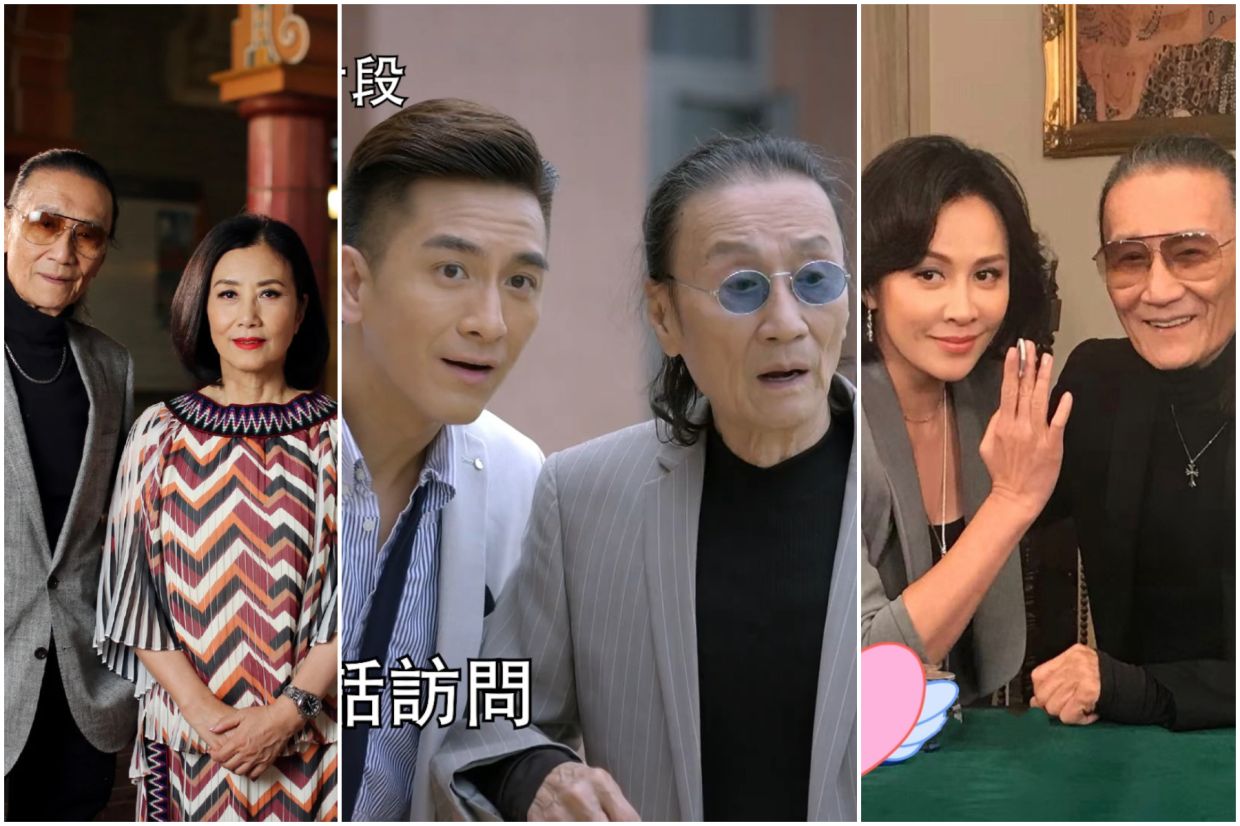
Hong Kong's entertainment industry continues to mourn the loss of Patrick Tse, the legendary actor affectionately called 'Sei Gor' (Fourth Brother), who succumbed to pneumonia on July 16 at the age of 89. His family confirmed his death on July 20, prompting an outpouring of reflections from colleagues who worked alongside him across decades of Hong Kong cinema and television.
Among those paying respects, acclaimed actress Carina Lau shared poignant tributes on Instagram, posting photographs of herself and her husband Tony Leung Chiu Wai alongside the late star. In her message, Lau celebrated Tse's defining qualities and lasting impact on the industry, describing him as embodying "wit, elegance and impeccable grace" throughout his career. She credited him with establishing a formidable legacy that extends far beyond his own performances, acknowledging the profound influence he exerted on Hong Kong cinema as an institution.
Veteran actress Liza Wang, who shared the screen with Tse across multiple TVB productions, offered deeply personal reflections on their professional and familial bond. Beyond their on-screen collaborations, Wang held a significant place in Tse's family, serving as godmother to his daughter Jennifer Tse. This dual relationship allowed Wang to appreciate both his professional capabilities and his character as a person. She characterised him as one of the industry's most cherished figures, someone whose genuine kindness extended beyond performative courtesy into substantive mentorship and support.
Wang elaborated on the nature of their working relationship, emphasising how Tse's conduct on set reflected deeper values. Whenever they collaborated, he prioritised her welfare and made conscious efforts to impart his vast reservoir of industry knowledge. Wang treasured these moments of learning and camaraderie, describing them as memories that would sustain her through her grief. She paid particular attention to his distinctive qualities—his luminous smile and consistently gentlemanly demeanor—suggesting that these personal attributes had become inseparable from his professional reputation.
Michelle Ye, who transitioned from her TVB career into other ventures, took to Weibo to share her own recollections of working alongside Tse. Their collaboration on the 2005 drama created a meaningful connection that extended beyond the typical professional relationship. Ye disclosed that her time with Tse fulfilled an emotional need in her own life, describing him as someone who provided the paternal affection and guidance she had lacked during her formative years. This revelation underscores how Tse's influence transcended the boundaries of performance, touching the personal lives of those around him.
Kenneth Ma, a younger generation actor who worked with Tse on Wong Jing's 2017 TVB production, provided insights into the veteran's work ethic and personality during filming. Despite his advanced age, Tse demonstrated an unwavering commitment to his craft by performing his own action sequences rather than relying on stunt doubles. Ma viewed this dedication as exemplary conduct worthy of emulation by performers in their prime years. The younger actor articulated a clear sense of having witnessed professionalism and commitment in their purest forms, seeing in Tse a benchmark against which to measure his own approach to acting.
Beyond his technical dedication, Ma recalled Tse's vibrant on-set presence, noting that the shooting experience carried an element of enjoyment and levity. This dimension of his personality—the capacity to bring joy and spontaneity to professional environments—emerged as a consistent theme across multiple testimonies from colleagues. The combination of rigorous professionalism with genuine warmth appears to have distinguished Tse as a particularly influential figure within the Hong Kong entertainment ecosystem.
Director Wong Jing, who collaborated with Tse on film and television projects, articulated perhaps the most sweeping assessment of the actor's place in cinema history. Wong characterised Tse as "the most dashing male star in Hong Kong's history," a formulation that captures both his physical presence and his broader cultural significance. Wong's relationship with Tse spanned nearly five decades, beginning in 1977 when Wong was a young TVB scriptwriter at the outset of his career. During this formative period, Tse served as both colleague and mentor figure, opening doors to creative conversation.
Wong recounted a particularly memorable aspect of their friendship: Tse's habit of driving him around the city in his Mercedes-Benz sports car while discussing cinematic matters and industry dynamics. These informal settings became venues for Tse to share accumulated wisdom with the younger professional. During one such conversation, Tse offered counsel that Wong identified as encapsulating his entire philosophy: "Once you're a star for a day, you have to be a star for life." This observation reflected Tse's understanding that stardom carried implicit obligations toward consistency, excellence, and dedication.
Wong's preservation of this aphorism across the decades suggests its profound resonance—it articulates not merely a professional standard but a moral framework for conducting oneself in the public eye. The advice mirrors Tse's own conduct throughout his extensive career, during which he maintained professional standards and contributed meaningfully to the industry regardless of prevailing trends or commercial pressures. For Wong and other contemporary observers, this philosophy became inseparable from Tse's identity and represented his greatest legacy beyond any individual performance or film.
The cumulative effect of these tributes reveals a figure whose significance extended across multiple generations and professional categories within Hong Kong's entertainment sector. Tse's influence operated simultaneously on practical, emotional, and philosophical registers—mentoring younger professionals, providing familial warmth to colleagues, and exemplifying a comprehensive vision of what sustained excellence in performance required. His death marks the passing of someone who embodied historical continuity with contemporary Hong Kong cinema, having witnessed and contributed to the medium's development across multiple decades. The breadth and depth of public mourning reflects not merely the loss of a talented performer but the departure of someone whose presence and values had become woven into the industry's foundational culture.

