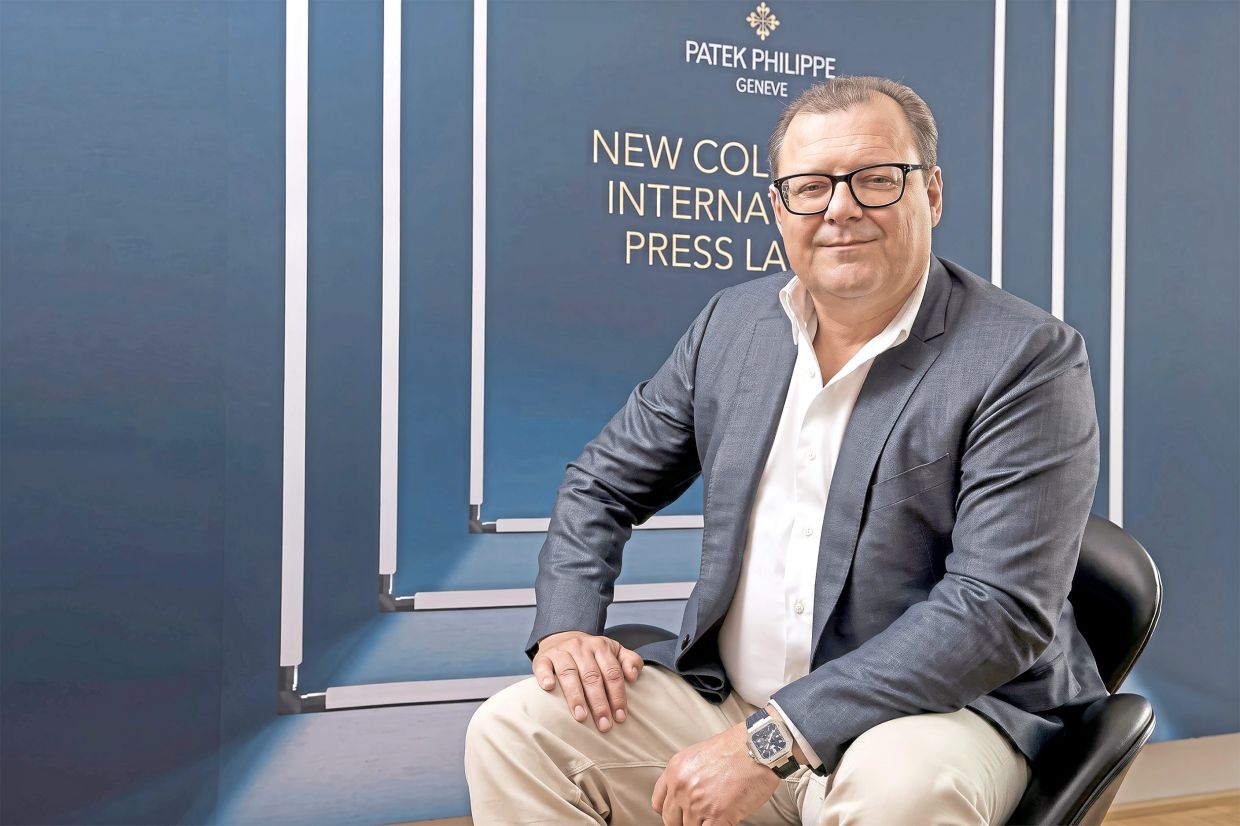
Thierry Stern speaks with the fervent conviction of a devoted horologist rather than a corporate custodian, a distinction that fundamentally shapes how the fourth-generation president approaches his role at Patek Philippe. During a recent conversation at Watches and Wonders 2026 in Geneva, the 55-year-old steward of one of watchmaking's most prestigious houses made clear that intellectual capability alone cannot substitute for genuine enthusiasm when stewarding a manufacture built on centuries of craftsmanship and exacting standards. His assertion reflects a philosophy that has become increasingly rare in industries where professional management often supersedes personal connection to the product itself.
For Stern, the distinction between competence and passion carries profound implications for how a company maintains its standing in an industry where clientele themselves possess extensive knowledge. He articulates this plainly: anyone lacking genuine appreciation for watches should not pursue leadership at Patek Philippe. The market, he explains, possesses an almost uncanny ability to detect inauthenticity. Collectors and clients who have invested years studying mechanical movements, case finishing, and dial proportions can immediately sense whether leadership approaches the business transactionally or vocationally. This dynamic creates a unique accountability structure where personal integrity becomes inseparable from business performance.
The philosophy underlying Stern's management style traces back to mentorship received from his father Philippe Stern, who previously led the manufacture. During his formative years, the younger Stern travelled extensively alongside his father, absorbing a crucial lesson about remaining connected to end consumers. Rather than managing through abstraction or relying solely on market data, genuine understanding requires physical presence in markets, listening to retailers, and comprehending how different regions engage with the brand. This hands-on approach to understanding demand signals—gathering intelligence directly rather than filtering it through organizational layers—has become foundational to his decision-making regarding product development and strategic positioning.
Perfect timing for introspection arrives as Patek Philippe marks fifty years since introducing the Nautilus in 1976, a model that fundamentally altered the manufacture's trajectory and challenged orthodox definitions of what constituted appropriate luxury watchmaking. When Gerald Genta's bold design first emerged, featuring an octagonal porthole-inspired case paired with an integrated bracelet, the reception proved deeply divisive. Traditionalists recoiled at what they perceived as industrial aesthetics incompatible with Patek Philippe's refined heritage. Stern finds particular amusement in recounting this resistance, noting that he was merely six years old when the watch launched and that many vocal critics have since passed. The passage of time has entirely vindicated this calculated risk, transforming the Nautilus into perhaps the planet's most pursued timepiece, commanding auction prices that frequently surpass even veteran collectors' expectations.
To commemorate this milestone, Patek Philippe has introduced three limited-edition Nautilus references crafted from white gold and platinum, alongside a quirky desk clock derivative. Stern deliberately rejected the conventional blockbuster approach that might have involved introducing a complicated movement such as a tourbillon, believing such decisions would constitute overreach. Instead, he embraced a philosophy of restraint, reasoning that the Nautilus derives its fundamental identity from being an hour-and-minute watch—a straightforward yet perfectly executed instrument that represents the core of the design's DNA. This conscious decision to maintain conceptual purity rather than pursue technical complication demonstrates a sophisticated understanding that not every milestone requires pushing manufacturing capabilities to their absolute limits.
The anniversary editions showcase 6.9-millimetre cases powered by the historic micro-rotor Calibre 240 movement, culminating a development process spanning several years to perfect the ergonomics of both case and integrated bracelet. This extended timeline underscores the reality that at Patek Philippe, expedited product development conflicts with fundamental values. The meticulous refinement of seemingly minor details—the interplay between case curves and bracelet flow, the tactile experience of the integrated structure—cannot be rushed without compromising the overall execution. Such patience reflects Stern's conviction that taste and market preferences remain inherently unpredictable, demanding humility rather than presumption.
Within the competitive landscape of Swiss luxury horology, where Rolex, Cartier, Audemars Piguet, and Omega occupy similarly rarefied positions, the imperative for calculated evolution becomes even more acute. Stern recognizes that standing still—maintaining today's excellence without tomorrow's innovation—guarantees eventual obsolescence. The manufacture cannot preserve its standing through heritage alone; it must demonstrate continued creative vitality and willingness to take measured risks. However, he distinguishes sharply between evolutionary risk-taking and reckless experimentation, understanding that Patek Philippe's capital lies precisely in its reputation for reliability, taste, and uncompromising execution.
This philosophy manifested clearly in the late 1990s with the introduction of the Aquanaut, conceived as a younger, more athletic counterpoint to the Nautilus. Rather than attempting to compete with competitors by copying their strategies, Patek Philippe created space within its own portfolio for different expressions of luxury watchmaking philosophy. The Aquanaut succeeded because it arrived from a place of genuine creative conviction rather than defensive market repositioning. Each new model introduction emerges from asking whether the manufacture can truthfully express something meaningful through the language of horology, not whether quarterly performance metrics demand novelty.
Stern's approach resonates particularly with Southeast Asian collectors and enthusiasts who have increasingly engaged with high-end watchmaking over the past two decades. The region's growing wealth and cosmopolitan tastes have created populations who appreciate both the engineering excellence and aesthetic coherence that distinguish houses like Patek Philippe from mass-market alternatives. Malaysian, Singaporean, and Thai collectors have demonstrated particular appreciation for timepieces that balance technical accomplishment with understated elegance—values that align precisely with Stern's philosophy regarding measured innovation and passionate stewardship.
The broader implication of Stern's leadership philosophy extends beyond horology into how family-controlled luxury enterprises navigate generational transitions while maintaining core values. As Asian business families increasingly inherit operations from previous generations, the question of whether successors can authentically connect with their brands' foundational purposes becomes increasingly consequential. Stern exemplifies an alternative to both the uncritical preservation of the past and the temptation to fundamentally remake inherited enterprises according to contemporary trends. Instead, he proposes that genuine progress emerges when leaders combine deep personal conviction about their products with intellectual willingness to evolve in response to changing markets and opportunities.

