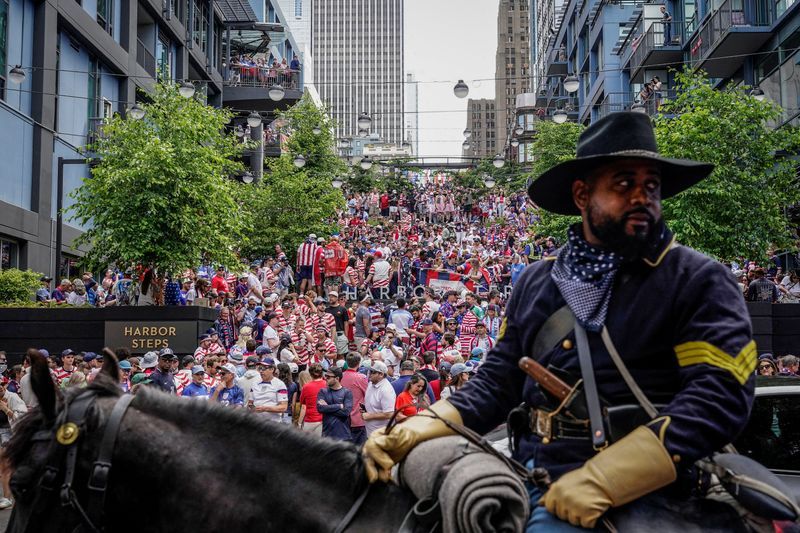
The 2026 FIFA World Cup is unfolding across sixteen cities scattered throughout North America, each bringing its own character and intensity to the global football spectacle. Reuters photographers have been positioned at training grounds and matches throughout the tournament, documenting not just the action on the pitch but the broader cultural tapestry that the competition weaves through its host communities. Their on-the-ground observations reveal how deeply football resonates in different ways across the continent, from neighbourhood pitches in Mexico City's residential areas to the grand stadiums hosting the world's elite teams.
Mexico's capital, Mexico City, represents perhaps the tournament's deepest well of footballing tradition. Photographer Raquel Cunha has observed that soccer permeates almost every aspect of urban life here, far beyond the iconic Estadio Azteca that has witnessed some of football's most historic moments, including two World Cup finals. In the city's working-class neighbourhoods, communities have reshaped their physical landscape to carve out space for the beautiful game, demonstrating how thoroughly the sport has become woven into the Mexican identity. This grassroots passion complements the tournament's grandest stages, creating a continuity between elite competition and street-level devotion.
Western Mexico's Guadalajara carries its own World Cup mystique, rooted in memory and commemoration. Locals still speak of Pelé's appearance there in 1970, and the city recently unveiled a statue honouring the Brazilian legend's connection to the region. Photographer Ivan Arias witnessed something equally memorable during the tournament: genuine friendships forming between supporters of different nations. Mexican and Colombian fans not only attended each other's matches and celebrations but began cheering for one another with the same passion they reserved for their own teams. This cross-border solidarity suggests that football's unifying power operates most effectively at the fan level, where national pride can coexist with human connection.
Northeast of Guadalajara, Monterrey embodies a more casual, domestic soccer culture. Photographer Daniel Becerril noted that locals here traditionally gather in backyards for matches accompanied by barbecues and cold beer, or congregate in neighbourhood bars to watch games together. This informal social tradition predates the World Cup and will likely persist long after it concludes, illustrating how football has become woven into Mexico's social fabric beyond the professional sphere.
Across the border in Miami, the World Cup felt less like a disruption and more like a natural extension of the city's existing character. Amanda Perobelli observed that Miami's substantial Latin American population meant the tournament integrated seamlessly into daily life rather than transforming it. The oppressive Florida heat and humidity presented genuine challenges for photographers spending extended hours outdoors, yet visiting supporters seemed unbothered by the climate, focusing instead on the matches and festivities. The tournament essentially amplified existing community dynamics rather than introducing entirely new ones.
Texas embraced the World Cup with characteristic exuberance. Photographer Phil Noble encountered the famous Texas maxim about everything being bigger proven repeatedly: massive barbecue portions, sprawling six-lane highways, and an overwhelming welcome extended to all visiting fans. Mexican-shirted supporters became ubiquitous throughout the state, and remarkably, they often cheered enthusiastically for opponents when Mexico wasn't competing. Hannah McKay experienced comparable observations about scale and enthusiasm, particularly when witnessing Lionel Messi break the men's World Cup all-time goal-scoring record in a packed stadium. The sheer size of Texas venues and the distances between them created a distinctive tournament experience, while the genuine warmth of local supporters transcended typical sports rivalry.
Atlanta's modern stadium, with its retractable roof and unconventional seating configuration, initially seemed at odds with traditional football architecture. Yet photographer Claudia Greco found that the Southern city had generated palpable energy nonetheless. Crowded fan zones, restaurants broadcasting matches, and bustling business activity indicated that the World Cup had stimulated genuine economic and social engagement throughout the metropolitan area, proving that contemporary stadium design need not diminish atmosphere or community participation.
Los Angeles, characteristically fragmented into distinct neighbourhoods, experienced an unusual unification through the tournament. Daniel Cole noted that Angelenos, often isolated in their vehicles, emerged into shared public spaces during the World Cup. The city's multiple diaspora communities — Iranian, South Korean, Mexican, and numerous others — displayed their heritage through flags, cultural celebrations, food, and language in ways that enriched the broader urban experience. For Cole, witnessing these varied communities openly celebrating their ancestral homelands provided meaningful cross-cultural exposure.
San Francisco's experience paralleled LA's in some respects but carried additional weight given recent migration policy tensions. Photographer Carlos Barria observed diaspora communities embracing their cultural identities through the tournament — a celebration that contrasted sharply with the anxiety many immigrant communities have experienced as American immigration policies have shifted. Simultaneously, many Americans encountered cultures and traditions they might otherwise never experience. Barria interpreted this cultural exchange as embodying football's deepest purpose: transcending national and political boundaries through shared human connection and celebration.
Kansas City, straddling two states, has embedded sport deeply within its civic identity. Photographer Kai Pfaffenbach documented a city equally welcoming to baseball, American football, and soccer, each finding enthusiastic local support. The World Cup atmosphere remained overwhelmingly positive, with residents prioritizing enjoyment and communal celebration over competitive intensity. This reflected a particular American approach to sporting entertainment that emphasises inclusive fun alongside athletic competition.
Philadelphia presented a contrasting experience to other host cities. Photographer Siphiwe Sibeko, accustomed to covering football tournaments in South Africa where the sport dominates public consciousness and conversation, found Philadelphia's World Cup atmosphere more contained. The tournament's presence felt concentrated near the stadium and most pronounced on match days, with broader citywide engagement considerably more muted than in markets where football held deeper cultural centrality. This difference highlighted how American sporting priorities remain diversified across multiple professional leagues and sports.
New York embodied the tournament's capacity to coincide with other major events, creating a densely packed entertainment calendar. Norwegian supporters performed their traditional Viking row, while Latin American fan groups staged elaborate pre-match celebrations in Times Square. The timing of the New York Knicks' first NBA championship in more than fifty years compressed multiple sporting narratives into a single moment, reinforcing New York's reputation as the perpetually energised city where multiple stories unfold simultaneously. Photographer Dylan Martinez captured this unique convergence of sporting histories.
Boston offered photographer Brian Snyder a personal historical perspective, as he had covered the 1994 World Cup in the same city. Snyder observed a substantially greater outpouring of fan enthusiasm in 2026 compared to three decades earlier, suggesting growing American engagement with football. Beyond the well-publicised embrace of Scotland's Tartan Army, local communities of Haitians, Moroccans, and Cape Verdeans actively participated in supporting their national teams, reflecting Boston's increasingly diverse demographic composition and these communities' investment in global football culture.
Toronto's World Cup coverage produced an unexpected moment when photographer Bernadett Szabo nearly collided with a falcon near the stadium. She subsequently learned that a falcon family — parents and four offspring — inhabits the venue, creating a surreal intersection between wildlife and sporting spectacle. Meanwhile, Vancouver presented perhaps the most subdued atmosphere among North American hosts. Photographer Agustin Marcarian, normally based in Buenos Aires, found Vancouver's engagement considerably more restrained, requiring intentional exploration to locate visible tournament signage and celebrations. In contrast, Seattle's Pacific Northwest supporters demonstrated American sporting enthusiasm through elaborate dress-up efforts and comprehensive concession infrastructure, reflecting the American conceptualisation of sports as total entertainment experiences rather than merely athletic competition.

