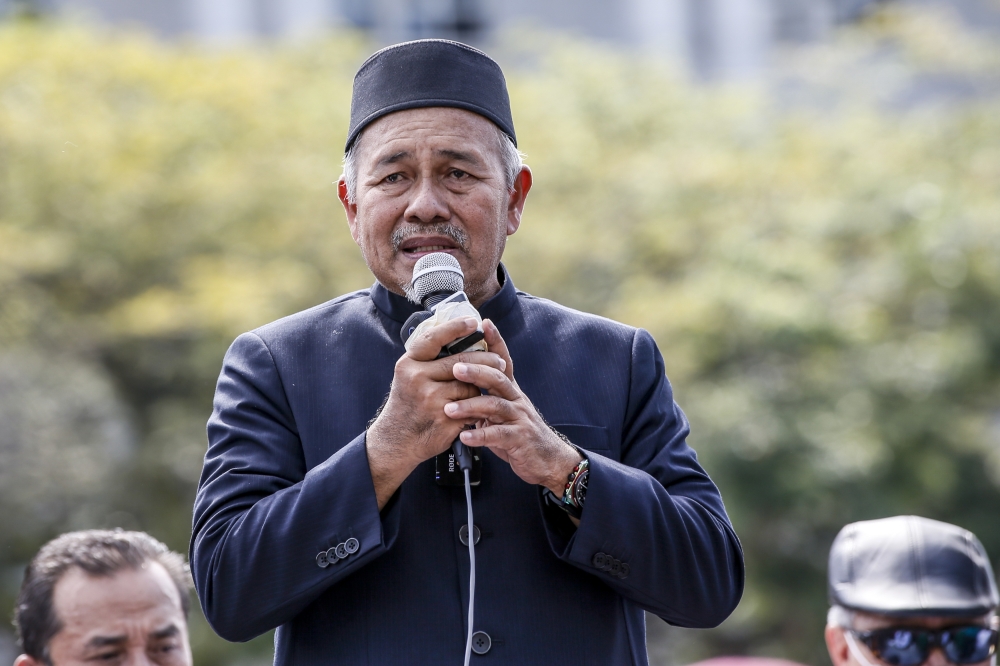
PAS has signalled its willingness to engage in substantive discussions about expanding the existing cooperative arrangement between Barisan Nasional and Perikatan Nasional beyond its current scope, according to party president Tuan Ibrahim Ibrahimm. The statement represents a significant development in Malaysian coalition politics, suggesting that talks could extend to other state administrations, notably Melaka, and potentially to national-level governance structures.
The current BN-PN cooperation framework has primarily focused on Selangor, where the two coalitions have coordinated politically despite their separate parliamentary and state assembly representations. This arrangement has allowed both blocs to exercise considerable influence in the state without formally merging their political organisations or surrendering their distinct identities. PAS's signal that it is prepared to examine similar arrangements elsewhere indicates the party views such pragmatic alliances as a viable political strategy moving forward.
Melaka represents a particularly significant testing ground for expanded cooperation. The state has experienced considerable political volatility over recent years, with multiple changes in administration and shifting coalitions. An extension of the BN-PN cooperative model to Melaka could reshape state politics substantially, potentially stabilising governance arrangements that have previously proven unstable. The state government's composition and policy direction could shift significantly depending on how such talks progress and what agreements might emerge.
The prospect of federal-level cooperation raises more complex considerations. While the two coalitions maintain separate identities in Parliament, with PN comprising Perikatan's Himpunan Rakyat Semesta (HAMIM) MPs and PAS members, any formalised arrangement at the national level would have profound implications for government formation, budget passage, and policy implementation. Such cooperation could affect everything from economic policy to social legislation to foreign relations, touching matters of concern to all Malaysians regardless of state.
From a Malaysian perspective, the significance of PAS's overture lies in what it reveals about the current political equilibrium. Rather than moving towards coalitional consolidation, Malaysian politics appears to be gravitating towards flexible, issue-specific or geographically-defined cooperative arrangements between blocs that maintain their organisational separation. This approach offers certain advantages: it preserves party autonomy, allows negotiating power to shift based on specific contexts, and prevents any single bloc from achieving overwhelming dominance.
However, such fragmented cooperation also introduces uncertainties. Coalition arrangements that are negotiated piecemeal and potentially subject to renegotiation create unpredictability for governance continuity. Investors, civil servants planning long-term initiatives, and ordinary citizens benefit from stable, predictable political environments. Multiple overlapping cooperative arrangements spanning different territorial and institutional levels can become difficult to manage and prone to internal contradictions.
Southeast Asian regional stability also depends partly on Malaysia's political coherence. A federal system spanning states with varying coalition arrangements, combined with a federal government operating under a different coalition framework, can complicate policy coordination across regions. Issues ranging from infrastructure development to environmental management to public health responses require consistent approaches, yet fragmented political arrangements may produce inconsistent priorities.
Tuan Ibrahim's statement also reflects PAS's positioning within broader Malaysian political dynamics. The party occupies an unusual position: it is ideologically distinct from both traditional BN parties and from other PN components, yet it participates in both coalitions. This dual positioning grants PAS considerable negotiating leverage, as both blocs value PAS's contributions and neither can completely exclude it without losing influence. By publicly indicating openness to expanded cooperation, PAS appears to be signalling that it retains strategic optionality.
The timing of PAS's signal warrants consideration. Malaysian politics enters different phases as electoral cycles approach or recede, and statements about coalition expansion often relate to calculations about electoral positioning and governmental stability. Understanding when and why PAS chooses to signal openness to expanded cooperation helps illuminate the party's strategic thinking and its assessments of political opportunities.
For Malaysian voters and observers of politics, the key implications concern government formation, policy direction, and accountability. Cooperative arrangements that remain informal or geographically fragmented can obscure lines of responsibility. Citizens and voters deserve clarity about who governs and on what basis. Transparent, comprehensible coalition agreements serve democratic principles better than opaque, multi-layered arrangements operating simultaneously across different levels and regions.
The coming weeks and months will reveal whether PAS's stated openness translates into concrete negotiations and potential agreements. Such discussions, if they occur, will shape Malaysian governance arrangements for years ahead. The outcomes will affect not only the specific states involved but also the broader trajectory of Malaysian coalition politics and the country's political stability more generally.
Ultimately, PAS's signal represents a moment of political possibility. Whether extended cooperation strengthens Malaysian governance or further complicates it will depend on the specific terms negotiated and how the resulting arrangements function in practice.

