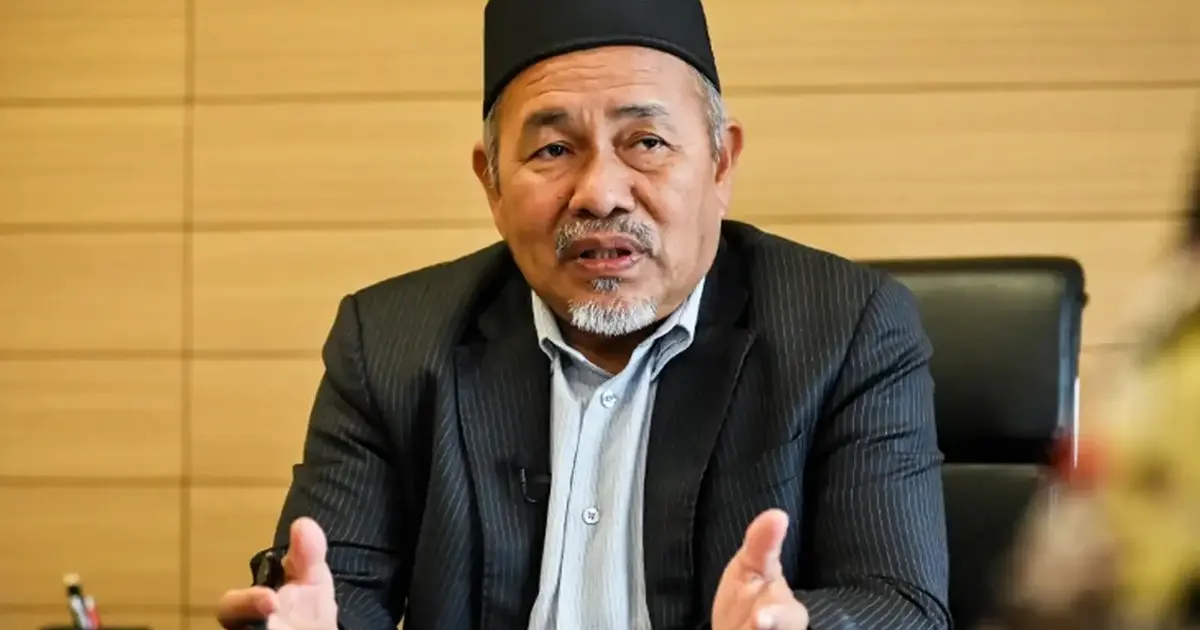
The stability of the political coalition binding Peninsular Islam-based Umno with its smaller but influential partner PAS depends fundamentally on authentic commitment and a coherent long-term vision, according to PAS treasurer-general Iskandar Abdul Samad. His remarks represent a significant statement from one of the party's senior leadership ranks about the conditions necessary for the partnership to endure beyond immediate electoral cycles or short-term political convenience.
Iskandar Abdul Samad's intervention comes at a moment when Malaysia's political landscape remains fractious, with multiple parties jockeying for position and influence. The Umno-PAS axis has become one of the most consequential blocs in Malaysian politics, particularly in driving policy formation and electoral strategies at both federal and state levels. The treasurer-general's emphasis on sincerity suggests an awareness within PAS leadership that purely transactional arrangements lack the resilience needed to weather internal disagreements and external pressures.
The strategic vision component of his statement carries particular weight in the Malaysian context. Both parties must operate from a coherent framework about their shared objectives, whether economic policy, religious affairs, constitutional matters, or electoral architecture. Without such alignment at the ideological and programmatic level, short-term tactical disagreements can quickly escalate into fundamental ruptures. PAS, historically associated with Islamic nationalist positions, and Umno, a secular-leaning Malay nationalist party, inhabit somewhat different political terrain despite their recent rapprochement.
Iskandar Abdul Samad's characterisation of the alliance's requirements reflects lessons learned from Malaysia's fractious coalition history. Previous partnerships between major parties have dissolved when the foundational understanding eroded or when individual leaders prioritised personal advancement over collective interests. By stressing sincerity—a quality that cannot be legislated or enforced but only demonstrated through consistent behaviour—the PAS official is essentially arguing that institutional arrangements mean little without genuine good faith from all participants.
The treasurer-general also issued a direct caution to Bersatu, the party led by former Prime Minister Mahathir Mohamad, against attempting to manufacture conflict between Umno and PAS. This warning carries multiple implications. First, it suggests that Bersatu views the Umno-PAS partnership as a threat to its own political position and might benefit from the coalition fragmenting. Second, the public articulation of this concern indicates that PAS leadership suspects specific overtures or activities designed to undermine the alliance. Third, the warning itself serves as a deterrent, raising the political cost of such interference by exposing the strategy publicly.
Bersatu's position in Malaysian politics has grown complicated in recent years. Once positioned as a major party with significant parliamentary representation and government participation, Bersatu now finds itself in a more marginal position relative to the Umno-PAS combination. Mahathir's presence lends the party historical gravitas and strategic sophistication, yet Bersatu's actual ground strength has diminished. This context makes Iskandar Abdul Samad's warning intelligible—a weakened party might indeed resort to divisive tactics rather than seek direct competition.
The implications for Malaysian politics extend beyond the immediate Umno-PAS relationship. The coalition's solidity affects government stability at federal level and controls significant state administrations. Any fracturing would create cascading uncertainty about parliamentary arithmetic, cabinet composition, and the continuity of current policy directions. For Southeast Asian observers, Malaysia's political stability carries regional consequences given the country's strategic location and economic significance.
For Malaysian voters and businesses, the question of alliance durability matters considerably. Political instability correlates with policy uncertainty, delayed investment decisions, and reduced government effectiveness in service delivery. The Umno-PAS alliance, despite its controversial aspects for non-Malay and non-Muslim constituencies, has provided relative predictability compared to previous coalition configurations. Whether that stability can be sustained through the mechanisms Iskandar Abdul Samad identifies—sincerity and vision—will significantly shape Malaysia's trajectory through the coming electoral cycles.
The treasurer-general's comments also reflect internal PAS dynamics. By publicly emphasising the need for sincerity and vision, party leadership sends signals both to Umno about its own commitment and to PAS rank-and-file about why alliance decisions serve the party's long-term interests. Maintaining grassroots confidence in strategic partnerships becomes increasingly important as criticism from other quarters intensifies.
Iskandar Abdul Samad's intervention suggests that PAS leadership recognises vulnerabilities within the current arrangement despite its apparent strength. The explicit articulation of conditions for alliance sustainability—rather than assuming such sustainability—indicates awareness that political partnerships operate as ongoing negotiations rather than permanent settlements. The warning directed at Bersatu simultaneously serves as reassurance to Umno that PAS will resist external temptations that might destabilise their arrangement.
Looking forward, the Umno-PAS alliance faces tests from multiple directions: internal disagreements about policy priorities, electoral calculations as the next general election approaches, and pressure from other political actors seeking to exploit potential divisions. Whether the combination of sincerity and shared vision that Iskandar Abdul Samad identifies can sustain the partnership through these challenges will significantly influence Malaysian politics' evolution during the remainder of this decade.

