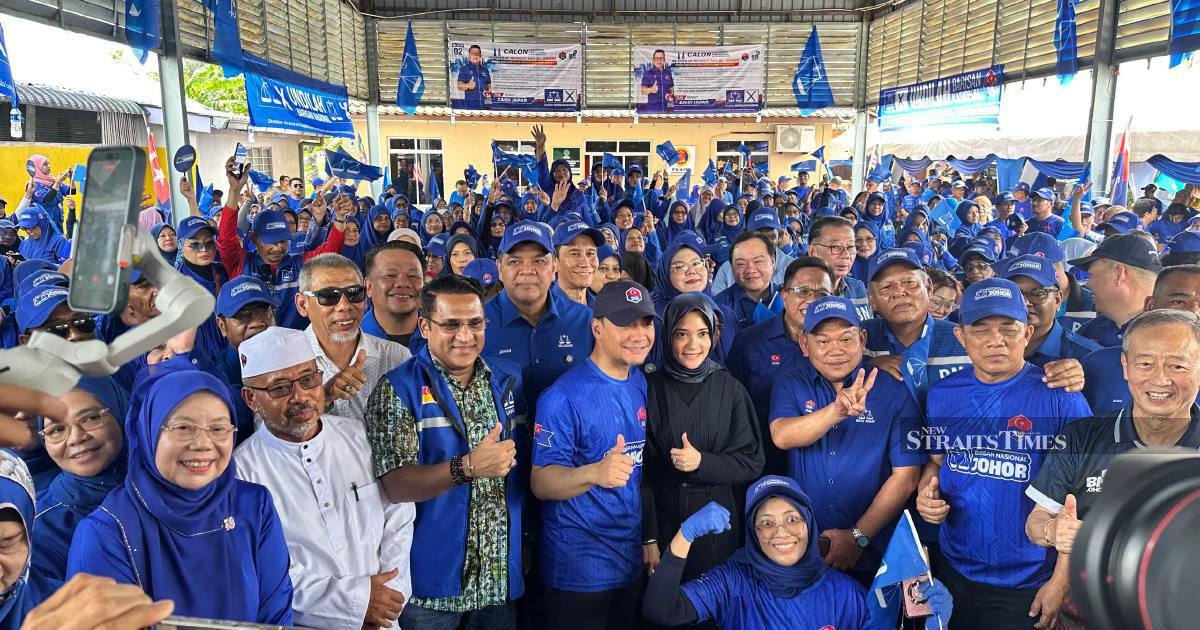
Two senior PAS division officials appeared at a Barisan Nasional gathering in Batu Pahat this week, a move observers interpret as a concrete step towards rebuilding coordination among Peninsular Malaysia's leading Malay-based political movements before the Johor state election next month. The attendance, while symbolic rather than formally announced, reflects behind-the-scenes discussions aimed at forging a united front for the contest.
The Batu Pahat event, organised within BN's established framework, served as an informal platform for leaders to demonstrate alignment on shared political objectives. Such gatherings have become increasingly important as parties seek to position themselves cohesively before major electoral contests, particularly in states where Malay Muslim voter sentiment carries decisive weight. The presence of PAS figures at what is fundamentally an Umno-led coalition event suggests that despite occasional public disagreements, both organisations remain willing to collaborate at grassroots levels.
This development carries particular significance for Johor, a state long considered a BN stronghold but where political dynamics have shifted considerably in recent years. The state election represents a critical test of whether Umno can maintain its traditional voter base while simultaneously managing relationships with PAS, a party that has grown stronger in several peninsular constituencies since the 2022 general election. For Johor specifically, strengthening inter-party coordination could prevent opposition parties from exploiting divisions within Malay-Muslim political representation.
PAS, despite operating within Perikatan Nasional at the federal level, has shown flexibility in regional contexts. The party's willingness to attend BN functions suggests either tacit acknowledgement that Johor presents unique electoral circumstances, or a recognition that fragmenting the Malay-Muslim vote risks allowing non-Malay-led opposition coalitions to gain ground. Johor's demographic composition and historical voting patterns mean that consolidated support among Malay and Muslim voters typically decides election outcomes, making interparty cooperation relatively straightforward when common threats are perceived.
Umno faces its own internal pressures as it seeks to revitalise the party and recover electoral momentum lost during the 2022 general election cycle. Johor represents perhaps the most important proving ground for a BN revival, given the state's size, population concentration, and symbolic importance within Umno's historical narrative. Success here would demonstrate that the coalition remains capable of commanding support even amid a fractured national political landscape, where multiple Malay-Muslim parties now compete for similar voter demographics.
For PAS, participation in BN-aligned activities without formally abandoning Perikatan Nasional affiliation allows the party to maintain multiple strategic options. This flexibility reflects the complex reality of Malaysian coalition politics, where formal alliances at national level sometimes coexist with pragmatic arrangements at state level. Johor's electoral importance may simply outweigh the diplomatic niceties of formal alignment declarations, particularly if both parties assess that a divided opposition would be detrimental to shared interests.
The timing of this coordination effort is noteworthy. With the Johor election scheduled for next month, parties must move quickly to establish campaign strategies, candidate selections, and voter mobilisation frameworks. Early signalling of cooperation, even through symbolic gestures like attending shared events, allows time for reconciling any outstanding disagreements and presenting unified messaging to voters. Division leaders, who maintain direct community connections, carry particular influence in this process by demonstrating to grassroots supporters that party positions have aligned.
This development also reflects broader Southeast Asian patterns where coalition politics frequently shift between election cycles and governance periods. Malaysia's experience of multiple layers of government—federal, state, and local—creates numerous forums where different alliance arrangements can flourish simultaneously without creating fundamental contradiction. What matters electorally is whether parties can avoid actively undermining each other during crucial voting periods, even if formal unity remains incomplete.
The Batu Pahat gathering comes amid broader discussion about Johor's electoral prospects. The state has been experiencing demographic shifts, urbanisation changes, and generational transitions in voter behaviour that complicate traditional voting patterns. Both Umno and PAS recognise that relying entirely on historical support bases would be insufficient; instead, coordinated efforts to consolidate Malay-Muslim votes while preventing opposition inroads represent the sensible approach.
Looking forward, the success of this coordination will likely influence approaches taken in subsequent state elections scheduled for later in the year. If Umno and PAS can effectively cooperate in Johor without formally dissolving their separate national alignments, this model might be replicated elsewhere. Conversely, friction or failure in Johor could accelerate moves toward more formal realignment at national level, as parties reassess whether existing coalition structures serve their electoral interests.
The Batu Pahat event ultimately demonstrates that despite the complexity of Malaysia's multiparty system, electoral contests often compel pragmatism. Division leaders attending BN functions signals not ideological convergence but rather recognition that Johor's voters, particular Malay-Muslim constituencies, benefit from parties offering coordinated representation rather than destructive competition. Whether this cooperation extends to formal seat-sharing arrangements, joint campaigns, or simply coordinated messaging remains unclear, but the symbolic opening has been established.

