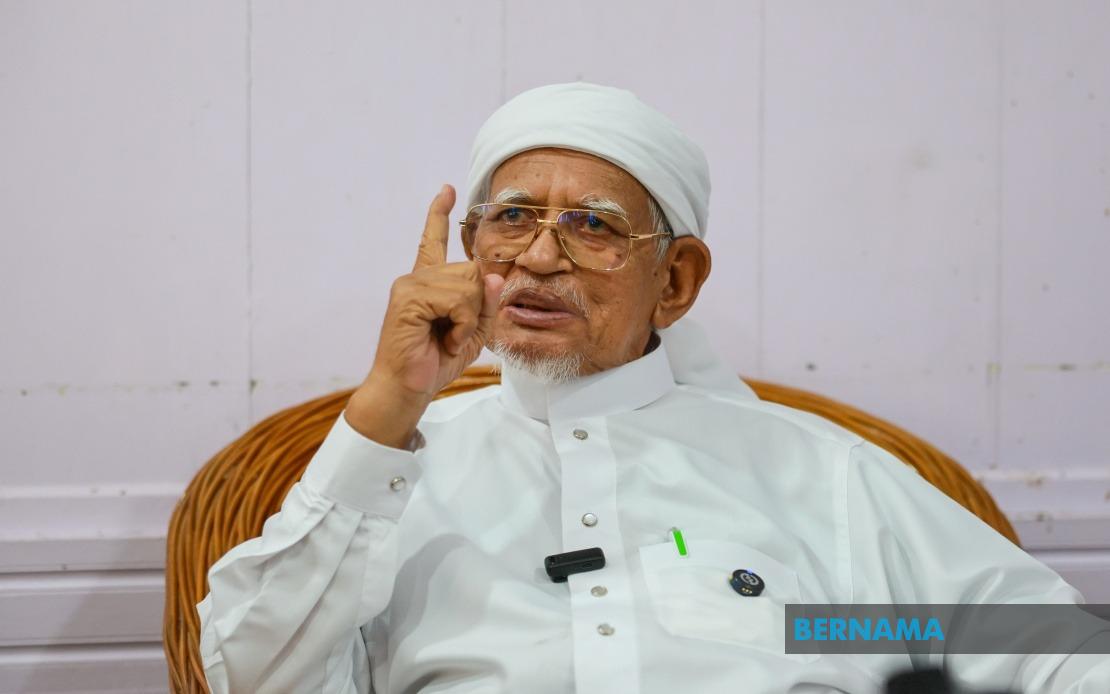
The ongoing power struggle within Malaysia's opposition coalition framework intensified on Wednesday when PAS president Tan Sri Abdul Hadi Awang unilaterally declared that Bersatu has automatically lost its membership in Perikatan Nasional, citing the party's stated intention to form an alternative political alliance. Speaking after a morning religious lecture at the Rusila Mosque in Marang, Abdul Hadi contended that no formal notification was necessary since Bersatu had effectively withdrawn itself through its public announcement of coalition-building plans.
The assertion by the PAS leader represents a significant escalation in internal tensions within the three-year-old Perikatan Nasional bloc, which was originally established as an opposition counterweight to Barisan Nasional-led administrations. Abdul Hadi's reasoning rested on the principle that expressing intent to establish a competing coalition automatically negates membership in the existing partnership, suggesting that PN operates on an implicit understanding of exclusive loyalty that supersedes formal contractual procedures. This position, however, appears to lack any documented basis in coalition protocols or publicly available frameworks governing PN's operational structures.
The triggering event for this constitutional dispute stems from remarks attributed to Bersatu president Tan Sri Muhyiddin Yassin, who earlier suggested that his party would explore forming a new coalition arrangement with unspecified partners following the recently concluded Negeri Sembilan state election. While Muhyiddin did not provide extensive detail regarding the scope or composition of such an alliance, his comments were sufficient to provoke immediate concerns among PAS leadership about the stability and cohesion of Perikatan Nasional itself. The Negeri Sembilan election outcome, where PN performed below expectations in certain constituencies, appears to have amplified existing strategic disagreements about the coalition's future direction and electoral viability.
Bersatu secretary-general Datuk Seri Mohamed Azmin Ali swiftly contested Abdul Hadi's unilateral pronouncement, asserting that the PAS president possessed neither constitutional authority nor procedural standing to eject any member party from PN's ranks. Azmin's response drew explicitly on Clause 7A of the Perikatan Nasional Constitution, which vest membership decisions exclusively with the coalition's presidential council—a body composed of representatives from all constituent parties. He emphasized that absent a formal convening of this presidential council and a deliberative process to determine Bersatu's status, the party retained full legitimacy as a PN component, notwithstanding any public statements about exploring alternative arrangements.
The constitutional distinction raised by Azmin carries substantial weight in Malaysian coalition politics, where formal procedures and documented protocols carry legal significance. Clause 7A's existence suggests that PN's architects anticipated potential disputes over membership and deliberately established an institutional mechanism requiring consensus among the presidential council rather than allowing unilateral action by individual party leaders. This structural safeguard appears designed to prevent exactly the scenario now unfolding, where a single party leader might seek to engineer another party's expulsion without collective deliberation. The presidential council's composition and voting rules would presumably require broad agreement to formally revoke any member's standing.
Azmin further countered Abdul Hadi's implicit assertion that expressing interest in forming alternative coalitions automatically triggers membership termination by pointing out the absence of any PN constitutional clause explicitly providing for such automatic revocation. This gap between Abdul Hadi's declared position and documented PN founding documents suggests a fundamental disagreement about the nature of coalition membership itself. Abdul Hadi appears to be operating from an implicit understanding that PN membership demands exclusive loyalty and prohibits simultaneous coalition exploration, whereas Azmin insists that only documented constitutional procedures can govern membership status, and those procedures have not yet been invoked.
The broader context illuminating this dispute involves longstanding tensions between PAS and Bersatu within the PN framework. Despite sharing opposition to Barisan Nasional, the two parties maintain distinct ideological orientations, with PAS emphasizing Islamic governance frameworks and Bersatu representing a broader multiethnic formation rooted in former Prime Minister Mahathir's political legacy through Muhyiddin's custodianship. These differences have occasionally created friction over PN's strategic direction, policy priorities, and electoral positioning across Malaysia's diverse state and federal constituencies. The Negeri Sembilan results may have exposed vulnerabilities in PN's coalition management that have now spilled into open constitutional disputation.
Azmin announced that Bersatu would lodge an official complaint with the Registrar of Societies concerning Abdul Hadi's unauthorized assertion of authority over membership determinations. This escalation signals that the dispute has transcended internal political posturing and entered the domain of formal institutional grievances. The Registrar of Societies, as the governmental body responsible for registering and regulating political associations in Malaysia, possesses authority to arbitrate questions involving coalition constitutional procedures and the legality of actions taken by coalition representatives. Bersatu's decision to pursue this channel suggests confidence in the documented superiority of their constitutional interpretation and desire to establish precedent restraining unilateral membership actions.
The implications of this rupture extend beyond the immediate three-party constellation of PAS, Bersatu, and Amanah that comprises PN's formal structure. Malaysia's opposition political landscape remains fragmented and heavily dependent on coalition arrangements to present competitive alternatives to Barisan Nasional dominance at both state and federal levels. Any permanent fracturing of PN could significantly alter the calculus of opposition competitiveness, particularly given that individual parties' combined parliamentary strength pales compared to their combined effect. The willingness of PN leaders to pursue public constitutional disputes rather than resolving disagreements through closed-door negotiations suggests underlying frustrations may be deeper than public statements indicate.
For Malaysian voters and regional observers, this episode underscores the perpetual fragility of opposition coalition structures in the country's political system. Unlike governing coalitions, which benefit from ministerial resources and patronage networks that incentivize continued membership, opposition coalitions rely primarily on shared opposition to incumbents and negotiated policy alignments. These bonds have proven historically susceptible to rupture when electoral conditions shift or individual parties perceive greater strategic advantage in alternative arrangements. The PN dispute also reflects broader regional patterns, where multiparty opposition coalitions across Southeast Asia frequently face cohesion challenges that constrain their effectiveness.
Moving forward, the constitutional resolution of this membership dispute will likely hinge on whether the PN presidential council convenes to formally address Bersatu's status. If convened, the council's deliberations and decision would either validate Abdul Hadi's position by formally terminating Bersatu's membership or repudiate it by affirming Bersatu's continued standing. Such a decision would establish binding precedent for future coalition membership disputes within PN and potentially influence how other Malaysian opposition coalitions manage internal disagreements. The resolution will also signal whether PN possesses sufficient institutional maturity to manage internal conflicts through established procedures or whether coalition solidarity will continue fragmenting through unilateral actions by individual party leaders pursuing narrow political advantage.

