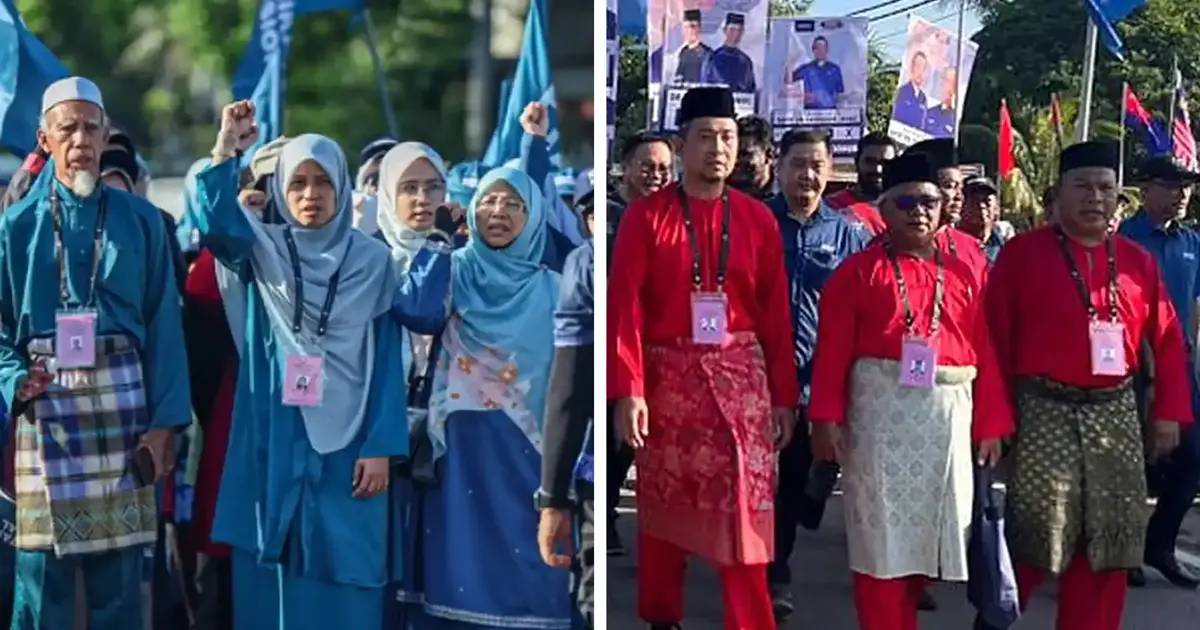
Divisions within the Perikatan Nasional coalition threaten to significantly weaken its electoral positioning in Johor, as PAS and Bersatu pursue independent campaign strategies rather than presenting a unified political front. Political analysts have raised concerns that the coalition's fragmentation will erode voter confidence and complicate efforts to mobilize support across the state, undermining what had been positioned as a cohesive opposition movement.
The decision by the two major parties to campaign separately represents a fundamental shift in how Perikatan Nasional has traditionally operated. Previously, the coalition presented itself as a unified bloc capable of offering voters a clear alternative to the ruling establishment. This fracturing signals internal disagreements that likely extend beyond mere campaign logistics, reflecting deeper tensions over strategy, resource allocation, and vision for governance that could become increasingly apparent to voters.
Voter perception plays a crucial role in electoral success, particularly in a state like Johor, which has historically been a bellwether for national political trends. When political coalitions operate in a visibly fragmented manner, voters often interpret this as a sign of instability, weak leadership, or irreconcilable policy differences. This perception can translate directly into reduced turnout among coalition supporters or swing voters who seek reassurance that their choice represents a stable alternative government.
The timing of this split is particularly consequential for Perikatan Nasional. In recent Malaysian political cycles, voters have demonstrated increasing sophistication in evaluating coalition coherence. The electorate has witnessed multiple realignments and coalition collapses, making them more cautious about supporting political arrangements that appear brittle or maintained through convenience rather than genuine partnership. A visibly divided campaign could reinforce narratives of political opportunism rather than principled governance.
For PAS specifically, conducting independent campaign activities may appeal to its core conservative constituency but could alienate moderate voters who might have supported a unified Perikatan Nasional ticket. The party's distinct Islamic emphasis creates a constituency that does not entirely overlap with Bersatu's broader nationalist appeal. Running separate campaigns risks segmenting the vote in ways that benefit neither party and potentially advantages ruling coalition candidates who present themselves as stable and unified.
Bersatu faces different strategic challenges. The party has positioned itself as a modernizing force within Malay-Muslim politics, but independent campaigning may be interpreted as a retreat from its coalition-building ambitions. For voters concerned about governance capacity and political stability, Bersatu's decision to pursue separate strategies alongside its coalition partner may raise questions about the party's actual influence within Perikatan Nasional and its ability to shape national political outcomes.
The practical implications of separate campaigns extend beyond messaging to include resource distribution and volunteer coordination. Duplicative campaign infrastructure inefficiently allocates the coalition's combined human and financial resources. Both parties must now maintain separate organizational structures, messaging teams, and ground operations, creating opportunities for tactical errors, inconsistent communication, and wasted effort that could have been deployed more effectively through coordinated action.
Voters in Johor and across Malaysia have become attuned to political messaging quality and coherence. When coalition partners campaign separately, they inevitably send conflicting signals about priorities, policy positions, and the nature of their intended collaboration. This creates confusion among undecided voters who struggle to understand what a Perikatan Nasional government would actually entail or how its constituent parties would resolve disagreements on significant policy matters.
The international comparison is instructive. Democratic elections globally demonstrate that fragmented opposition coalitions consistently underperform their combined polling potential. Voters punish visible internal discord by either abstaining from voting or shifting support toward parties perceived as more unified and capable. Malaysia's political history provides domestic examples of this phenomenon, with coalition fragmentation regularly translating into electoral losses that exceeded analysts' pre-election predictions.
Analysts point out that this split carries particular significance given Johor's strategic importance in national politics. Historically, the state has served as a crucial testing ground for broader political trends affecting the federal government. A poor showing by Perikatan Nasional in Johor, attributable partly to campaign fragmentation, could influence voter behavior in subsequent state elections and future federal elections, potentially setting trajectories that extend well beyond the immediate state contest.
The economic dimension also merits consideration. Malaysian voters increasingly evaluate political parties based on perceived governance competence and economic management capabilities. Visible internal divisions can undermine confidence in a coalition's ability to manage complex economic challenges, coordinate between ministerial portfolios, and deliver consistent policy implementation. This is particularly relevant in Johor, where economic development, infrastructure planning, and foreign investment attraction are salient voter concerns requiring coordinated political leadership.
For ruling coalition parties, Perikatan Nasional's division presents unexpected opportunities. A fractured opposition allows these parties to compete separately against each coalition component, potentially exploiting specific vulnerabilities or policy differences. Moreover, if the split Perikatan Nasional campaign underperforms, ruling coalition candidates can frame their victory as reflecting voter preference for stable, unified governance over fragmented alternative arrangements.
Moving forward, whether PAS and Bersatu successfully reunify their campaign efforts before the Johor election may prove determinative for their electoral outcomes. Voters watching this situation unfold will draw conclusions about the coalition's viability and the trustworthiness of its political leadership. The credibility of Perikatan Nasional as a coherent political force capable of governing Malaysia depends significantly on how visibly unified or fragmented its component parties appear during this crucial election cycle.

