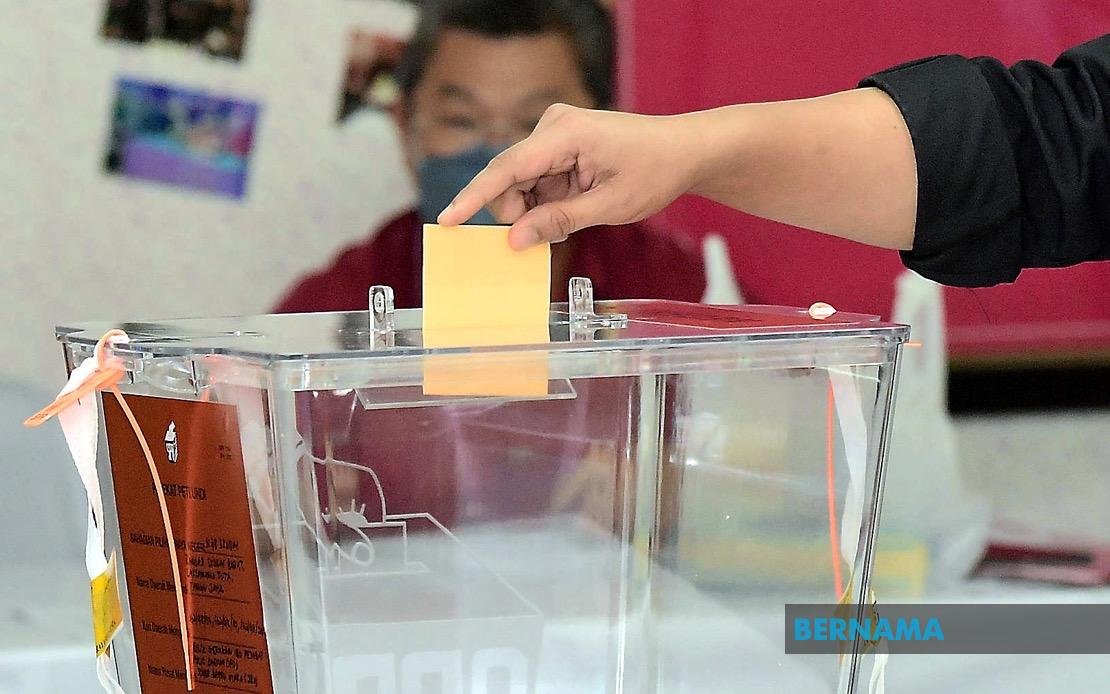
Johor's state election held on July 11 delivered a decisive outcome that will shape Malaysia's political landscape heading into the 16th General Election. Barisan Nasional, steering the momentum from its 2022 general election gains, consolidated its dominance in the southern state by capturing 29 of 56 available seats—a simple majority that gives Menteri Besar Datuk Onn Hafiz Ghazi an unambiguous mandate to govern. The results underscore the continued appeal of the BN brand at the state level, even as electoral competition across Malaysia has grown more fragmented and unpredictable.
PAS, the Islamist party that commands considerable influence within the Perikatan Nasional coalition, responded to the outcome with measured acceptance rather than acrimony. Johor PAS commissioner Datuk Dr Mahfodz Mohamed released a statement acknowledging the electorate's choice and offering congratulations to the victorious Barisan Nasional team. This gracious posture reflects both political maturity and pragmatism—PAS recognises that the 2023 Johor polls served partly as a testing ground for coalition dynamics ahead of the anticipated 16th General Election. By accepting the result without rancour, PAS sought to preserve the Perikatan Nasional alliance structure while maintaining credibility with its base.
Yet beneath the surface courtesy lies a more complex narrative about PAS's electoral trajectory. The party's failure to improve upon its standing through this state-level contest suggests that the momentum it gained from its 2022 general election performance may be consolidating rather than expanding. For Malaysian voters focused on the Perikatan coalition's viability as a national alternative, the Johor outcome provided useful intelligence: the partnership between PAS, Bersatu, and smaller allies faces headwinds in translating federal-level appeal into consistent state victories. PAS framed its continued commitment to the Perikatan Nasional structure as preparation for the next general election, indicating that the party views the current phase as one of repositioning and consolidation rather than breakthrough expansion.
Bersatu, the newer political entity formed after the 2020 Muhyiddin government, announced it would undertake a comprehensive review of the Johor election results to extract strategic lessons. Party secretary-general Datuk Seri Mohamed Azmin Ali's pledge to conduct detailed analysis signals recognition that the outcome fell short of expectations. For Bersatu, which had positioned itself as a reformist force capable of attracting disaffected voters from both Pakatan Harapan and Barisan Nasional, the electoral performance underscores the difficulty of building durable political infrastructure in Malaysia's crowded landscape. The party's review process will likely examine whether its messaging resonated with urban and rural voters, whether its candidate selection reflected local preferences, and how effectively it differentiated itself from both PAS and Bersatu's rivals within the broader opposition spectrum.
The most telling outcome may belong to Parti Bersama Malaysia, the fledgling political party led by Datuk Seri Rafizi Ramli. Formed merely 52 days before the Johor election, Bersama fielded 15 candidates and saw every single one lose their deposit—a dramatic threshold that requires candidates to secure minimum vote percentages to recover their RM500 nomination fees. This outcome, though not entirely surprising given the party's nascent status, illustrates the structural barriers facing new entrants to Malaysian politics. Rafizi's declaration that the party would study its electoral performance thoroughly reflects the resolve required to sustain a political project in a system where established brands command voter loyalty and organisational advantages.
Bersama's situation carries particular significance for Malaysia's political trajectory. Rafizi, the former PKR deputy president who fell out with Anwar Ibrahim's faction, represents an attempt to create political space beyond the established coalitions. The complete wipeout of Bersama candidates in Johor suggests that Malaysia's voters—at least in that state—were not yet ready to embrace a genuinely new political vehicle. Whether this outcome reflects voter exhaustion with new parties, Bersama's underdeveloped ground presence, or simply the choice to vote for established entities remains an open question. Rafizi's framing of the result as a learning experience for a 52-day-old party acknowledged the limitations while maintaining the narrative that participation itself built institutional capacity for future contests.
Pakatan Harapan's performance—winning only two seats—marked a historic low for the coalition that governed Malaysia from 2018 to 2020. The opposition alliance struggled to recover from the perception that its 2018-2020 government had disappointed voters on multiple fronts, from economic management to internal conflicts. The Johor result suggests that the rehabilitation of Pakatan Harapan's standing remains incomplete, even as Anwar Ibrahim's subsequent appointment as Prime Minister may shift electoral calculations nationally.
The broader significance of the Johor election extends beyond state-level politics. These results provided the first substantial electoral test of coalition dynamics since the 2022 general election, offering valuable data about voter preferences that will inform campaign strategies for the 16th General Election. Barisan Nasional's decisive victory demonstrated that the coalition's repositioning after 2022 has successfully regained voter confidence, particularly among traditionally conservative constituencies. The performance of Perikatan Nasional and its allies indicated that while the coalition retains relevance, translating that relevance into consistent electoral gains remains challenging. For Malaysian observers evaluating the health of democratic competition in the country, the Johor election confirmed that voter choice remains meaningful and that electoral outcomes continue to surprise—a healthy sign for electoral democracy even when particular results disappoint particular factions.
As each political formation processes the July 11 results, attention turns inexorably toward the 16th General Election. PAS's commitment to strengthening its Perikatan Nasional partnership, Bersatu's detailed strategic review, and Bersama's determination to build institutional capacity all represent attempts to position their respective organisations for national-level competition. For voters considering Malaysia's political options heading into the next general election, the Johor outcome provided a reality check: incumbent Barisan Nasional remains formidable, Perikatan Nasional requires clearer differentiation and more effective coordination, and new political forces must overcome substantial barriers to break through. The path to Malaysia's next general election now becomes clearer, even as its ultimate destination remains uncertain.

