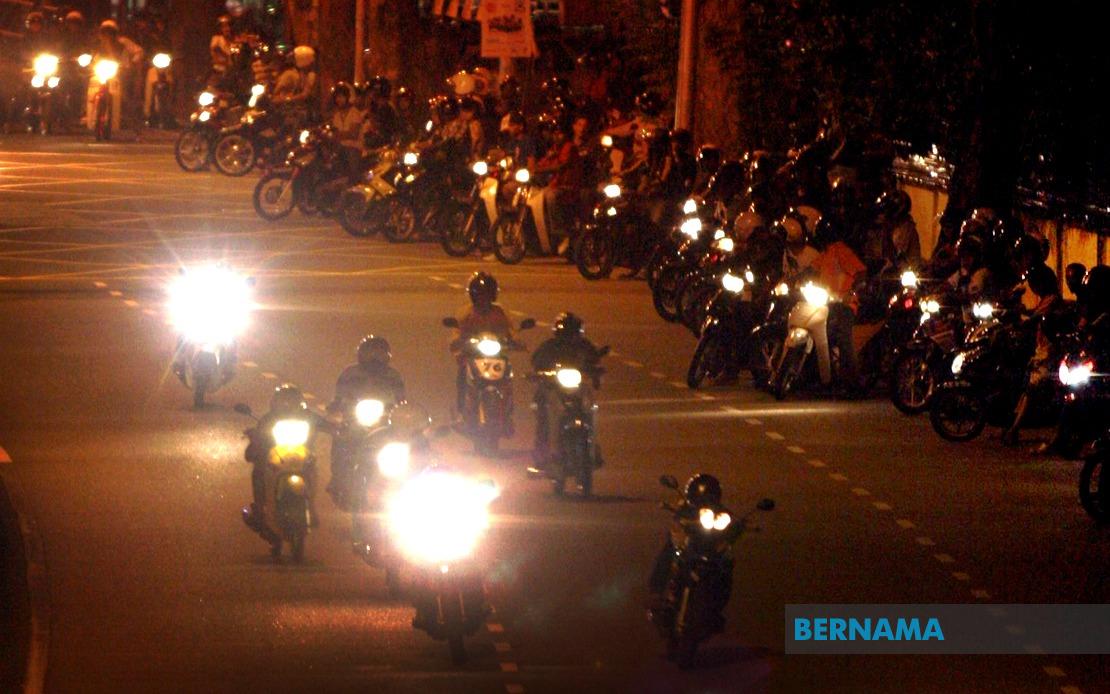
Parliament is moving toward a comprehensive crackdown on illegal street racing following a heated debate on the Road Transport (Amendment) Act 2026, with lawmakers proposing a range of measures designed to deter and punish offenders more severely. The proposals, advanced by both government and opposition members during proceedings in the Dewan Rakyat on June 23, suggest that existing penalties have proven insufficient to tackle what many view as an escalating public safety crisis on Malaysian roads.
The debate reflects growing frustration at the persistent problem of illegal racing, which has claimed lives and caused injuries across the nation. The June 1 incident in Simpang Renggam, Johor, involving high-powered vehicles that resulted in fatalities, appears to have galvanised parliamentarians to consider more drastic intervention. This tragedy, in particular, underscored for several members that the issue extends beyond motorcycle racing to include cars capable of inflicting even more catastrophic damage, shifting the conversation from a nuisance affecting specific communities to a broader public health emergency.
Among the most significant proposals is that of Datuk Willie Mongin from Puncak Borneo, who called for permanent revocation of driving licences as a mandatory consequence for those convicted of illegal street racing. He advocated raising minimum penalties to RM300,000 in fines or five years imprisonment, coupled with the lifetime ban from driving. This escalation reflects a belief that current sanctions lack sufficient bite to discourage participation in illegal racing, which often attracts younger drivers who may underestimate consequences or view fines as manageable costs of engagement in the activity.
Khairil Nizam Khirudin, representing Jerantut, introduced a different but complementary approach by proposing a structured rehabilitation programme that combines disciplinary training with community service obligations. Rather than relying solely on punitive measures, this framework seeks to address underlying behavioural issues and educate offenders about the consequences of their actions. The inclusion of community service is particularly noteworthy, as it would require convicted racers to directly engage with communities affected by street racing, potentially fostering greater accountability and understanding of harm caused.
A persistent gap in current enforcement concerns the modification of motorcycles and vehicles to facilitate illegal racing. Khairil suggested that the Ministry of Transport collaborate with the Ministry of Domestic Trade and Cost of Living to utilise Section 66 of the Road Transport Act 1987 as a legal foundation for targeting workshops engaged in illegal modifications. This approach recognises that supply-side intervention—targeting those who mechanically enable racing rather than only those who participate—could prove more effective than demand-side enforcement alone. Such coordination would require substantial regulatory coordination between ministries and possibly new technical standards defining impermissible modifications.
The proposal to hold parents of illegal racers accountable represents an attempt to strengthen family-level deterrence and responsibility. This notion, advanced by Khairil, reflects broader societal debates about parental accountability and family institution strength, though implementation would present practical and legal challenges regarding how parental culpability could be defined and enforced without overreaching into domains traditionally considered parental discretion.
Wan Razali Wan Nor from Kuantan emphasised the importance of extending Section 42A provisions to cover all vehicle types engaged in illegal racing, not merely motorcycles. His intervention highlights that lawmakers have begun recognising illegal street racing as a vehicle-agnostic problem requiring comprehensive rather than piecemeal legislative responses. The expansion of existing provisions would streamline prosecution and ensure consistent penalties regardless of vehicle class, addressing current loopholes where different vehicle categories might receive disproportionate treatment.
Shaharizukirnain Abd Kadir introduced yet another enforcement lever by proposing mandatory destruction of excessively modified motorcycles. Confiscation and destruction policies, used selectively in other jurisdictions, serve both punitive and preventive functions by removing tools that facilitate offending and eliminating the potential for reuse or resale of vehicles modified specifically for racing purposes. The implementation of such measures would require clear technical standards for determining what constitutes excessive modification and robust due process protections.
Parallel to the street racing focus, several parliamentarians raised concerns about enforcement of drink-driving laws, proposing expanded victim compensation mechanisms. Zahari Kechik and Datuk Seri Dr Ismail Abd Muttalib advocated for formalised hospital cost compensation and victim welfare provisions, arguing that offenders causing accidents while impaired should bear full financial responsibility for physical harm. This discussion reflects recognition that the Road Transport Act 2026 provides an opportunity to address multiple road safety crises simultaneously, treating illegal racing and impaired driving as interconnected problems requiring coordinated solutions.
The compensation framework represents a shift toward victim-centric justice, acknowledging that current penalties predominantly serve retributive functions rather than providing meaningful restitution to those harmed. Implementation would necessitate establishing administrative mechanisms to calculate, award, and enforce compensation, potentially creating new burdens on already stretched judicial resources.
The breadth of proposals indicates that parliamentarians view existing legislative frameworks as inadequate for contemporary challenges. The 24 members participating in the debate—spanning both government and opposition benches—suggest unusual consensus on the need for stronger measures, though agreement on specific mechanisms remains incomplete. The diversity of proposals also reflects genuine uncertainty about which interventions would prove most effective, suggesting that evidence-based refinement will be necessary as measures progress through legislative stages and implementation.
For Malaysian road safety advocates and community groups, the parliamentary debate signals openness to substantive reform, though translation of proposals into enforceable law and effective implementation remains uncertain. The focus on rehabilitation and family accountability, alongside purely punitive measures, suggests evolving thinking about how societies should respond to dangerous behaviour among young people, balancing deterrence with rehabilitation and acknowledging that legal penalties alone rarely address underlying drivers of illegal racing participation.