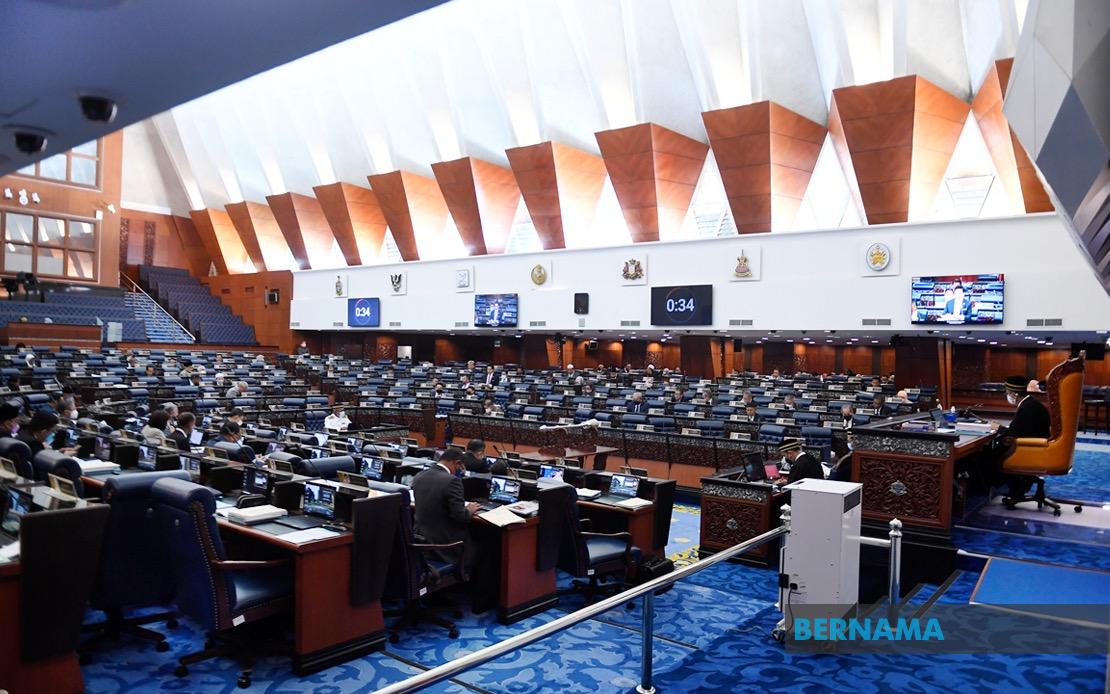
The Dewan Rakyat will tackle two politically sensitive questions today regarding how the Federal Government distributes resources to state administrations and whether election-season constraints on project announcements still hold legal weight. The session, documented in parliament's official Order Paper, signals mounting pressure on the Prime Minister to justify funding mechanisms that some opposition lawmakers contend disadvantage certain states and allow insufficient budget flexibility for regional development.
Doris Sophia Brodi, the GPS member representing Sri Aman, will push the Prime Minister to respond to persistent allegations that state governments receive federal allocations that fall short compared with the revenue these states contribute to national coffers. Her question reflects broader frustration among state-level politicians, particularly those in resource-rich regions, over what they perceive as an inequitable revenue-sharing formula. The MADANI Government's approach to restructuring this allocation mechanism will come under scrutiny, with lawmakers expecting concrete details on whether reforms genuinely address regional grievances or merely represent cosmetic adjustments to an entrenched system.
The second major parliamentary focus concerns the government's commitment to enforcing project announcement restrictions during electoral periods. Shahidan Kassim from PN's Arau constituency will directly ask whether the prohibition on announcing government allocations or projects after nomination day closes remains in force. This question carries particular weight as Johor, Melaka, and Negeri Sembilan prepare for state elections, making the transparency and fairness of government communications a live issue. Lawmakers will demand clarity on which enforcement bodies will monitor compliance and what penalties apply to ministers or officials who breach these restrictions—a concern that reflects the electorate's sensitivity to perceived misuse of state resources for political advantage.
Beyond these core governance questions, parliament will examine Malaysia's preparedness for emerging technological challenges. Ismail Sabri Yaakob, a senior BN figure from Bera, will interrogate the Communications Ministry about strategies to combat the proliferation of artificially generated content, particularly deepfake videos that could distort public discourse or damage reputations. This reflects a genuine anxiety across the region about how AI-enabled disinformation poses risks to democratic institutions and social cohesion. The minister must outline concrete verification protocols and social media labelling mechanisms that can meaningfully slow the spread of manipulated visual content while respecting freedoms of expression.
Energy infrastructure readiness will also feature prominently in today's session. Chong Zhemin, representing Kampar for Pakatan Harapan, has lodged a question examining whether Malaysia's electricity generation and distribution capacity can sustain rapidly expanding demand from data centres and artificial intelligence operations. This line of inquiry reflects recognition that digital economy growth—if matched by inadequate power supply—could become a competitive vulnerability. Southeast Asian nations are competing fiercely to attract tech investment, and power supply constraints could persuade multinational firms to invest elsewhere, making this infrastructure question strategically significant for Malaysia's regional positioning.
Social welfare and cost-of-living measures will also command parliamentary attention. Awang Hashim from PN's Pendang will scrutinise the effectiveness of the mySalam scheme, Malaysia's health insurance initiative targeting the bottom 40 percent of earners, while Syahredzan Johan from Bangi will ask about redemption rates for the MADANI Book Vouchers distributed in 2024 and 2025. These questions probe whether government assistance programmes are reaching intended beneficiaries and delivering tangible improvements to household finances, or whether uptake remains sluggish due to inadequate awareness, bureaucratic friction, or scheme design flaws.
Women's labour force participation will receive parliamentary examination through a question about TalentCorp's Career Comeback Programme. Mumtaz Md Nawi from PN's Tumpat will press the Human Resources Ministry on whether this initiative successfully encourages women to resume employment after career interruptions. Female workforce participation directly affects household incomes, economic productivity, and Malaysia's demographic trajectory, making this human capital question relevant beyond narrow labour policy concerns.
Iskandar Dzulkarnain Abdul Khalid will probe the government's signature cost-of-living intervention, the Program Jualan Rahmah MADANI, which offers subsidised essential goods and groceries. His questions will seek updated implementation figures across state constituencies and explore whether the government intends to increase programme frequency to provide more regular relief. This welfare initiative represents a tangible test of whether government messaging about supporting lower-income Malaysians translates into sustained, accessible programmes.
Following Question Time, the legislative agenda turns to substantive bills. Parliament will resume winding-up debate on the Sexual Offences Against Children (Amendment) Bill 2026, reflecting the government's commitment to strengthening protections for vulnerable minors. The session will also consider Dewan Negara amendments to the Employment Insurance System (Amendment) Bill 2025, which modifies Malaysia's social insurance framework, and take up the Cyber Crime Bill 2026, addressing digital-era criminal conduct including online fraud, harassment, and data breaches.
Collectively, today's parliamentary sitting illustrates the diverse pressures shaping Malaysian governance. Questions about federal resource distribution, election integrity, artificial intelligence risks, energy infrastructure, social welfare uptake, labour participation, and digital security reflect a legislature grappling with the intersecting challenges of regional equity, technological disruption, cost-of-living anxieties, and institutional adaptation. How clearly the government responds to these inquiries will signal whether policy frameworks are evolving quickly enough to address constituencies' mounting concerns.

